

 搜索
搜索
第21页
- 第1页
- 第2页
- 第3页
- 第4页
- 第5页
- 第6页
- 第7页
- 第8页
- 第9页
- 第10页
- 第11页
- 第12页
- 第13页
- 第14页
- 第15页
- 第16页
- 第17页
- 第18页
- 第19页
- 第20页
- 第21页
- 第22页
- 第23页
- 第24页
- 第25页
- 第26页
- 第27页
- 第28页
- 第29页
- 第30页
- 第31页
- 第32页
- 第33页
- 第34页
- 第35页
- 第36页
- 第37页
- 第38页
- 第39页
- 第40页
- 第41页
- 第42页
- 第43页
- 第44页
- 第45页
- 第46页
- 第47页
- 第48页
- 第49页
- 第50页
- 第51页
- 第52页
- 第53页
- 第54页
- 第55页
- 第56页
- 第57页
- 第58页
- 第59页
- 第60页
- 第61页
- 第62页
- 第63页
- 第64页
- 第65页
- 第66页
- 第67页
- 第68页
- 第69页
- 第70页
- 第71页
- 第72页
- 第73页
- 第74页
- 第75页
- 第76页
- 第77页
- 第78页
- 第79页
- 第80页
Ⅰ.用括号内所给单词的适当形式填空。
1. While I was writing an e - mail, the computer ________ (sudden) went off.
2. Could you tell me how long it took you ________ (solve) the problem?
3. I heard Molly ________ (sing) a song when I passed by the music room.
4. Anne always ________ (remain) silent when she doesn't know what to say.
5. The police ________ (search) for the missing boy for three hours since he got lost.
1. While I was writing an e - mail, the computer ________ (sudden) went off.
2. Could you tell me how long it took you ________ (solve) the problem?
3. I heard Molly ________ (sing) a song when I passed by the music room.
4. Anne always ________ (remain) silent when she doesn't know what to say.
5. The police ________ (search) for the missing boy for three hours since he got lost.
答案:
1.suddenly 2.to solve 3.singing 4.remains 5.have searched
Ⅱ.(2024·广东)阅读理解。
People know animals do have feelings, but they are not sure if these feelings are correctly understood. In recent years, scientists have done research about the feelings of cows, frogs and pandas. ▲ It says that humans can tell whether a chicken is happy or sad by listening to its calls.
The researchers put a bowl behind a door. Inside the bowl, sometimes, there was something chickens love to eat, such as rice or insects. Sometimes, there was nothing. When the chickens saw food behind the door, they seemed happy and produced fast and loud sounds, known as food calls. When there wasn't food, the chickens made low and long noises to express disappointment. The researchers recorded all these sounds and studied their waves.
Then the researchers chose 16 recordings of such chicken noises. Half were from the chickens seeing the food and half were from the chickens finding no food. The recordings were played to 194 volunteers. Sixty - nine percent of the volunteers correctly understood whether the chickens were feeling happy or not, and some of them even had no experience of taking care of chickens.
The result shows that humans have the natural ability to understand the feelings of chickens. Hopefully, this finding can bring about new technology to help with chicken - raising, a big industry in many countries. Some scientists are already working on a smart computer program that can identify chickens' feelings. This is good news for farmers who want to make the birds happier and healthier.
( )6. 新考法 信息还原 Which of the following can be put in ▲ in Paragraph 1?
A. Humans may not like animals.
B. Scientists know nothing about it.
C. Nobody knows why this happens.
D. A new study adds chickens to the list.
( )7. 新考法 跨学科知识 Which is most probably the sound wave of a food call by a chicken?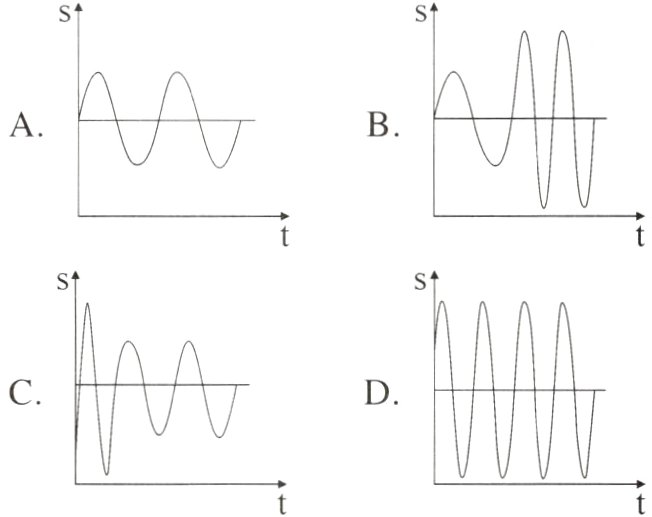
( )8. How did the volunteers help with the research?
A. By listening to the chicken calls.
B. By taking care of the chickens.
C. By finding food for the chickens.
D. By making the chickens happy.
( )9. What does the underlined word “identify” mean in Paragraph 4?
A. Control.
B. Hide.
C. Recognize.
D. Hurt.
( )10. 新考法 标题归纳 What is the best title for the text?
A. Chickens' Food Calls
B. Happy Chickens, Sad Chickens
C. Farmers' Best Choice
D. Smart Farmers, Healthy Farmers
People know animals do have feelings, but they are not sure if these feelings are correctly understood. In recent years, scientists have done research about the feelings of cows, frogs and pandas. ▲ It says that humans can tell whether a chicken is happy or sad by listening to its calls.
The researchers put a bowl behind a door. Inside the bowl, sometimes, there was something chickens love to eat, such as rice or insects. Sometimes, there was nothing. When the chickens saw food behind the door, they seemed happy and produced fast and loud sounds, known as food calls. When there wasn't food, the chickens made low and long noises to express disappointment. The researchers recorded all these sounds and studied their waves.
Then the researchers chose 16 recordings of such chicken noises. Half were from the chickens seeing the food and half were from the chickens finding no food. The recordings were played to 194 volunteers. Sixty - nine percent of the volunteers correctly understood whether the chickens were feeling happy or not, and some of them even had no experience of taking care of chickens.
The result shows that humans have the natural ability to understand the feelings of chickens. Hopefully, this finding can bring about new technology to help with chicken - raising, a big industry in many countries. Some scientists are already working on a smart computer program that can identify chickens' feelings. This is good news for farmers who want to make the birds happier and healthier.
( )6. 新考法 信息还原 Which of the following can be put in ▲ in Paragraph 1?
A. Humans may not like animals.
B. Scientists know nothing about it.
C. Nobody knows why this happens.
D. A new study adds chickens to the list.
( )7. 新考法 跨学科知识 Which is most probably the sound wave of a food call by a chicken?
( )8. How did the volunteers help with the research?
A. By listening to the chicken calls.
B. By taking care of the chickens.
C. By finding food for the chickens.
D. By making the chickens happy.
( )9. What does the underlined word “identify” mean in Paragraph 4?
A. Control.
B. Hide.
C. Recognize.
D. Hurt.
( )10. 新考法 标题归纳 What is the best title for the text?
A. Chickens' Food Calls
B. Happy Chickens, Sad Chickens
C. Farmers' Best Choice
D. Smart Farmers, Healthy Farmers
答案:
6-10 D D A C B
查看更多完整答案,请扫码查看

