

 搜索
搜索
第1页
- 第1页
- 第2页
- 第3页
- 第4页
- 第5页
- 第6页
- 第7页
- 第8页
- 第9页
- 第10页
- 第11页
- 第12页
- 第13页
- 第14页
- 第15页
- 第16页
- 第17页
- 第18页
- 第19页
- 第20页
- 第21页
- 第22页
- 第23页
- 第24页
- 第25页
- 第26页
- 第27页
- 第28页
- 第29页
- 第30页
- 第31页
- 第32页
- 第33页
- 第34页
- 第35页
- 第36页
- 第37页
- 第38页
- 第39页
- 第40页
- 第41页
- 第42页
- 第43页
- 第44页
- 第45页
- 第46页
- 第47页
- 第48页
- 第49页
- 第50页
- 第51页
- 第52页
- 第53页
- 第54页
- 第55页
- 第56页
- 第57页
- 第58页
- 第59页
- 第60页
- 第61页
- 第62页
- 第63页
- 第64页
- 第65页
- 第66页
- 第67页
- 第68页
- 第69页
- 第70页
- 第71页
- 第72页
- 第73页
- 第74页
- 第75页
- 第76页
- 第77页
- 第78页
- 第79页
- 第80页
Ⅰ.用括号内所给单词的适当形式填空。
1.(2024·龙东地区)It is ________(polite)to talk loudly in public places.
2. Bob and his friend are supposed ________(bow)when they meet in Japan.
3. Mrs. Brown ________(kiss)her daughter every night before she falls asleep.
4. People from Thailand never greet each other by ________(shake)hands, do they?
5. ________(final), they learned how to behave well when traveling to foreign countries.
6. China is ________(expect)to play a more important role in keeping the peace of the world.
7. I ________(greet)the teacher with “hello”, and the teacher gave me a sweet smile in return.
8.(2024·德阳中考改编)I won't go to Lucy's birthday party next Sunday unless I am ________(invite).
9. Almost every festival in China has its own activities which reflect Chinese traditions and ________(custom).
10. 河南人文 We bought a kind of delicious tea ________(call)Xinyang Maojian. People see it as the king of the green tea and it is one of the top ten famous teas in China.
1.(2024·龙东地区)It is ________(polite)to talk loudly in public places.
2. Bob and his friend are supposed ________(bow)when they meet in Japan.
3. Mrs. Brown ________(kiss)her daughter every night before she falls asleep.
4. People from Thailand never greet each other by ________(shake)hands, do they?
5. ________(final), they learned how to behave well when traveling to foreign countries.
6. China is ________(expect)to play a more important role in keeping the peace of the world.
7. I ________(greet)the teacher with “hello”, and the teacher gave me a sweet smile in return.
8.(2024·德阳中考改编)I won't go to Lucy's birthday party next Sunday unless I am ________(invite).
9. Almost every festival in China has its own activities which reflect Chinese traditions and ________(custom).
10. 河南人文 We bought a kind of delicious tea ________(call)Xinyang Maojian. People see it as the king of the green tea and it is one of the top ten famous teas in China.
答案:
1.impolite 2.to bow 3.kisses 4.shaking 5.Finally 6.expected 7.greeted 8.invited 9.customs 10.called
Ⅱ.根据句子要求填空,使句子通顺、意思完整。每空限填一词。
11. Maria arrived late for the party yesterday. ________ about you?
12. ________ my surprise, such a little girl can draw so many beautiful pictures.
13. Li Lei, what should I do when I meet someone ________ the first time in China?
14. Cindy made a survey to find ________ how many cities have hosted the Olympic Games.
15. Ben is tired of doing ________ same thing all the time. He plans to try something new.
11. Maria arrived late for the party yesterday. ________ about you?
12. ________ my surprise, such a little girl can draw so many beautiful pictures.
13. Li Lei, what should I do when I meet someone ________ the first time in China?
14. Cindy made a survey to find ________ how many cities have hosted the Olympic Games.
15. Ben is tired of doing ________ same thing all the time. He plans to try something new.
答案:
11.How/What 12.To 13.for 14.out 15.the
Ⅲ.根据汉语意思完成句子,每空一词。
16. 我们在使用英语时犯错误是很正常的。It's normal for us to ________ ________ while using English.
17. 当我遇到麻烦的时候,他们总向我伸出友谊之手。They always ________ ________ the hand of friendship to me when I am in trouble.
18. 那就是我们在国外用餐时应有的举止方式。________ ________ we should behave in a foreign country when we have meals.
19. 在韩国,人们第一次见面时应该做什么?What ________ people in South Korea ________ ________ do when they meet for the first time?
20. 我一完成作业就帮妈妈做家务。I'll help my mother with the housework ________ ________ ________ I complete my homework.
16. 我们在使用英语时犯错误是很正常的。It's normal for us to ________ ________ while using English.
17. 当我遇到麻烦的时候,他们总向我伸出友谊之手。They always ________ ________ the hand of friendship to me when I am in trouble.
18. 那就是我们在国外用餐时应有的举止方式。________ ________ we should behave in a foreign country when we have meals.
19. 在韩国,人们第一次见面时应该做什么?What ________ people in South Korea ________ ________ do when they meet for the first time?
20. 我一完成作业就帮妈妈做家务。I'll help my mother with the housework ________ ________ ________ I complete my homework.
答案:
16.make mistakes 17.hold out 18.That’s how 19.are; supposed/expected to 20.as soon as
Ⅳ.阅读理解。
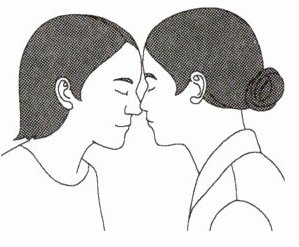
Different countries have different customs. Something that is polite in one country may be quite impolite in another. When two people meet for the first time, there are a lot of ways of greeting. The ways of greeting are not always the same in different countries.
In America, two people usually greet each other with a handshake. It is a way to show respect to the other person. Sports players from opposite teams shake hands before a game for the same reason. However, most Americans don't shake hands when they meet people they have already known well. When American friends meet each other, they might only wave or maybe just nod their heads.
In New Zealand, there is a special way of greeting called “Hongi”. In the greeting, two people press their noses and foreheads together and close their eyes. This is an old tradition that comes from the Maori, who were the first people to live in New Zealand. Even today, many New Zealanders still press their foreheads when they meet.
Kissing is sometimes used as a way to greet someone. In some countries, important people used to wear special rings. It was the custom for visitors to kiss these rings when they came for a meeting. In France, when people meet, they sometimes kiss each other on the face.
In Japan, people bow to each other every time they meet. Even family members bow to each other. People decide how low to bow depending on how respected the other person is.
Today, new ways of greeting are created all the time. People can do this with a quick “hi”, a handshake, or even a simple smile. The important thing is that the people they are greeting understand each other.
( )21. What does the underlined part “the same reason” refer to?
A. Showing love.
B. Showing respect.
C. Thanking each other.
D. Introducing each other.
( )22. What can we learn from the third paragraph?
A. It's impolite to press one's nose in New Zealand.
B. “Hongi” is a kind of traditional food in New Zealand.
C. The Maori used to be an old village in New Zealand.
D. “Hongi” is an old tradition in New Zealand.
( )23. How low do Japanese bow to each other?
A. It depends on how successful the other person is.
B. It depends on how old the other person is.
C. It depends on how respected the other person is.
D. It depends on how tall the other person is.
( )24. Which of the following is TRUE according to the text?
A. It is impolite to just nod heads when American friends meet.
B. Family members in Japan don't bow to each other.
C. In some countries rings were once used for kissing.
D. The ways of greeting never change over time.
( )25. 新考法 标题归纳 What is the best title for the text?
A. Different Ways of Greeting
B. How to Be a Polite Person
C. How to Show Respect to Others
D. Ways of Saying Hello in Different Cultures
Different countries have different customs. Something that is polite in one country may be quite impolite in another. When two people meet for the first time, there are a lot of ways of greeting. The ways of greeting are not always the same in different countries.
In America, two people usually greet each other with a handshake. It is a way to show respect to the other person. Sports players from opposite teams shake hands before a game for the same reason. However, most Americans don't shake hands when they meet people they have already known well. When American friends meet each other, they might only wave or maybe just nod their heads.
In New Zealand, there is a special way of greeting called “Hongi”. In the greeting, two people press their noses and foreheads together and close their eyes. This is an old tradition that comes from the Maori, who were the first people to live in New Zealand. Even today, many New Zealanders still press their foreheads when they meet.
Kissing is sometimes used as a way to greet someone. In some countries, important people used to wear special rings. It was the custom for visitors to kiss these rings when they came for a meeting. In France, when people meet, they sometimes kiss each other on the face.
In Japan, people bow to each other every time they meet. Even family members bow to each other. People decide how low to bow depending on how respected the other person is.
Today, new ways of greeting are created all the time. People can do this with a quick “hi”, a handshake, or even a simple smile. The important thing is that the people they are greeting understand each other.
( )21. What does the underlined part “the same reason” refer to?
A. Showing love.
B. Showing respect.
C. Thanking each other.
D. Introducing each other.
( )22. What can we learn from the third paragraph?
A. It's impolite to press one's nose in New Zealand.
B. “Hongi” is a kind of traditional food in New Zealand.
C. The Maori used to be an old village in New Zealand.
D. “Hongi” is an old tradition in New Zealand.
( )23. How low do Japanese bow to each other?
A. It depends on how successful the other person is.
B. It depends on how old the other person is.
C. It depends on how respected the other person is.
D. It depends on how tall the other person is.
( )24. Which of the following is TRUE according to the text?
A. It is impolite to just nod heads when American friends meet.
B. Family members in Japan don't bow to each other.
C. In some countries rings were once used for kissing.
D. The ways of greeting never change over time.
( )25. 新考法 标题归纳 What is the best title for the text?
A. Different Ways of Greeting
B. How to Be a Polite Person
C. How to Show Respect to Others
D. Ways of Saying Hello in Different Cultures
答案:
21 - 25 B D C C A
Ⅴ.根据下面的对话情景,在每个空白处填上一个适当的句子,使对话的意思连贯、完整。
A:Hello, Wang Ting!
B:Hello, David.
A:Are you free tomorrow afternoon?
B:26. ________. I'm going to meet Sarah at the airport tomorrow afternoon.
A:27. ________?
B:She is my pen pal.
A:28. ________?
B:I'm supposed to shake hands with her when I see her.
A:29. ________?
B:She is from Japan.
A:Well, you know, Japanese people usually bow when they meet.
B:Really? I don't know that.
A:People do different things in different countries.
B:That's interesting! 30. ________?
A:Yes, you are. I think you are supposed to do that.
A:Hello, Wang Ting!
B:Hello, David.
A:Are you free tomorrow afternoon?
B:26. ________. I'm going to meet Sarah at the airport tomorrow afternoon.
A:27. ________?
B:She is my pen pal.
A:28. ________?
B:I'm supposed to shake hands with her when I see her.
A:29. ________?
B:She is from Japan.
A:Well, you know, Japanese people usually bow when they meet.
B:Really? I don't know that.
A:People do different things in different countries.
B:That's interesting! 30. ________?
A:Yes, you are. I think you are supposed to do that.
答案:
26.No, I’m not (free) 27.Who is Sarah/she 28.What are you supposed to do when you see her 29.Where is she from/Where does she come from 30.Am I supposed to bow to her
查看更多完整答案,请扫码查看

