

 搜索
搜索
第91页
- 第2页
- 第3页
- 第4页
- 第5页
- 第6页
- 第7页
- 第8页
- 第9页
- 第10页
- 第11页
- 第12页
- 第13页
- 第14页
- 第15页
- 第16页
- 第17页
- 第18页
- 第19页
- 第20页
- 第21页
- 第22页
- 第23页
- 第24页
- 第25页
- 第26页
- 第27页
- 第28页
- 第29页
- 第30页
- 第31页
- 第32页
- 第33页
- 第34页
- 第35页
- 第36页
- 第37页
- 第38页
- 第39页
- 第40页
- 第41页
- 第42页
- 第43页
- 第44页
- 第45页
- 第46页
- 第47页
- 第48页
- 第49页
- 第50页
- 第51页
- 第52页
- 第53页
- 第54页
- 第55页
- 第56页
- 第57页
- 第58页
- 第59页
- 第60页
- 第61页
- 第62页
- 第63页
- 第64页
- 第65页
- 第66页
- 第67页
- 第68页
- 第69页
- 第70页
- 第71页
- 第72页
- 第73页
- 第74页
- 第75页
- 第76页
- 第77页
- 第78页
- 第79页
- 第80页
- 第81页
- 第82页
- 第83页
- 第84页
- 第85页
- 第86页
- 第87页
- 第88页
- 第89页
- 第90页
- 第91页
- 第92页
- 第93页
- 第94页
- 第95页
- 第96页
- 第97页
- 第98页
- 第99页
- 第100页
- 第101页
- 第102页
- 第103页
- 第104页
- 第105页
- 第106页
- 第107页
- 第108页
- 第109页
- 第110页
- 第111页
- 第112页
- 第113页
- 第114页
- 第115页
- 第116页
( )10. What does the man really mean?
A. He fell off his horse.
B. His horse was polite.
C. His horse crossed the fence (栅栏).
A. He fell off his horse.
B. His horse was polite.
C. His horse crossed the fence (栅栏).
答案:
A
听一段对话,回答第11—12小题。答题完毕,请等待“嘀”的信号,进入第一篇短文。
( )11. What is the conversation mainly about?
A. Birthday wishes.
B. Western customs (风俗).
C. Different customs.
( )12. Why does Yanyan accept the gift with both hands?
A. To show her politeness and thanks.
B. To introduce a Chinese custom.
C. To express her surprise.
( )11. What is the conversation mainly about?
A. Birthday wishes.
B. Western customs (风俗).
C. Different customs.
( )12. Why does Yanyan accept the gift with both hands?
A. To show her politeness and thanks.
B. To introduce a Chinese custom.
C. To express her surprise.
答案:
11—12 CAC
听第一篇短文,回答第13—15小题。请根据短文内容,选择正确答案,完成信息记录表。答题完毕,请等待“嘀”的信号,进入下一篇短文。
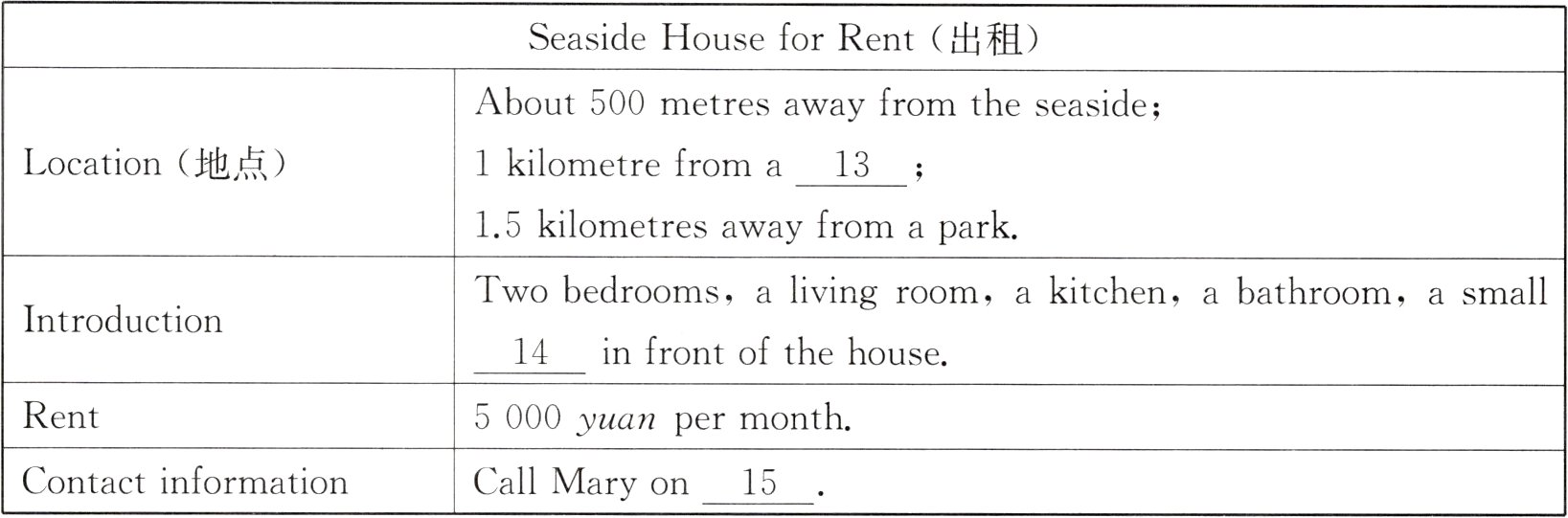
( )13. A. hospital
B. police station
C. supermarket
( )14. A. garden
B. swimming pool
C. forest
( )15. A. 678-5542
B. 658-7742
C. 658-7542
( )13. A. hospital
B. police station
C. supermarket
( )14. A. garden
B. swimming pool
C. forest
( )15. A. 678-5542
B. 658-7742
C. 658-7542
答案:
13—15 CAB
听第二篇短文,回答第16—20小题。
( )16. Why should you listen to the other person carefully?
A. To know about movies.
B. To understand examples.
C. To ask him questions.
( )17. Which is the best answer to a “no” question?
A. No.
B. Never.
C. No, but...
( )18. How should you speak if your pronunciation is a little different?
A. Slowly.
B. Loudly.
C. Freely.
( )19. What should you do when you travel in English - speaking countries?
A. Get a map.
B. Speak in English.
C. Ask friends for help.
( )20. What is the speaker talking about?
A. How to make trips exciting.
B. How to practise your pronunciation.
C. How to keep an English conversation going.
( )16. Why should you listen to the other person carefully?
A. To know about movies.
B. To understand examples.
C. To ask him questions.
( )17. Which is the best answer to a “no” question?
A. No.
B. Never.
C. No, but...
( )18. How should you speak if your pronunciation is a little different?
A. Slowly.
B. Loudly.
C. Freely.
( )19. What should you do when you travel in English - speaking countries?
A. Get a map.
B. Speak in English.
C. Ask friends for help.
( )20. What is the speaker talking about?
A. How to make trips exciting.
B. How to practise your pronunciation.
C. How to keep an English conversation going.
答案:
16—20 CCABC
查看更多完整答案,请扫码查看

