

 搜索
搜索
第34页
- 第1页
- 第2页
- 第3页
- 第4页
- 第5页
- 第6页
- 第7页
- 第8页
- 第9页
- 第10页
- 第11页
- 第12页
- 第13页
- 第14页
- 第15页
- 第16页
- 第17页
- 第18页
- 第19页
- 第20页
- 第21页
- 第22页
- 第23页
- 第24页
- 第25页
- 第26页
- 第27页
- 第28页
- 第29页
- 第30页
- 第31页
- 第32页
- 第33页
- 第34页
- 第35页
- 第36页
- 第37页
- 第38页
- 第39页
- 第40页
- 第41页
- 第42页
- 第43页
- 第44页
- 第45页
- 第46页
- 第47页
- 第48页
- 第49页
- 第50页
- 第51页
- 第52页
- 第53页
- 第54页
- 第55页
- 第56页
- 第57页
- 第58页
- 第59页
- 第60页
- 第61页
- 第62页
- 第63页
- 第64页
- 第65页
- 第66页
- 第67页
- 第68页
- 第69页
- 第70页
- 第71页
- 第72页
- 第73页
- 第74页
- 第75页
- 第76页
- 第77页
- 第78页
- 第79页
- 第80页
- 第81页
- 第82页
跨地理·天气预报(2024四川成都中考改编)
根据短文内容,完成图表中所缺信息。
Humans have long tried to predict(预测)the weather. From the hunters of ancient times to today’s pilots, predicting rain or shine can shape people’s life and make a difference.
At about 650 BC, the Babylonians tried to predict the weather based on the appearance of clouds. Around 340 BC, Aristotle, a famous Greek thinker and scientist, wrote *Meteorologica*. It introduced the types of weather, such as rain, cloud and lightning. Aristotle believed that there was earth, water, air and fire around the Earth. It was almost 2, 000 years before his ideas were replaced by new ones.
By about 300 BC in China, a calendar divided the year into 24 solar terms gradually; each solar term related to a type of weather, like the Rain Water (the start of the spring rains), the Waking of Insects ( the spring thunder awakens sleeping insects ) and so on. That was useful for farmers to plan when to plant and harvest (收获).
People used lots of ways to predict the weather over the centuries. You might have heard the expressions like “Red sky at night, sailor’s delight”, which suggests a red sky in the evening is followed by good weather. This has a basis in science, as does telling wind direction through smoke from the fire. On the other hand, some thought that if sheep crowded together, it meant rain. But there isn’t any science behind it.
The science of weather prediction really took off in the 1830s with the invention of the telegraph. It sent messages over hundreds of thousands of miles, so weather maps were drawn up and storm systems were studied. The next big step came in the 1920s with the invention of the “radiosonde”, a balloon carrying weather instruments high above the ground to collect information. Experts took the information and built a picture of the weather over the following few days.
Today, supercomputers are used to take data (数据) from the world and process it very fast to work out the weather. For example, they once helped predict where Hurricane Lee, which hit the US and Canada, would land nine days in advance (提前).
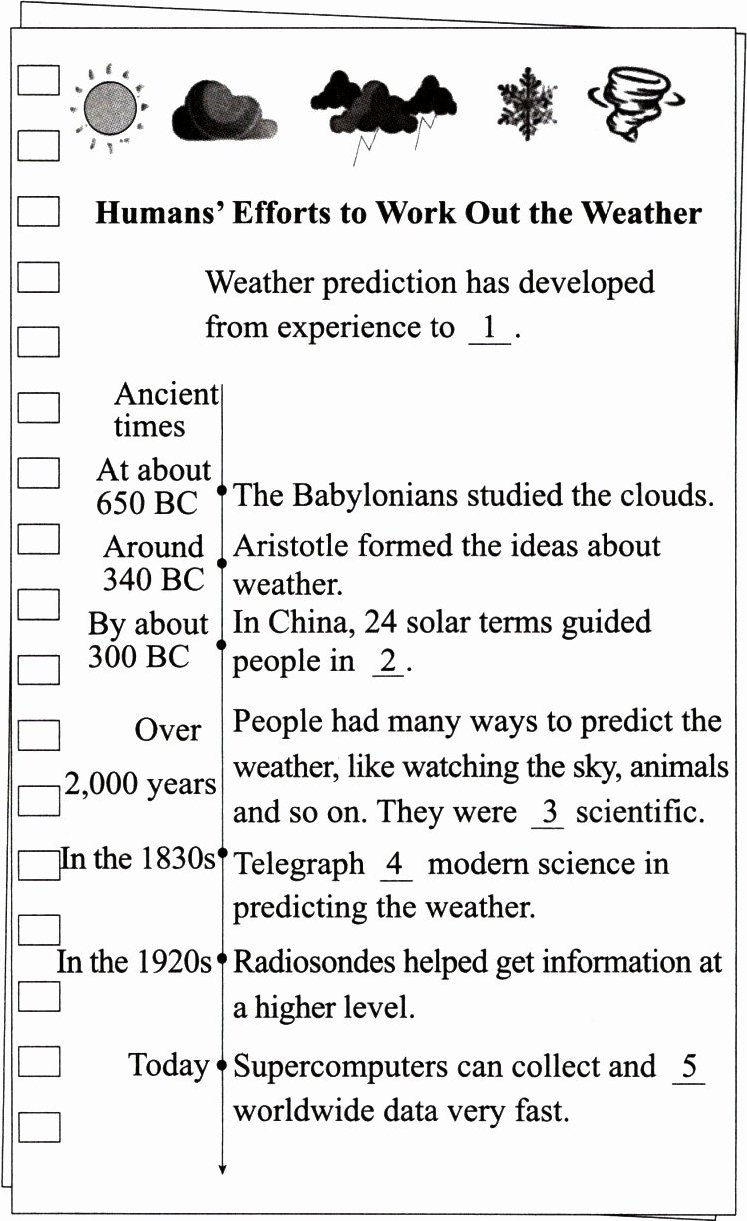
1. ________ 2. ________ 3. ________ 4. ________ 5. ________
根据短文内容,完成图表中所缺信息。
Humans have long tried to predict(预测)the weather. From the hunters of ancient times to today’s pilots, predicting rain or shine can shape people’s life and make a difference.
At about 650 BC, the Babylonians tried to predict the weather based on the appearance of clouds. Around 340 BC, Aristotle, a famous Greek thinker and scientist, wrote *Meteorologica*. It introduced the types of weather, such as rain, cloud and lightning. Aristotle believed that there was earth, water, air and fire around the Earth. It was almost 2, 000 years before his ideas were replaced by new ones.
By about 300 BC in China, a calendar divided the year into 24 solar terms gradually; each solar term related to a type of weather, like the Rain Water (the start of the spring rains), the Waking of Insects ( the spring thunder awakens sleeping insects ) and so on. That was useful for farmers to plan when to plant and harvest (收获).
People used lots of ways to predict the weather over the centuries. You might have heard the expressions like “Red sky at night, sailor’s delight”, which suggests a red sky in the evening is followed by good weather. This has a basis in science, as does telling wind direction through smoke from the fire. On the other hand, some thought that if sheep crowded together, it meant rain. But there isn’t any science behind it.
The science of weather prediction really took off in the 1830s with the invention of the telegraph. It sent messages over hundreds of thousands of miles, so weather maps were drawn up and storm systems were studied. The next big step came in the 1920s with the invention of the “radiosonde”, a balloon carrying weather instruments high above the ground to collect information. Experts took the information and built a picture of the weather over the following few days.
Today, supercomputers are used to take data (数据) from the world and process it very fast to work out the weather. For example, they once helped predict where Hurricane Lee, which hit the US and Canada, would land nine days in advance (提前).
1. ________ 2. ________ 3. ________ 4. ________ 5. ________
答案:
1. science;2. farming;3. partly;4. used;5. process
查看更多完整答案,请扫码查看

