

 搜索
搜索
第48页
- 第1页
- 第2页
- 第3页
- 第4页
- 第5页
- 第6页
- 第7页
- 第8页
- 第9页
- 第10页
- 第11页
- 第12页
- 第13页
- 第14页
- 第15页
- 第16页
- 第17页
- 第18页
- 第19页
- 第20页
- 第21页
- 第22页
- 第23页
- 第24页
- 第25页
- 第26页
- 第27页
- 第28页
- 第29页
- 第30页
- 第31页
- 第32页
- 第33页
- 第34页
- 第35页
- 第36页
- 第37页
- 第38页
- 第39页
- 第40页
- 第41页
- 第42页
- 第43页
- 第44页
- 第45页
- 第46页
- 第47页
- 第48页
- 第49页
- 第50页
- 第51页
- 第52页
- 第53页
- 第54页
- 第55页
- 第56页
- 第57页
- 第58页
- 第59页
- 第60页
- 第61页
- 第62页
- 第63页
- 第64页
- 第65页
- 第66页
- 第67页
- 第68页
- 第69页
- 第70页
- 第71页
- 第72页
- 第73页
- 第74页
- 第75页
- 第76页
- 第77页
- 第78页
- 第79页
- 第80页
- 第81页
- 第82页
- 第83页
- 第84页
- 第85页
- 第86页
- 第87页
- 第88页
- 第89页
- 第90页
- 第91页
- 第92页
- 第93页
- 第94页
- 第95页
- 第96页
- 第97页
- 第98页
- 第99页
- 第100页
- 第101页
- 第102页
- 第103页
- 第104页
- 第105页
- 第106页
- 第107页
- 第108页
- 第109页
- 第110页
- 第111页
- 第112页
- 第113页
- 第114页
- 第115页
- 第116页
- 第117页
- 第118页
- 第119页
- 第120页
- 第121页
- 第122页
- 第123页
- 第124页
- 第125页
第二部分 听对话和短文答题(听两遍)
答案:
由于您未提供具体的听力题目内容(如问题、选项、听力材料等),无法进行解答。请您补充完整题目信息,以便我按照要求为您提供解析和答案。
听一段对话,回答第6—7小题。
( ) 6. What language is Jack going to learn?
A. Japanese.
B. English.
C. Chinese.
( ) 7. How long are the lessons for young learners?
A. Three months.
B. Half a year.
C. One year.
( ) 6. What language is Jack going to learn?
A. Japanese.
B. English.
C. Chinese.
( ) 7. How long are the lessons for young learners?
A. Three months.
B. Half a year.
C. One year.
答案:
6. C 7. A
听一篇短文,回答第8—10小题,完成信息记录表。
| Tips on how to learn a foreign language well |
| Don't be afraid of making mistakes. | People sometimes get things 8. |
| Enjoy learning the language. | A good learner 9 with the language. |
| Keep learning the language outside the 10. | You can pick up useful words and phrases in a street, or read some materials out loud at home. |
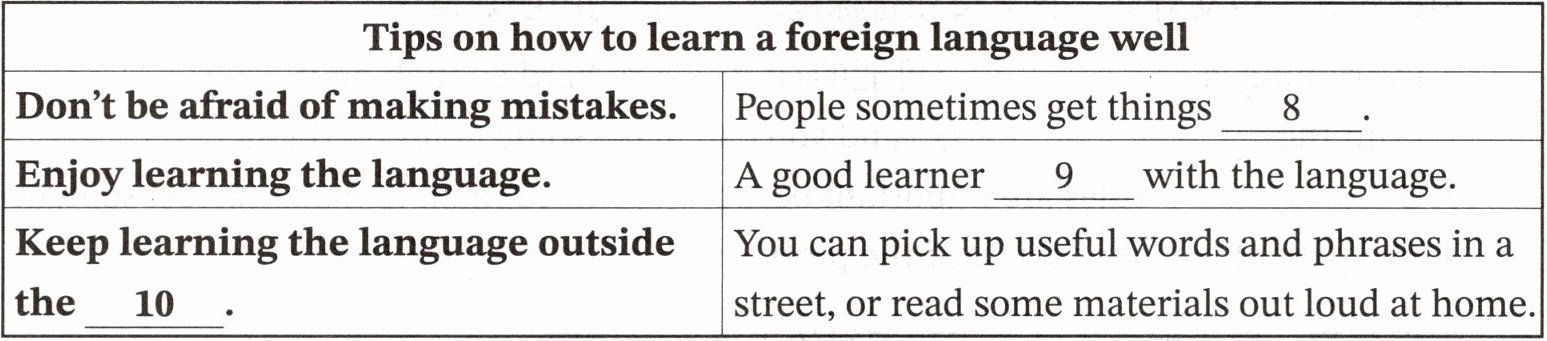
( ) 8. A. right
B. quickly
C. wrong
( ) 9. A. gets bored
B. has fun
C. feels happy
( ) 10. A. classroom
B. home
C. school
| Tips on how to learn a foreign language well |
| Don't be afraid of making mistakes. | People sometimes get things 8. |
| Enjoy learning the language. | A good learner 9 with the language. |
| Keep learning the language outside the 10. | You can pick up useful words and phrases in a street, or read some materials out loud at home. |
( ) 8. A. right
B. quickly
C. wrong
( ) 9. A. gets bored
B. has fun
C. feels happy
( ) 10. A. classroom
B. home
C. school
答案:
8. C
9. B
10. A
9. B
10. A
阅读短文,在空格处填入一个适当的单词或括号中单词的正确形式。
People get started to learn languages young or old. Most people think that the older you get, the (1) ______ (hard) it is to learn a new language. (2) ______ this way, at some point in our lives, maybe around age 12 or 13, we lose the ability to learn languages well. Is this idea a fact?
(3) ______ (science) did plenty of research studies which show a different opinion. One report on 2,000 (4) ______ (Italy) studying Swedish showed that quite a few adults (成年人) learnt more but they used less time (5) ______ the younger children. There are several possible explanations (解释) for these findings. For one thing, adults can understand the (6) ______ (mean) of different words better than children. Moreover, adults can use logical (逻辑的) thinking to help (7) ______ (they) see the patterns in the language. Third, adults have more self - discipline (自律) than children. They deeply understand the (8) ______ (important) of learning a new language.
All in all, it seems that the common (普遍的) idea that children are better language learners than adults may not be true.
People get started to learn languages young or old. Most people think that the older you get, the (1) ______ (hard) it is to learn a new language. (2) ______ this way, at some point in our lives, maybe around age 12 or 13, we lose the ability to learn languages well. Is this idea a fact?
(3) ______ (science) did plenty of research studies which show a different opinion. One report on 2,000 (4) ______ (Italy) studying Swedish showed that quite a few adults (成年人) learnt more but they used less time (5) ______ the younger children. There are several possible explanations (解释) for these findings. For one thing, adults can understand the (6) ______ (mean) of different words better than children. Moreover, adults can use logical (逻辑的) thinking to help (7) ______ (they) see the patterns in the language. Third, adults have more self - discipline (自律) than children. They deeply understand the (8) ______ (important) of learning a new language.
All in all, it seems that the common (普遍的) idea that children are better language learners than adults may not be true.
答案:
(1) harder
(2) In
(3) Scientists
(4) Italians
(5) than
(6) meanings
(7) themselves
(8) importance
(1) harder
(2) In
(3) Scientists
(4) Italians
(5) than
(6) meanings
(7) themselves
(8) importance
查看更多完整答案,请扫码查看

