

 搜索
搜索
第47页
- 第1页
- 第2页
- 第3页
- 第4页
- 第5页
- 第6页
- 第7页
- 第8页
- 第9页
- 第10页
- 第11页
- 第12页
- 第13页
- 第14页
- 第15页
- 第16页
- 第17页
- 第18页
- 第19页
- 第20页
- 第21页
- 第22页
- 第23页
- 第24页
- 第25页
- 第26页
- 第27页
- 第28页
- 第29页
- 第30页
- 第31页
- 第32页
- 第33页
- 第34页
- 第35页
- 第36页
- 第37页
- 第38页
- 第39页
- 第40页
- 第41页
- 第42页
- 第43页
- 第44页
- 第45页
- 第46页
- 第47页
- 第48页
- 第49页
- 第50页
- 第51页
- 第52页
- 第53页
- 第54页
- 第55页
- 第56页
- 第57页
- 第58页
- 第59页
- 第60页
- 第61页
- 第62页
- 第63页
- 第64页
- 第65页
- 第66页
- 第67页
- 第68页
- 第69页
- 第70页
- 第71页
- 第72页
- 第73页
- 第74页
- 第75页
- 第76页
- 第77页
- 第78页
- 第79页
- 第80页
- 第81页
- 第82页
- 第83页
- 第84页
- 第85页
- 第86页
- 第87页
- 第88页
- 第89页
- 第90页
- 第91页
- 第92页
- 第93页
- 第94页
- 第95页
- 第96页
- 第97页
- 第98页
- 第99页
- 第100页
- 第101页
- 第102页
- 第103页
- 第104页
- 第105页
- 第106页
- 第107页
- 第108页
- 第109页
- 第110页
- 第111页
- 第112页
1. compare
【感知】
- How do we compare with each other?(教材第 21 页)我们如何比较彼此?
- Parents always compare their own children with other children. 父母总是将自己的孩子与其他孩子比较。
- We usually compare books to friends. 我们通常会将书籍比作朋友。
【探究】
(1)compare 动词,意为“
(2)compare... with...与 compare... to...的用法辨析
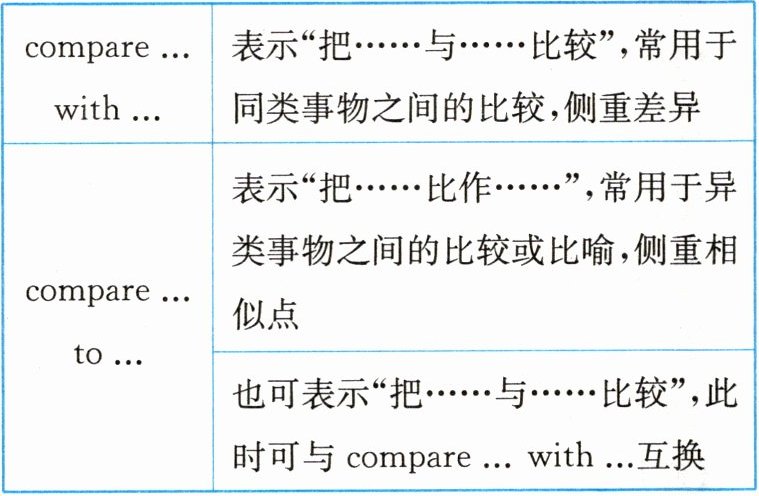
【应用】
完成句子
① 我父母常常把我比作温室里的花朵。
My parents often
② 别拿你的优点和别人的缺点比较。
Don’t
【感知】
- How do we compare with each other?(教材第 21 页)我们如何比较彼此?
- Parents always compare their own children with other children. 父母总是将自己的孩子与其他孩子比较。
- We usually compare books to friends. 我们通常会将书籍比作朋友。
【探究】
(1)compare 动词,意为“
比较;对比
”,常与介词 with / to 搭配使用。(2)compare... with...与 compare... to...的用法辨析
【应用】
完成句子
① 我父母常常把我比作温室里的花朵。
My parents often
compare
me to
a flower in the greenhouse.② 别拿你的优点和别人的缺点比较。
Don’t
compare
your advantages with
others’ disadvantages.
答案:
[探究]
(1)比较;对比
[应用]①compare; to ②compare; with
(1)比较;对比
[应用]①compare; to ②compare; with
2. as... as...
【感知】
- I work as hard as her!(教材第 23 页)我和她一样努力!
- She is as tall as me. 她和我一样高。
- I’m not as / so outgoing as her. 我不像她那样外向。
【探究】
as... as... 意为“像……一样……”,中间用形容词或副词的
【应用】
① 用所给单词的适当形式填空:To let others understand you easily, it’s better to speak as
② 改为否定句:Jack is as tall as Tom.
Jack isn’t
【感知】
- I work as hard as her!(教材第 23 页)我和她一样努力!
- She is as tall as me. 她和我一样高。
- I’m not as / so outgoing as her. 我不像她那样外向。
【探究】
as... as... 意为“像……一样……”,中间用形容词或副词的
原级
。其否定形式为not as / so ... as ...
,意为“不如……;不像……一样……”。【应用】
① 用所给单词的适当形式填空:To let others understand you easily, it’s better to speak as
clearly
(clear) as you can.② 改为否定句:Jack is as tall as Tom.
Jack isn’t
as / so tall as
Tom.
答案:
[探究]原级;not as / so ... as ...
[应用]①clearly ②as / so tall as
[应用]①clearly ②as / so tall as
3. population
【感知】
- The population of China is much larger than that of the US. 中国的人口比美国多得多。
- Its population is about triple that of Venice. 它的人口大约是威尼斯的三倍。
- What’s the population of your hometown? 你家乡的人口是多少?
- Three fifths of the population here is / are old people. 这里五分之三的人口是老年人。
【探究】
(1)population 名词,意为“人口”,作主语时,谓语动词常用
(2)询问人口数量时,用句型“
(3)population 前如果有分数、百分数修饰,谓语动词常用
【应用】
① 对画线部分提问:The population of the town is about 250,000.
② 用所给单词的适当形式填空:The population of Shanghai
【感知】
- The population of China is much larger than that of the US. 中国的人口比美国多得多。
- Its population is about triple that of Venice. 它的人口大约是威尼斯的三倍。
- What’s the population of your hometown? 你家乡的人口是多少?
- Three fifths of the population here is / are old people. 这里五分之三的人口是老年人。
【探究】
(1)population 名词,意为“人口”,作主语时,谓语动词常用
单数
形式。表示人口“多”或“少”时,常用 big / large 或 small,而不用 much / many 或 little / few。(2)询问人口数量时,用句型“
What's the population of ...?
”。(3)population 前如果有分数、百分数修饰,谓语动词常用
单数
形式(强调整体),但强调个体成员时可用复数形式。【应用】
① 对画线部分提问:The population of the town is about 250,000.
What
is
the population of the town?② 用所给单词的适当形式填空:The population of Shanghai
is
(be) larger than that of many other cities in China.
答案:
[探究]
(1)单数
(2)What's the population of ...?
(3)单数
[应用]①What is ②is
(1)单数
(2)What's the population of ...?
(3)单数
[应用]①What is ②is
查看更多完整答案,请扫码查看

