

 搜索
搜索
第60页
- 第1页
- 第2页
- 第3页
- 第4页
- 第5页
- 第6页
- 第7页
- 第8页
- 第9页
- 第10页
- 第11页
- 第12页
- 第13页
- 第14页
- 第15页
- 第16页
- 第17页
- 第18页
- 第19页
- 第20页
- 第21页
- 第22页
- 第23页
- 第24页
- 第25页
- 第26页
- 第27页
- 第28页
- 第29页
- 第30页
- 第31页
- 第32页
- 第33页
- 第34页
- 第35页
- 第36页
- 第37页
- 第38页
- 第39页
- 第40页
- 第41页
- 第42页
- 第43页
- 第44页
- 第45页
- 第46页
- 第47页
- 第48页
- 第49页
- 第50页
- 第51页
- 第52页
- 第53页
- 第54页
- 第55页
- 第56页
- 第57页
- 第58页
- 第59页
- 第60页
- 第61页
- 第62页
- 第63页
- 第64页
- 第65页
- 第66页
- 第67页
- 第68页
- 第69页
- 第70页
- 第71页
- 第72页
- 第73页
- 第74页
- 第75页
- 第76页
- 第77页
- 第78页
- 第79页
- 第80页
- 第81页
- 第82页
- 第83页
- 第84页
- 第85页
- 第86页
- 第87页
- 第88页
- 第89页
- 第90页
- 第91页
- 第92页
- 第93页
- 第94页
- 第95页
- 第96页
- 第97页
- 第98页
- 第99页
- 第100页
- 第101页
- 第102页
- 第103页
- 第104页
Ⅴ. 补全对话。
根据下面的对话情景,在空白处填入一个适当的句子,使对话的意思连贯、完整。
A: Hey, Li Ming! I know you are good at using DeepSeek. 27.
B: Yes, it is quite useful in English learning.
A: What do you usually use it for in English?
B: 28.
A: 29.
B: Yes, it can help us with English writing. It points out grammar mistakes clearly. And I even use it to help with my English speaking.
A: Oh? 30.
B: It has a lot of useful functions (功能) for speaking practice. With the help of DeepSeek, you will have better pronunciation.
A: 31.
B: Yeah, it can really build up your confidence. I believe it will be a great helper to you.
A: Oh, I can't wait to use it now!
根据下面的对话情景,在空白处填入一个适当的句子,使对话的意思连贯、完整。
A: Hey, Li Ming! I know you are good at using DeepSeek. 27.
Is DeepSeek useful in English learning?
B: Yes, it is quite useful in English learning.
A: What do you usually use it for in English?
B: 28.
I usually use it to learn new words.
It gives me interesting ways to remember new words.A: 29.
Can it help us with English writing?
B: Yes, it can help us with English writing. It points out grammar mistakes clearly. And I even use it to help with my English speaking.
A: Oh? 30.
How does it help with your English speaking?
B: It has a lot of useful functions (功能) for speaking practice. With the help of DeepSeek, you will have better pronunciation.
A: 31.
Sounds great. /That's good.
I must try that. I'm always nervous when speaking English.B: Yeah, it can really build up your confidence. I believe it will be a great helper to you.
A: Oh, I can't wait to use it now!
答案:
27. Is DeepSeek useful in English learning? 28. I usually use it to learn new words. 29. Can it help us with English writing? 30. How does it help with your English speaking? 31. Sounds great. /That's good.
Task 1: Do a survey about different types of learners and fill in the chart.
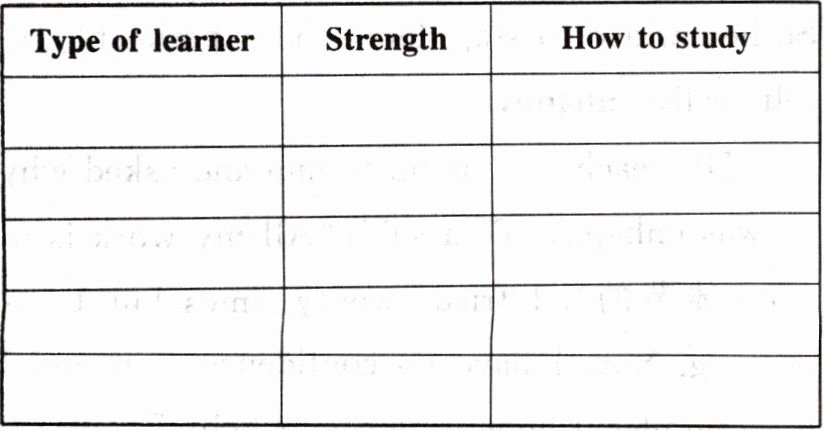
Task 2: Based on the survey result, talk about how to improve yourself to be a better learner.
___
___
___
___
Task 2: Based on the survey result, talk about how to improve yourself to be a better learner.
___
___
___
___
答案:
1. **Task 1**:
Visual Learner**:
Strength**: Good at remembering information through images, diagrams, and visual aids.
How to study**: Use flashcards with pictures, create mind - maps, watch educational videos.
Auditory Learner**:
Strength**: Good at remembering information through listening.
How to study**: Listen to podcasts, record lectures and listen to them again, have discussions.
Kinesthetic Learner**:
Strength**: Good at learning through doing and moving.
How to study**: Do experiments, role - play, use hands - on activities.
Reading/Writing Learner**:
Strength**: Good at understanding and remembering information through reading and writing.
How to study**: Take detailed notes, write summaries, read textbooks and articles.
2. **Task 2**:
If I am a visual learner, I can improve myself by using more online educational resources with visual elements. For example, when learning a new concept in science, I can search for 3D animations of scientific processes.
If I am an auditory learner, I can join study groups where we can discuss topics aloud. Also, I can use language learning apps that have audio lessons for better language acquisition.
If I am a kinesthetic learner, I can participate in more laboratory courses (if applicable) or even create my own small - scale experiments at home. For example, in math, I can use physical objects to model geometric shapes.
If I am a reading/writing learner, I can start a study blog. By writing about what I learn, I can not only reinforce my knowledge but also get feedback from others. I can also read more widely, not just textbooks, but also related non - fiction books to expand my understanding.
Visual Learner**:
Strength**: Good at remembering information through images, diagrams, and visual aids.
How to study**: Use flashcards with pictures, create mind - maps, watch educational videos.
Auditory Learner**:
Strength**: Good at remembering information through listening.
How to study**: Listen to podcasts, record lectures and listen to them again, have discussions.
Kinesthetic Learner**:
Strength**: Good at learning through doing and moving.
How to study**: Do experiments, role - play, use hands - on activities.
Reading/Writing Learner**:
Strength**: Good at understanding and remembering information through reading and writing.
How to study**: Take detailed notes, write summaries, read textbooks and articles.
2. **Task 2**:
If I am a visual learner, I can improve myself by using more online educational resources with visual elements. For example, when learning a new concept in science, I can search for 3D animations of scientific processes.
If I am an auditory learner, I can join study groups where we can discuss topics aloud. Also, I can use language learning apps that have audio lessons for better language acquisition.
If I am a kinesthetic learner, I can participate in more laboratory courses (if applicable) or even create my own small - scale experiments at home. For example, in math, I can use physical objects to model geometric shapes.
If I am a reading/writing learner, I can start a study blog. By writing about what I learn, I can not only reinforce my knowledge but also get feedback from others. I can also read more widely, not just textbooks, but also related non - fiction books to expand my understanding.
查看更多完整答案,请扫码查看

