

 搜索
搜索
第17页
- 第1页
- 第2页
- 第3页
- 第4页
- 第5页
- 第6页
- 第7页
- 第8页
- 第9页
- 第10页
- 第11页
- 第12页
- 第13页
- 第14页
- 第15页
- 第16页
- 第17页
- 第18页
- 第19页
- 第20页
- 第21页
- 第22页
- 第23页
- 第24页
- 第25页
- 第26页
- 第27页
- 第28页
- 第29页
- 第30页
- 第31页
- 第32页
- 第33页
- 第34页
- 第35页
- 第36页
- 第37页
- 第38页
- 第39页
- 第40页
- 第41页
- 第42页
- 第43页
- 第44页
- 第45页
- 第46页
- 第47页
- 第48页
- 第49页
- 第50页
- 第51页
- 第52页
- 第53页
- 第54页
- 第55页
- 第56页
- 第57页
- 第58页
- 第59页
- 第60页
- 第61页
- 第62页
- 第63页
- 第64页
- 第65页
- 第66页
- 第67页
- 第68页
- 第69页
- 第70页
- 第71页
- 第72页
- 第73页
- 第74页
- 第75页
- 第76页
- 第77页
- 第78页
- 第79页
- 第80页
- 第81页
- 第82页
- 第83页
- 第84页
- 第85页
- 第86页
- 第87页
- 第88页
- 第89页
- 第90页
- 第91页
- 第92页
- 第93页
- 第94页
- 第95页
- 第96页
- 第97页
- 第98页
- 第99页
- 第100页
- 第101页
- 第102页
- 第103页
- 第104页
- 第105页
- 第106页
- 第107页
- 第108页
- 第109页
- 第110页
- 第111页
- 第112页
- 第113页
- 第114页
- 第115页
- 第116页
五、从方框中选择适当的选项补全对话。
A: What’s your plan for the holiday?
B: I’ll visit my cousin. 1.
A: Is the farm big?
B: 2, but it’s really nice.
A: What does he grow on the farm?
B: 3.
A: What are you going to do there?
B: I’ll go there and help him pick (采摘) vegetables and fruit.
A: 4.
B: It really does. And the fruit is very good.
A: Does your cousin live on the farm?
B: No, he doesn’t. 5.
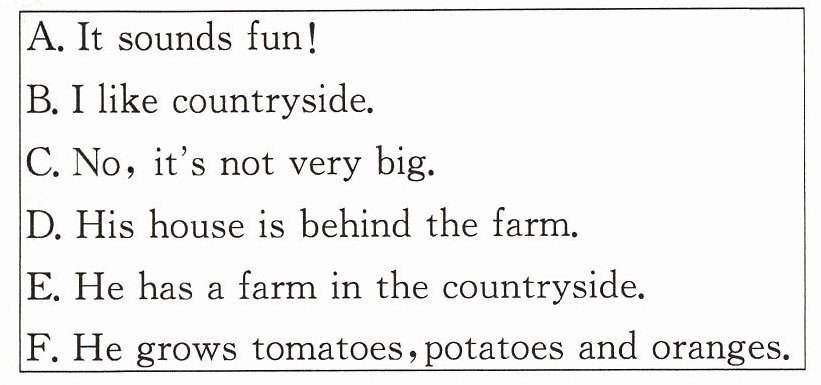
A: What’s your plan for the holiday?
B: I’ll visit my cousin. 1.
A: Is the farm big?
B: 2, but it’s really nice.
A: What does he grow on the farm?
B: 3.
A: What are you going to do there?
B: I’ll go there and help him pick (采摘) vegetables and fruit.
A: 4.
B: It really does. And the fruit is very good.
A: Does your cousin live on the farm?
B: No, he doesn’t. 5.
答案:
ECFAD
六、阅读理解。选择正确选项。
Everybody has a home. We people have homes. Animals have homes, too.
Some animals live under the ground (地面). The woodchuck(土拨鼠)lives in holes(洞) under the ground. His home has two doors. If anyone comes in from one door, he goes out from the other door. Some birds live in holes in trees. They come out for food in the daytime and go back to sleep at night. But many birds live just in the trees. It’s quite interesting that turtles(海龟)take their homes with them. Because their homes are on their backs (背). Bees (蜜蜂)work hard to make their homes. There are many small rooms in their house. Cats, dogs and rabbits live in people’s homes.
( )1. How many doors does a woodchuck’s home have?
A. One. B. Two. C. Three.
( )2. Where do many birds live?
A. In the sky. B. In trees. C. In people’s homes.
( )3. Which animals work hard to make their homes?
A. Birds. B. Turtles. C. Bees.
( )4. People’s homes are homes of ______, too.
A. dogs, turtles and cats
B. bees, cats and dogs
C. rabbits, cats and dogs
( )5. Which is the best title (题目) for the passage?
A. The woodchuck’s home.
B. Many birds live in trees.
C. Animals’ homes.
Everybody has a home. We people have homes. Animals have homes, too.
Some animals live under the ground (地面). The woodchuck(土拨鼠)lives in holes(洞) under the ground. His home has two doors. If anyone comes in from one door, he goes out from the other door. Some birds live in holes in trees. They come out for food in the daytime and go back to sleep at night. But many birds live just in the trees. It’s quite interesting that turtles(海龟)take their homes with them. Because their homes are on their backs (背). Bees (蜜蜂)work hard to make their homes. There are many small rooms in their house. Cats, dogs and rabbits live in people’s homes.
( )1. How many doors does a woodchuck’s home have?
A. One. B. Two. C. Three.
( )2. Where do many birds live?
A. In the sky. B. In trees. C. In people’s homes.
( )3. Which animals work hard to make their homes?
A. Birds. B. Turtles. C. Bees.
( )4. People’s homes are homes of ______, too.
A. dogs, turtles and cats
B. bees, cats and dogs
C. rabbits, cats and dogs
( )5. Which is the best title (题目) for the passage?
A. The woodchuck’s home.
B. Many birds live in trees.
C. Animals’ homes.
答案:
1. B
2. B
3. C
4. C
5. C
2. B
3. C
4. C
5. C
查看更多完整答案,请扫码查看

