

 搜索
搜索
第62页
- 第1页
- 第2页
- 第3页
- 第4页
- 第5页
- 第6页
- 第7页
- 第8页
- 第9页
- 第10页
- 第11页
- 第12页
- 第13页
- 第14页
- 第15页
- 第16页
- 第17页
- 第18页
- 第19页
- 第20页
- 第21页
- 第22页
- 第23页
- 第24页
- 第25页
- 第26页
- 第27页
- 第28页
- 第29页
- 第30页
- 第31页
- 第32页
- 第33页
- 第34页
- 第35页
- 第36页
- 第37页
- 第38页
- 第39页
- 第40页
- 第41页
- 第42页
- 第43页
- 第44页
- 第45页
- 第46页
- 第47页
- 第48页
- 第49页
- 第50页
- 第51页
- 第52页
- 第53页
- 第54页
- 第55页
- 第56页
- 第57页
- 第58页
- 第59页
- 第60页
- 第61页
- 第62页
- 第63页
- 第64页
- 第65页
- 第66页
- 第67页
- 第68页
- 第69页
- 第70页
- 第71页
- 第72页
- 第73页
- 第74页
- 第75页
- 第76页
- 第77页
- 第78页
- 第79页
- 第80页
Ⅰ. 完成句子:根据所给汉语意思,用单词或短语完成下列英文句子。
1. 士兵们取得胜利后,作为英雄归来。
The soldiers returned home as heroes after achieving
2. 在数学方面,她总是领先于她的同学。
She is always
3. 我太累了,到家时几乎昏了过去。
I was so tired that I almost
4. 我在工作日通常早起赶公交车去上班。
I usually get up early
5. 我得在藏身之处一动不动,直到安全为止。
I had to
1. 士兵们取得胜利后,作为英雄归来。
The soldiers returned home as heroes after achieving
victory
.2. 在数学方面,她总是领先于她的同学。
She is always
ahead of
her classmates in Maths.3. 我太累了,到家时几乎昏了过去。
I was so tired that I almost
passed out
when I got home.4. 我在工作日通常早起赶公交车去上班。
I usually get up early
on weekdays
to catch the bus to work.5. 我得在藏身之处一动不动,直到安全为止。
I had to
keep still
in the hiding place until it was safe.
答案:
1.victory 2.ahead of 3.passed out 4.on weekdays 5.keep still
Ⅱ. 阅读理解。
第一节:阅读下面短文,从所给的四个选项中选出能回答所提问题或完成所给句子的一个最佳答案。
Do you like watching TV? If you do, there are many different kinds of TV shows for you to choose from. When you watch a TV show, it keeps your mind active. And it's a good way to relax. You can focus your mind on TV and think less about your problems. However, different kinds of TV shows mean different things to you.
There are some TV shows that can help you learn a lot, such as talk shows and news. You can master a lot of things from these TV shows. You may also learn how to be a better person from some examples. Sometimes the TV shows seem kind of boring, but they bring us something important about life.
Some other TV shows are for fun, like game shows or sitcoms. These TV shows are usually relaxing and funny. In them, you may see your favourite stars. Or you might have similar experiences to the main characters'.
___▲___ For example, sports shows and talent shows can both give you a big surprise. If you are a sports fan or have a talent, these TV shows will be your favourites . They are really exciting and they will open your eyes to a new world and help you know how fantastic the outside world is. In fact, cartoons and soap operas are also good ways for you to kill your time.
However, don't spend too much time on any TV shows. We have a lot more to do.
(
A. Keep.
B. Send.
C. Bring.
D. Learn.
(
A. Why talk shows and news are boring.
B. What kind of people like watching talk shows and news.
C. Watching talk shows and news is a good way to kill time.
D. People can learn a lot from some TV shows like talk shows and news.
(
A. Many people spend less time watching TV.
B. Of course, there are some exciting TV shows.
C. Some people don't like exciting TV shows.
D. Watching soap operas may be a good choice for you.
(
A. To ask us not to watch TV.
B. To describe different kinds of TV shows.
C. To show something bad about watching TV.
D. To tell the reason why people like watching TV.
(
第一节:阅读下面短文,从所给的四个选项中选出能回答所提问题或完成所给句子的一个最佳答案。
Do you like watching TV? If you do, there are many different kinds of TV shows for you to choose from. When you watch a TV show, it keeps your mind active. And it's a good way to relax. You can focus your mind on TV and think less about your problems. However, different kinds of TV shows mean different things to you.
There are some TV shows that can help you learn a lot, such as talk shows and news. You can master a lot of things from these TV shows. You may also learn how to be a better person from some examples. Sometimes the TV shows seem kind of boring, but they bring us something important about life.
Some other TV shows are for fun, like game shows or sitcoms. These TV shows are usually relaxing and funny. In them, you may see your favourite stars. Or you might have similar experiences to the main characters'.
___▲___ For example, sports shows and talent shows can both give you a big surprise. If you are a sports fan or have a talent, these TV shows will be your favourites . They are really exciting and they will open your eyes to a new world and help you know how fantastic the outside world is. In fact, cartoons and soap operas are also good ways for you to kill your time.
However, don't spend too much time on any TV shows. We have a lot more to do.
(
D
)6. What does the underlined word “master” mean?A. Keep.
B. Send.
C. Bring.
D. Learn.
(
D
)7. What does the second paragraph mainly talk about?A. Why talk shows and news are boring.
B. What kind of people like watching talk shows and news.
C. Watching talk shows and news is a good way to kill time.
D. People can learn a lot from some TV shows like talk shows and news.
(
B
)8. Choose the best sentence to fill in the “____▲____”.A. Many people spend less time watching TV.
B. Of course, there are some exciting TV shows.
C. Some people don't like exciting TV shows.
D. Watching soap operas may be a good choice for you.
(
B
)9. What's the purpose of this passage?A. To ask us not to watch TV.
B. To describe different kinds of TV shows.
C. To show something bad about watching TV.
D. To tell the reason why people like watching TV.
(
C
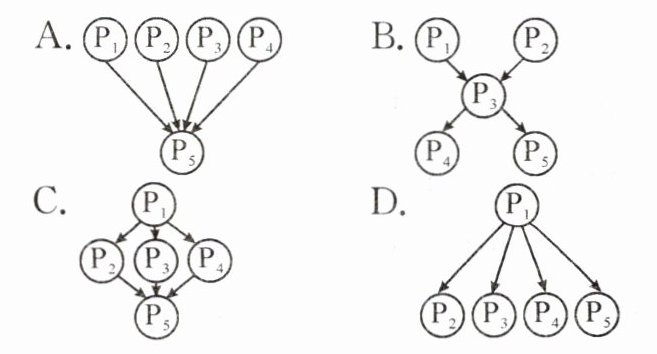
)10. Which of the following can best show the structure of the passage? (P₁ = Paragraph 1...)
答案:
第一节 6-10 DDBBC
第二节:根据短文内容,从短文后的选项中选出能填入空白处的最佳选项。选项中有两项为多余选项。
David Stringer is a star in the Chinese community in New Zealand's South Island. He is famous for his great skills in the traditional Chinese musical instrument—the *hulusi*.
Recently, Stringer played the Chinese folk music *Deep in the Bamboo Forest* using the *hulusi* at the concert organized by the Chinese community. 11
“Although it is easy to play the *hulusi* at a basic level, *Deep in the Bamboo Forest* requires lots of skills, which is a Level 6 exam piece,” said Stringer who preferred to be called Qin Dawei, a Chinese name he really likes.
12 It has been used by European composers (作曲家) and performers in recent years. Stringer said he first saw the *hulusi* ten years ago on his first trip to China. After expressing his interest in the *hulusi*, he was given one by a friend. The next year, Stringer went to China again and bought two more *hulusi*. 13
“From a young age, I was introduced to the Chinese culture. More recently, I have been learning Chinese and have made many friends in the Chinese community. Like New Zealanders, I find they are friendly and encouraging,” Stringer said. Nowadays, many people move to New Zealand. 14 There is a *hulusi* group, and Stringer was encouraged to join it and has performed with them many times.
“I have been making friends with many Chinese people. 15 I learned a lot from them and performed with them. And it is the *hulusi* that brings us together,” he added.
A. And people enjoyed his performance very much.
B. However, people found it difficult to understand.
C. So Chinese culture has played a bigger part there.
D. Now, he has a total of five *hulusi* of different kinds.
E. The *hulusi* is a musical instrument that comes from China.
F. His friend showed him some basic rules on how to play it.
G. I found the friendships formed good for me andformylanguagelearning.
11.
David Stringer is a star in the Chinese community in New Zealand's South Island. He is famous for his great skills in the traditional Chinese musical instrument—the *hulusi*.
Recently, Stringer played the Chinese folk music *Deep in the Bamboo Forest* using the *hulusi* at the concert organized by the Chinese community. 11
“Although it is easy to play the *hulusi* at a basic level, *Deep in the Bamboo Forest* requires lots of skills, which is a Level 6 exam piece,” said Stringer who preferred to be called Qin Dawei, a Chinese name he really likes.
12 It has been used by European composers (作曲家) and performers in recent years. Stringer said he first saw the *hulusi* ten years ago on his first trip to China. After expressing his interest in the *hulusi*, he was given one by a friend. The next year, Stringer went to China again and bought two more *hulusi*. 13
“From a young age, I was introduced to the Chinese culture. More recently, I have been learning Chinese and have made many friends in the Chinese community. Like New Zealanders, I find they are friendly and encouraging,” Stringer said. Nowadays, many people move to New Zealand. 14 There is a *hulusi* group, and Stringer was encouraged to join it and has performed with them many times.
“I have been making friends with many Chinese people. 15 I learned a lot from them and performed with them. And it is the *hulusi* that brings us together,” he added.
A. And people enjoyed his performance very much.
B. However, people found it difficult to understand.
C. So Chinese culture has played a bigger part there.
D. Now, he has a total of five *hulusi* of different kinds.
E. The *hulusi* is a musical instrument that comes from China.
F. His friend showed him some basic rules on how to play it.
G. I found the friendships formed good for me andformylanguagelearning.
11.
A
12. E
13. D
14. C
15. G
答案:
第二节 11-15 AEDCG
查看更多完整答案,请扫码查看

