

 搜索
搜索
第7页
- 第1页
- 第2页
- 第3页
- 第4页
- 第5页
- 第6页
- 第7页
- 第8页
- 第9页
- 第10页
- 第11页
- 第12页
- 第13页
- 第14页
- 第15页
- 第16页
- 第17页
- 第18页
- 第19页
- 第20页
- 第21页
- 第22页
- 第23页
- 第24页
- 第25页
- 第26页
- 第27页
- 第28页
- 第29页
- 第30页
- 第31页
- 第32页
- 第33页
- 第34页
- 第35页
- 第36页
- 第37页
- 第38页
- 第39页
- 第40页
- 第41页
- 第42页
- 第43页
- 第44页
- 第45页
- 第46页
- 第47页
- 第48页
- 第49页
- 第50页
- 第51页
- 第52页
- 第53页
- 第54页
- 第55页
- 第56页
- 第57页
- 第58页
- 第59页
- 第60页
- 第61页
- 第62页
- 第63页
- 第64页
- 第65页
- 第66页
- 第67页
- 第68页
- 第69页
- 第70页
- 第71页
- 第72页
- 第73页
- 第74页
- 第75页
- 第76页
- 第77页
- 第78页
- 第79页
- 第80页
- 第81页
- 第82页
- 第83页
- 第84页
- 第85页
- 第86页
- 第87页
- 第88页
- 第89页
- 第90页
- 第91页
- 第92页
- 第93页
- 第94页
- 第95页
- 第96页
- 第97页
- 第98页
- 第99页
- 第100页
- 第101页
- 第102页
- 第103页
- 第104页
- 第105页
- 第106页
- 第107页
- 第108页
- 第109页
- 第110页
- 第111页
- 第112页
- 第113页
- 第114页
- 第115页
- 第116页
- 第117页
- 第118页
- 第119页
- 第120页
- 第121页
- 第122页
- 第123页
- 第124页
- 第125页
- 第126页
- 第127页
- 第128页
- 第129页
- 第130页
- 第131页
- 第132页
- 第133页
- 第134页
- 第135页
- 第136页
- 第137页
- 第138页
- 第139页
- 第140页
- 第141页
- 第142页
- 第143页
- 第144页
- 第145页
- 第146页
- 第147页
- 第148页
- 第149页
- 第150页
- 第151页
- 第152页
- 第153页
- 第154页
- 第155页
- 第156页
- 第157页
- 第158页
- 第159页
- 第160页
- 第161页
- 第162页
- 第163页
- 第164页
- 第165页
- 第166页
- 第167页
- 第168页
- 第169页
- 第170页
- 第171页
- 第172页
- 第173页
- 第174页
- 第175页
- 第176页
- 第177页
- 第178页
- 第179页
- 第180页
- 第181页
- 第182页
- 第183页
- 第184页
体裁:说明文
主题:让学校课程变得更有趣的方法
词数:276
难度:★★★★
用时:7 分钟
请阅读全文,并从下面方框里的六个句子中选择五个还原到短文中,使短文的意思完整、连贯。
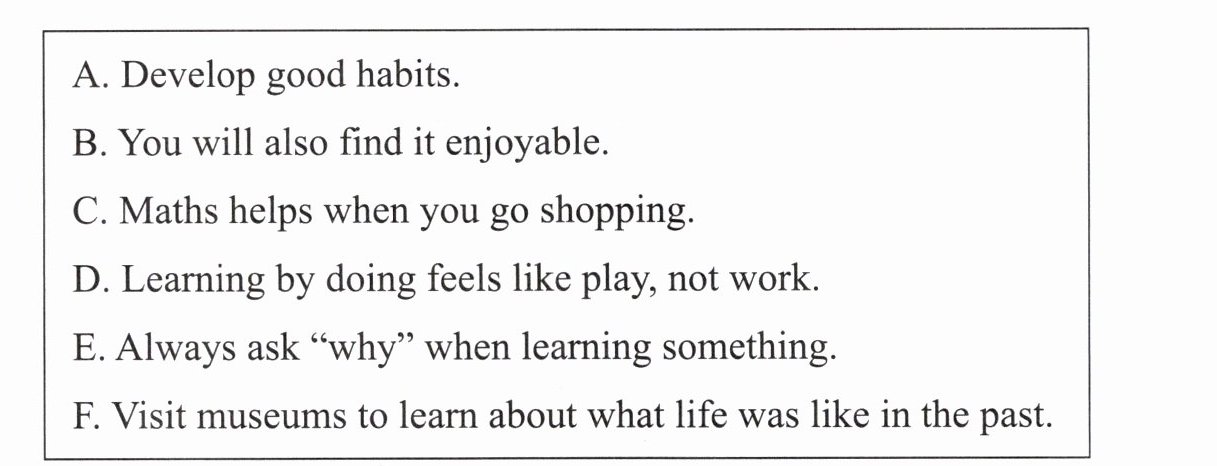
Learning can be exciting when you follow your curiosity (好奇心)! Scientists say curious students enjoy studying more. Also, curious students can find ways to make school subjects more enjoyable. Here are four easy ways to start.
Ask questions.
1.
Connect lessons to real life.
Find out how school subjects connect to your life. 2.
Turn learning into games.
Make word cards to play memory games. Put together a puzzle map (拼图) to learn about the shapes of countries. Use apps or other online tools to practise spelling and grammar. 3.
Learn outside school.
Join a community centre to learn to play a new sport. 4.
Start with one way today. You’ll find learning useful. 5.
一材多练(请再次阅读上面的文章,完成以下练习)
根据英文释义及首字母提示拼写单词。
1. p
2. a
主题:让学校课程变得更有趣的方法
词数:276
难度:★★★★
用时:7 分钟
请阅读全文,并从下面方框里的六个句子中选择五个还原到短文中,使短文的意思完整、连贯。
Learning can be exciting when you follow your curiosity (好奇心)! Scientists say curious students enjoy studying more. Also, curious students can find ways to make school subjects more enjoyable. Here are four easy ways to start.
Ask questions.
1.
E
If you study Physics, ask yourself why light travels faster than sound. When learning Chinese, ask why Tang poems remain so popular in modern China. Questions make you learn actively and help you understand better.Connect lessons to real life.
Find out how school subjects connect to your life. 2.
C
English is useful when you travel abroad. Geography can explain weather changes and the environment around us. When you find that knowledge is practical, you’ll want to learn more.Turn learning into games.
Make word cards to play memory games. Put together a puzzle map (拼图) to learn about the shapes of countries. Use apps or other online tools to practise spelling and grammar. 3.
D
Learn outside school.
Join a community centre to learn to play a new sport. 4.
F
Going to a park or a zoo allows you to watch plants and animals carefully while learning about them. Experiencing different ways of learning keeps your brain excited.Start with one way today. You’ll find learning useful. 5.
B
Remember, every subject becomes interesting when you’re curious about it.一材多练(请再次阅读上面的文章,完成以下练习)
根据英文释义及首字母提示拼写单词。
1. p
ractical
adj.: useful or suitable2. a
broad
adv.: in or to a foreign country
答案:
短文填空
1.E 由小标题“Ask questions.”可知,此处强调在学习中提问的重要性。E项“学习时,要常问‘为什么’”符合语境。故选E。
2.C 由上文“Find out how school subjects connect to your life.”及下文“English is useful when you travel abroad. Geography can explain weather changes and the environment around us.”可知,此处需要举例说明学科与生活的联系。C项“在购物时,数学知识会派上用场”符合语境。故选C。
3.D 由小标题“Turn learning into games.”可知,此处强调通过游戏化学习让学习变得有趣。D项“通过实践来学习的感觉就像是在玩耍,而不是在工作”符合语境。故选D。
4.F 由小标题“Learn outside school.”可知,此处提到校外学习方式。F项“参观博物馆,了解过去的生活状况”符合语境。故选F。
5.B 由上文“You’ll find learning useful.”可知,B项“你也会发现它很有趣的”符合语境。故选B。
一材多练
1.practical 2.abroad
1.E 由小标题“Ask questions.”可知,此处强调在学习中提问的重要性。E项“学习时,要常问‘为什么’”符合语境。故选E。
2.C 由上文“Find out how school subjects connect to your life.”及下文“English is useful when you travel abroad. Geography can explain weather changes and the environment around us.”可知,此处需要举例说明学科与生活的联系。C项“在购物时,数学知识会派上用场”符合语境。故选C。
3.D 由小标题“Turn learning into games.”可知,此处强调通过游戏化学习让学习变得有趣。D项“通过实践来学习的感觉就像是在玩耍,而不是在工作”符合语境。故选D。
4.F 由小标题“Learn outside school.”可知,此处提到校外学习方式。F项“参观博物馆,了解过去的生活状况”符合语境。故选F。
5.B 由上文“You’ll find learning useful.”可知,B项“你也会发现它很有趣的”符合语境。故选B。
一材多练
1.practical 2.abroad
查看更多完整答案,请扫码查看

