

 搜索
搜索
第65页
- 第1页
- 第2页
- 第3页
- 第4页
- 第5页
- 第6页
- 第7页
- 第8页
- 第9页
- 第10页
- 第11页
- 第12页
- 第13页
- 第14页
- 第15页
- 第16页
- 第17页
- 第18页
- 第19页
- 第20页
- 第21页
- 第22页
- 第23页
- 第24页
- 第25页
- 第26页
- 第27页
- 第28页
- 第29页
- 第30页
- 第31页
- 第32页
- 第33页
- 第34页
- 第35页
- 第36页
- 第37页
- 第38页
- 第39页
- 第40页
- 第41页
- 第42页
- 第43页
- 第44页
- 第45页
- 第46页
- 第47页
- 第48页
- 第49页
- 第50页
- 第51页
- 第52页
- 第53页
- 第54页
- 第55页
- 第56页
- 第57页
- 第58页
- 第59页
- 第60页
- 第61页
- 第62页
- 第63页
- 第64页
- 第65页
- 第66页
- 第67页
- 第68页
- 第69页
- 第70页
- 第71页
- 第72页
- 第73页
- 第74页
- 第75页
- 第76页
- 第77页
- 第78页
- 第79页
- 第80页
- 第81页
- 第82页
- 第83页
- 第84页
- 第85页
- 第86页
- 第87页
- 第88页
- 第89页
- 第90页
- 第91页
- 第92页
- 第93页
- 第94页
- 第95页
- 第96页
- 第97页
- 第98页
- 第99页
- 第100页
探究点1 “特殊疑问词+动词不定式”的用法
“特殊疑问词+动词不定式”在句中作动词的宾语,可以转换为宾语从句。
Can you tell me how to fix my bike? = Can you tell me how I fix my bike?
你能告诉我怎么修我的自行车吗?
情境应用
1. I don't know what
2. I have no idea where I can
“特殊疑问词+动词不定式”在句中作动词的宾语,可以转换为宾语从句。
Can you tell me how to fix my bike? = Can you tell me how I fix my bike?
你能告诉我怎么修我的自行车吗?
情境应用
1. I don't know what
to do
next. (do)2. I have no idea where I can
go
. = I have no idea where to go
. (go)
答案:
1. to do;
2. go; to go
2. go; to go
探究点2 do with 处理
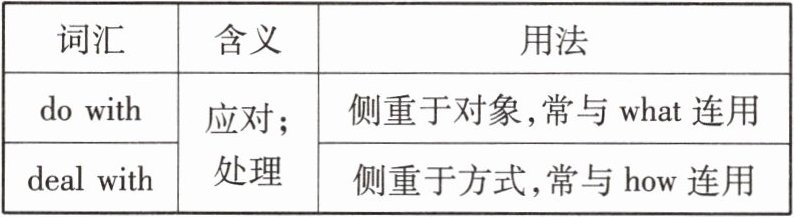
辨析 do with 与 deal with
|词汇|含义|用法|
|do with|应对;处理|侧重于对象,常与 what 连用|
|deal with|应对;处理|侧重于方式,常与 how 连用|
I don't know what to do with these old clothes.
我不知道怎么处理这些旧衣服。
How have you dealt with these letters?
你是怎么处理这些信件的?
情境应用
1. —Would you please tell me what to ______ my old car?
—Sorry, I don't know how to ______ it.
A. deal with; do with
B. do with; do with
C. deal with; deal with
D. do with; deal with
(
2. It's necessary for us to learn how to ______ the stress in our daily lives. (处理)
辨析 do with 与 deal with
|词汇|含义|用法|
|do with|应对;处理|侧重于对象,常与 what 连用|
|deal with|应对;处理|侧重于方式,常与 how 连用|
I don't know what to do with these old clothes.
我不知道怎么处理这些旧衣服。
How have you dealt with these letters?
你是怎么处理这些信件的?
情境应用
1. —Would you please tell me what to ______ my old car?
—Sorry, I don't know how to ______ it.
A. deal with; do with
B. do with; do with
C. deal with; deal with
D. do with; deal with
(
D
)2. It's necessary for us to learn how to ______ the stress in our daily lives. (处理)
deal with
答案:
1. D 2. deal with
探究点3 heat 的用法
heat
- 作动词,意为“加热;变热”
I want to heat some water to wash the clothes.
我想烧些水来洗衣服。
- 作名词,意为“热;温度;炎热天气”
The sun gives us light and heat.
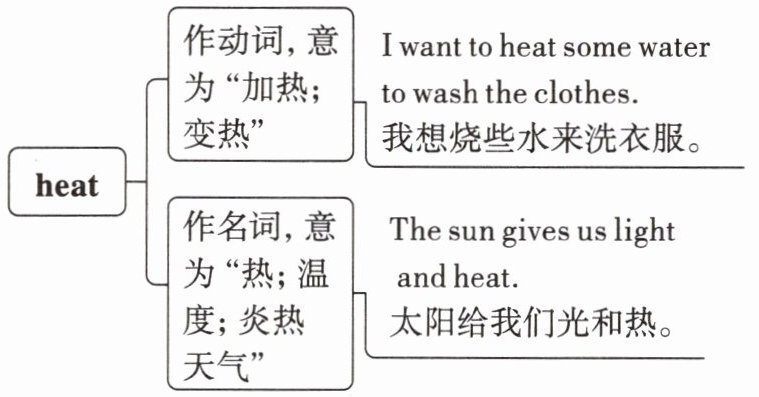
太阳给我们光和热。
情境应用
1.
2. Cook the steak over
heat
- 作动词,意为“加热;变热”
I want to heat some water to wash the clothes.
我想烧些水来洗衣服。
- 作名词,意为“热;温度;炎热天气”
The sun gives us light and heat.
太阳给我们光和热。
情境应用
1.
Heat
the oil and add the eggs to it. (heat)2. Cook the steak over
high heat
for a few minutes. (高温)
答案:
1. Heat
2. high heat
2. high heat
(
—A kilo.
A.How many
B.How much
C.How long
D.How often
B
) 1.—______ beef do you need?—A kilo.
A.How many
B.How much
C.How long
D.How often
答案:
B
( ) 2.—Hi, guys! Our team won first place in the table tennis match.
—
A.What
B.How
C.What an
D.How an
—
What
exciting news it is! We are so happy about it.A.What
B.How
C.What an
D.How an
答案:
A
查看更多完整答案,请扫码查看

