

 搜索
搜索
第125页
- 第1页
- 第2页
- 第3页
- 第4页
- 第5页
- 第6页
- 第7页
- 第8页
- 第9页
- 第10页
- 第11页
- 第12页
- 第13页
- 第14页
- 第15页
- 第16页
- 第17页
- 第18页
- 第19页
- 第20页
- 第21页
- 第22页
- 第23页
- 第24页
- 第25页
- 第26页
- 第27页
- 第28页
- 第29页
- 第30页
- 第31页
- 第32页
- 第33页
- 第34页
- 第35页
- 第36页
- 第37页
- 第38页
- 第39页
- 第40页
- 第41页
- 第42页
- 第43页
- 第44页
- 第45页
- 第46页
- 第47页
- 第48页
- 第49页
- 第50页
- 第51页
- 第52页
- 第53页
- 第54页
- 第55页
- 第56页
- 第57页
- 第58页
- 第59页
- 第60页
- 第61页
- 第62页
- 第63页
- 第64页
- 第65页
- 第66页
- 第67页
- 第68页
- 第69页
- 第70页
- 第71页
- 第72页
- 第73页
- 第74页
- 第75页
- 第76页
- 第77页
- 第78页
- 第79页
- 第80页
- 第81页
- 第82页
- 第83页
- 第84页
- 第85页
- 第86页
- 第87页
- 第88页
- 第89页
- 第90页
- 第91页
- 第92页
- 第93页
- 第94页
- 第95页
- 第96页
- 第97页
- 第98页
- 第99页
- 第100页
- 第101页
- 第102页
- 第103页
- 第104页
- 第105页
- 第106页
- 第107页
- 第108页
- 第109页
- 第110页
- 第111页
- 第112页
- 第113页
- 第114页
- 第115页
- 第116页
- 第117页
- 第118页
- 第119页
- 第120页
- 第121页
- 第122页
- 第123页
- 第124页
- 第125页
- 第126页
- 第127页
- 第128页
- 第129页
- 第130页
- 第131页
- 第132页
- 第133页
- 第134页
- 第135页
- 第136页
- 第137页
- 第138页
- 第139页
- 第140页
- 第141页
- 第142页
- 第143页
- 第144页
- 第145页
- 第146页
- 第147页
- 第148页
- 第149页
- 第150页
- 第151页
- 第152页
- 第153页
- 第154页
- 第155页
- 第156页
- 第157页
- 第158页
- 第159页
- 第160页
- 第161页
- 第162页
- 第163页
- 第164页
- 第165页
- 第166页
- 第167页
- 第168页
- 第169页
- 第170页
- 第171页
- 第172页
- 第173页
四、阅读短文,根据短文内容选择正确答案。
My interest in cooking started when I was 11, partly(一定程度上)thanks to my mother. She didn't really like cooking and when she cooked, I didn't like her food. Once I was watching something about cooking on TV and I thought I could do this, so I went to the bookstore and looked for the biggest cookbook I could find. During a year, I had made most of its recipes and was ready for a big challenge. I wanted to create my own dishes and I started cooking for more people than just my family. To my joy, my parents allowed me to build a test kitchen. I did much cooking to test my dishes in it and my skill improved quickly. Later, my mom and I set up a dinner club that organized monthly events inside my home. Now as a teen chef(主厨), I have also cooked in top-class restaurants around the country. I am not doing it for the money, but because I love cooking. Now I know that when you stop caring whether you'll be famous or do well, your dream will come to you.
(
A. a TV star
B. a news reporter
C. a good chef
() 2. What made the writer begin to cook?
A. His parents' wish.
B. TV shows about cooking.
C. His mother's delicious food.
(
A. take cooking lessons
B. write his cookbook
C. make new dishes of his own
(
A. a test kitchen
B. the bookstore
C. a dinner club
(
A. Finding a good job.
B. Doing what he loves.
C. Making lots of money.
My interest in cooking started when I was 11, partly(一定程度上)thanks to my mother. She didn't really like cooking and when she cooked, I didn't like her food. Once I was watching something about cooking on TV and I thought I could do this, so I went to the bookstore and looked for the biggest cookbook I could find. During a year, I had made most of its recipes and was ready for a big challenge. I wanted to create my own dishes and I started cooking for more people than just my family. To my joy, my parents allowed me to build a test kitchen. I did much cooking to test my dishes in it and my skill improved quickly. Later, my mom and I set up a dinner club that organized monthly events inside my home. Now as a teen chef(主厨), I have also cooked in top-class restaurants around the country. I am not doing it for the money, but because I love cooking. Now I know that when you stop caring whether you'll be famous or do well, your dream will come to you.
(
C
) 1. The writer is .A. a TV star
B. a news reporter
C. a good chef
() 2. What made the writer begin to cook?
A. His parents' wish.
B. TV shows about cooking.
C. His mother's delicious food.
(
C
) 3. After making most of the recipes in the cookbook, the writer wanted to .A. take cooking lessons
B. write his cookbook
C. make new dishes of his own
(
A
) 4. The underlined word “it” in Paragraph 2 refers to(指代)“ ”.A. a test kitchen
B. the bookstore
C. a dinner club
(
B
) 5. What is important for the writer?A. Finding a good job.
B. Doing what he loves.
C. Making lots of money.
答案:
C; B; C; A; B
五、完成图表。根据短文内容,完成图表格中所缺信息。
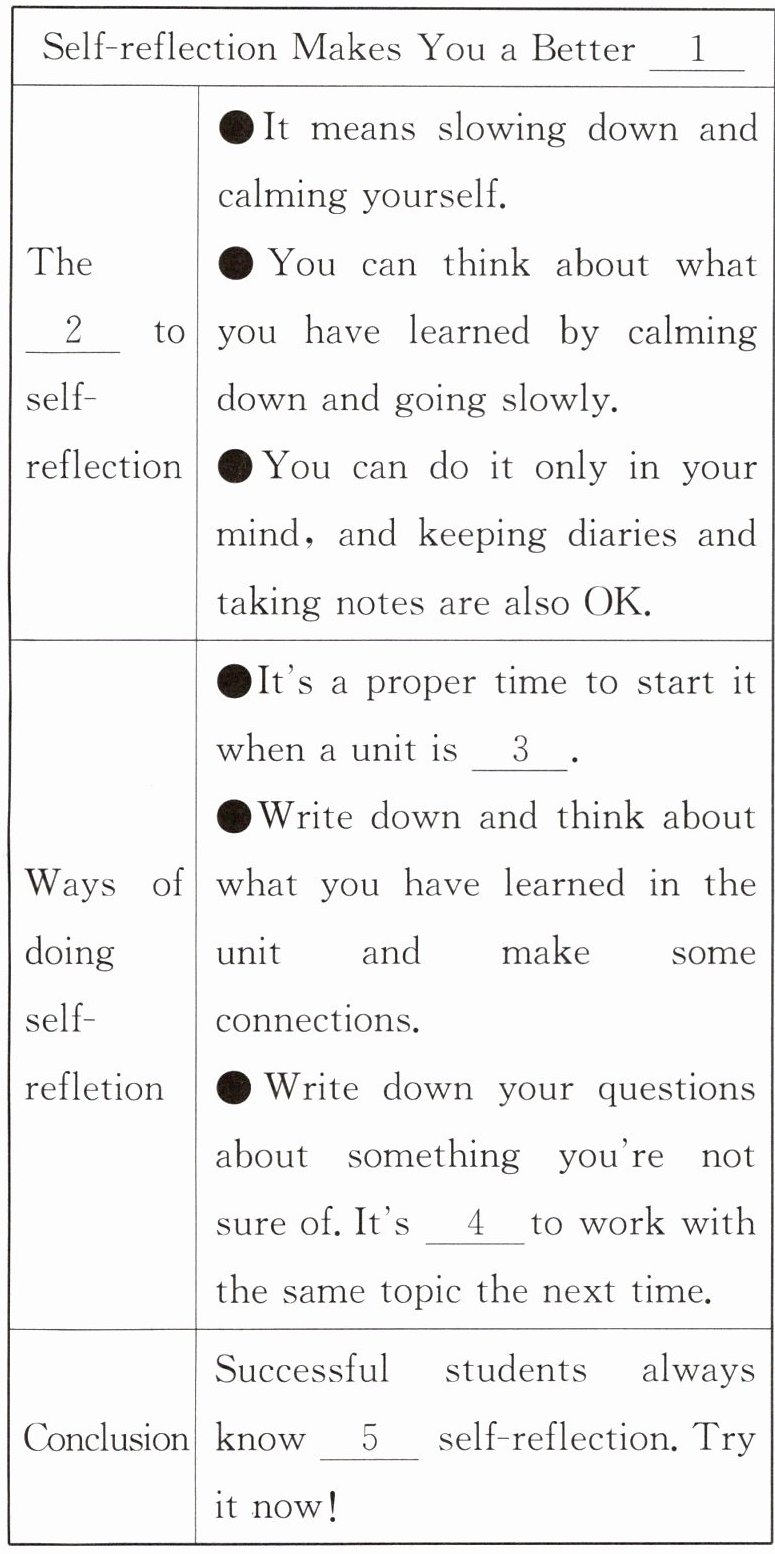
Do you ever feel like you are just rushing from one subject to another? When things happen so fast, maybe you can't understand clearly what you are doing or learning, so it is important to stop yourself to think about what you have been doing or learning. Self-reflection(反省)means slowing down and calming(使平静)yourself, including calming your mind. By calming down and going slowly, you give your brain a chance to think about what it has already received. Some people prefer to do self-reflection only in their mind. Others keep a diary. What's more, taking notes is also OK. Each way works, depending on your own personal learning. You can follow the steps to do self-reflection. First, choose the proper time to do it. School textbooks are divided(分成)into units of study. This makes it easier to begin self-reflection. Look for time when you finish a unit of study. Sometimes you know the unit ends because there is some kind of test. Use these natural breaks to stop and do self-reflection. Then, find a quiet place and take out your reflection diary. Write down some notes on the new things that you learned in the unit. Let your mind think about the notes you have written and make some connections. Finally, think about things that you are not sure of. Maybe you learned a new way to work out a math problem, but you're not sure when to use it. Writing down your questions will help you remember to look for answers the next time you are working with the same topic. Successful students always know self-reflection is important. If you have never taken the time to do self-reflection, try it now!
Do you ever feel like you are just rushing from one subject to another? When things happen so fast, maybe you can't understand clearly what you are doing or learning, so it is important to stop yourself to think about what you have been doing or learning. Self-reflection(反省)means slowing down and calming(使平静)yourself, including calming your mind. By calming down and going slowly, you give your brain a chance to think about what it has already received. Some people prefer to do self-reflection only in their mind. Others keep a diary. What's more, taking notes is also OK. Each way works, depending on your own personal learning. You can follow the steps to do self-reflection. First, choose the proper time to do it. School textbooks are divided(分成)into units of study. This makes it easier to begin self-reflection. Look for time when you finish a unit of study. Sometimes you know the unit ends because there is some kind of test. Use these natural breaks to stop and do self-reflection. Then, find a quiet place and take out your reflection diary. Write down some notes on the new things that you learned in the unit. Let your mind think about the notes you have written and make some connections. Finally, think about things that you are not sure of. Maybe you learned a new way to work out a math problem, but you're not sure when to use it. Writing down your questions will help you remember to look for answers the next time you are working with the same topic. Successful students always know self-reflection is important. If you have never taken the time to do self-reflection, try it now!
1. Learner 2. Introduction 3. over/complete 4. helpful 5. the importance of
答案:
Learner; Introduction; over/complete; helpful; the importance of; 1. Learner 2. Introduction 3. over/complete 4. helpful 5. theimportanceof
查看更多完整答案,请扫码查看

