

 搜索
搜索
第112页
- 第2页
- 第3页
- 第4页
- 第5页
- 第6页
- 第7页
- 第8页
- 第9页
- 第10页
- 第11页
- 第12页
- 第13页
- 第14页
- 第15页
- 第16页
- 第17页
- 第18页
- 第19页
- 第20页
- 第21页
- 第22页
- 第23页
- 第24页
- 第25页
- 第26页
- 第27页
- 第28页
- 第29页
- 第30页
- 第31页
- 第32页
- 第33页
- 第34页
- 第35页
- 第36页
- 第37页
- 第38页
- 第39页
- 第40页
- 第41页
- 第42页
- 第43页
- 第44页
- 第45页
- 第46页
- 第47页
- 第48页
- 第49页
- 第50页
- 第51页
- 第52页
- 第53页
- 第54页
- 第55页
- 第56页
- 第57页
- 第58页
- 第59页
- 第60页
- 第61页
- 第62页
- 第63页
- 第64页
- 第65页
- 第66页
- 第67页
- 第68页
- 第69页
- 第70页
- 第71页
- 第72页
- 第73页
- 第74页
- 第75页
- 第76页
- 第77页
- 第78页
- 第79页
- 第80页
- 第81页
- 第82页
- 第83页
- 第84页
- 第85页
- 第86页
- 第87页
- 第88页
- 第89页
- 第90页
- 第91页
- 第92页
- 第93页
- 第94页
- 第95页
- 第96页
- 第97页
- 第98页
- 第99页
- 第100页
- 第101页
- 第102页
- 第103页
- 第104页
- 第105页
- 第106页
- 第107页
- 第108页
- 第109页
- 第110页
- 第111页
- 第112页
- 第113页
- 第114页
- 第115页
- 第116页
- 第117页
- 第118页
- 第119页
- 第120页
- 第121页
- 第122页
- 第123页
- 第124页
- 第125页
- 第126页
- 第127页
- 第128页
- 第129页
- 第130页
- 第131页
- 第132页
- 第133页
- 第134页
- 第135页
- 第136页
- 第137页
- 第138页
- 第139页
- 第140页
- 第141页
- 第142页
- 第143页
- 第144页
- 第145页
- 第146页
- 第147页
- 第148页
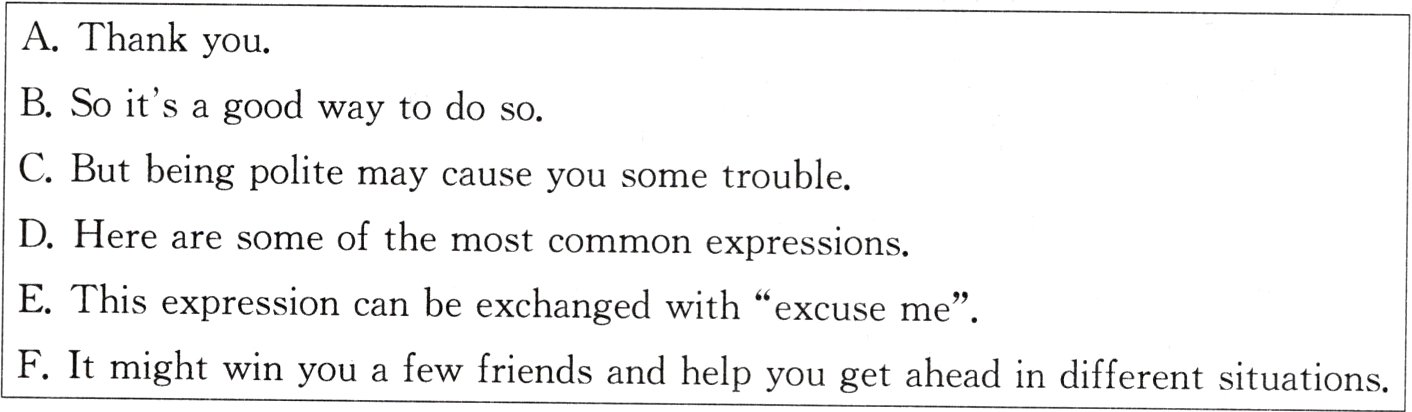
Most people learn the importance of the magic words “please” and “thank you” at a very early age. As you go through life, you see better things happen when you don't forget to say them, and that people warm up to you more quickly. (1) __________
“Please.” This is one of those words that can show good manners. Any time you ask for something, it's always a good idea to add this word to soften the request (要求).
“(2) __________” When someone does something nice for you or gives you a gift, you should always say “thank you”, even if it's something you dislike. Not doing so gives the impression that you feel entitled (有资格的) to whatever it is.
“May I...?” The expression “May I...?” puts you on the same side as the person you are speaking to. For example, when you say “May I see that book”, you give the person a chance to share what he is looking at.
“Excuse me.” This expression is used when you are asking forgiveness (原谅) for leaving the table, coughing or troubling somebody.
“Pardon me.” (3) __________ The expression “pardon me” sounds more formal (正式的).
Polite language is always helpful. Why not use it? (4) __________
“Please.” This is one of those words that can show good manners. Any time you ask for something, it's always a good idea to add this word to soften the request (要求).
“(2) __________” When someone does something nice for you or gives you a gift, you should always say “thank you”, even if it's something you dislike. Not doing so gives the impression that you feel entitled (有资格的) to whatever it is.
“May I...?” The expression “May I...?” puts you on the same side as the person you are speaking to. For example, when you say “May I see that book”, you give the person a chance to share what he is looking at.
“Excuse me.” This expression is used when you are asking forgiveness (原谅) for leaving the table, coughing or troubling somebody.
“Pardon me.” (3) __________ The expression “pardon me” sounds more formal (正式的).
Polite language is always helpful. Why not use it? (4) __________
答案:
1-4 DAEF
Wei Jiyu, the 16 - year - old boy from Beijing, put on a special concert. Different from the competitions he'd taken part in before, the boy (1) __________ (play) the piano on his own this time.
This idea (2) __________ (encourage) by his piano teacher, who believed in Wei's ability. To prove (3) __________ (he), Wei took on this challenge.
However, it seemed (4) __________ (bored) for him to play the piano alone on the stage for the whole night. So, the Senior 2 student came up (5) __________ the idea to organize a music group with his schoolmates.
“I've been learning (6) __________ (west) instruments, but I'm deeply crazy about Chinese folk music,” Wei said. “So I invited two students (7) __________ (play) ‘The Moon Over the River on a Spring Night’, (8) __________ well - loved Chinese music piece, with pipa and guzheng.”
The concert got a big hit. However, in Wei's eyes, the theme of the concert was more important than the number of the people who watched him.
“Teenagers like singing, dancing or playing musical instruments, (9) __________ most of them do it for fun. We're doing it for charity,” Wei said. The group of young (10) __________ (music) raised a total of 15 474 yuan from ticket sales, and all the money will go to nursing institutions (护理机构) for the aged. “I hope the concert can help call on more people to pay attention to those in need,” he added.
This idea (2) __________ (encourage) by his piano teacher, who believed in Wei's ability. To prove (3) __________ (he), Wei took on this challenge.
However, it seemed (4) __________ (bored) for him to play the piano alone on the stage for the whole night. So, the Senior 2 student came up (5) __________ the idea to organize a music group with his schoolmates.
“I've been learning (6) __________ (west) instruments, but I'm deeply crazy about Chinese folk music,” Wei said. “So I invited two students (7) __________ (play) ‘The Moon Over the River on a Spring Night’, (8) __________ well - loved Chinese music piece, with pipa and guzheng.”
The concert got a big hit. However, in Wei's eyes, the theme of the concert was more important than the number of the people who watched him.
“Teenagers like singing, dancing or playing musical instruments, (9) __________ most of them do it for fun. We're doing it for charity,” Wei said. The group of young (10) __________ (music) raised a total of 15 474 yuan from ticket sales, and all the money will go to nursing institutions (护理机构) for the aged. “I hope the concert can help call on more people to pay attention to those in need,” he added.
答案:
1. played 2. was encouraged 3. himself 4. boring 5. with
6. Western 7. to play 8. a 9. but 10. musicians
6. Western 7. to play 8. a 9. but 10. musicians
查看更多完整答案,请扫码查看

