

 搜索
搜索
第6页
- 第1页
- 第2页
- 第3页
- 第4页
- 第5页
- 第6页
- 第7页
- 第8页
- 第9页
- 第10页
- 第11页
- 第12页
- 第13页
- 第14页
- 第15页
- 第16页
- 第17页
- 第18页
- 第19页
- 第20页
- 第21页
- 第22页
- 第23页
- 第24页
- 第25页
- 第26页
- 第27页
- 第28页
- 第29页
- 第30页
- 第31页
- 第32页
- 第33页
- 第34页
- 第35页
- 第36页
- 第37页
- 第38页
- 第39页
- 第40页
- 第41页
- 第42页
- 第43页
- 第44页
- 第45页
- 第46页
- 第47页
- 第48页
- 第49页
- 第50页
- 第51页
- 第52页
- 第53页
- 第54页
- 第55页
- 第56页
- 第57页
- 第58页
- 第59页
- 第60页
- 第61页
- 第62页
- 第63页
- 第64页
- 第65页
- 第66页
- 第67页
- 第68页
- 第69页
- 第70页
- 第71页
- 第72页
- 第73页
- 第74页
- 第75页
- 第76页
- 第77页
- 第78页
- 第79页
- 第80页
- 第81页
- 第82页
- 第83页
- 第84页
- 第85页
- 第86页
- 第87页
一、用括号内所给单词的适当形式填空。
1. Spring is one of the best __________ (season) to go to the western part of China.
2. It's bad __________ (manner) to talk and eat at the same time.
3. China Daily is worth __________ (read). We can learn a lot from it.
4. Tourists will be amazed to find that __________ (east) and Western cultures mix so well here.
5. The weather in the __________ (north) part of the country is much colder than that in the southern part.
1. Spring is one of the best __________ (season) to go to the western part of China.
2. It's bad __________ (manner) to talk and eat at the same time.
3. China Daily is worth __________ (read). We can learn a lot from it.
4. Tourists will be amazed to find that __________ (east) and Western cultures mix so well here.
5. The weather in the __________ (north) part of the country is much colder than that in the southern part.
答案:
1. seasons 2. manners 3. reading 4. Eastern 5. northern
二、用方框中所给单词的适当形式填空。
passport knock chalk coast blackboard
6. It's impolite not __________ at the door before entering the room.
7. I live close to the __________ and it's very convenient to see the beauty of the sea.
8. You are supposed to copy the notes on the __________.
9. Boys, don't forget to take your __________ with you when you go abroad.
10. My little brother likes drawing pictures with colorful __________.
passport knock chalk coast blackboard
6. It's impolite not __________ at the door before entering the room.
7. I live close to the __________ and it's very convenient to see the beauty of the sea.
8. You are supposed to copy the notes on the __________.
9. Boys, don't forget to take your __________ with you when you go abroad.
10. My little brother likes drawing pictures with colorful __________.
答案:
6. to knock 7. coast 8. blackboard 9. passports 10. chalks
三、用方框中所给短语的适当形式填空。
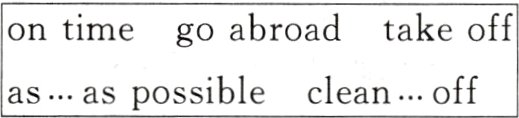
11. Alfred is getting hot, so he is going to __________ his coat.
12. Linda will miss her family when she __________ for further study this autumn.
13. Students should __________ the chalk __________ the blackboard after class.
14. We should send out the invitations __________ early __________.
15. Lisa promised to hand in the project plan __________ within two weeks.
11. Alfred is getting hot, so he is going to __________ his coat.
12. Linda will miss her family when she __________ for further study this autumn.
13. Students should __________ the chalk __________ the blackboard after class.
14. We should send out the invitations __________ early __________.
15. Lisa promised to hand in the project plan __________ within two weeks.
答案:
11. take off 12. goes abroad 13. clean; off 14. as; as possible 15. on time
四、短文填词。
从方框中选择适当的单词并用其正确形式填空。每个词限用一次。

When giving names to children, there are different traditions in different places.
In many European cultures, parents' choices of names for their 16. __________ may depend on the names of relatives in their family. This is a basic rule. For example, in Italy, children are traditionally named 17. __________ their grandparents. The parents 18. __________ use the names of the father's parents first. If they have more children, they will use the names of the 19. __________ parents.
Traditionally in some 20. __________ countries, it is a child's grandfather who chooses the child's name. The child's name is chosen to influence his character. For example, names may be based on a connection to certain things such as fire, water, earth or wood.
In certain African cultures, the time when a child is born plays a large part in 21. __________ the name. In Ghana's Akan culture, the day when a child is born 22. __________ the child's name. 23. __________ each day has different names for boys and girls. For example, a boy born on Friday is named Kofi and a girl born on the same day is named Afua.
No matter 24. __________ the name comes from, a child's name is the first gift in his or her life. The name shows something about the child's culture. For that reason, all names should be 25. __________. We should like our names.
从方框中选择适当的单词并用其正确形式填空。每个词限用一次。
When giving names to children, there are different traditions in different places.
In many European cultures, parents' choices of names for their 16. __________ may depend on the names of relatives in their family. This is a basic rule. For example, in Italy, children are traditionally named 17. __________ their grandparents. The parents 18. __________ use the names of the father's parents first. If they have more children, they will use the names of the 19. __________ parents.
Traditionally in some 20. __________ countries, it is a child's grandfather who chooses the child's name. The child's name is chosen to influence his character. For example, names may be based on a connection to certain things such as fire, water, earth or wood.
In certain African cultures, the time when a child is born plays a large part in 21. __________ the name. In Ghana's Akan culture, the day when a child is born 22. __________ the child's name. 23. __________ each day has different names for boys and girls. For example, a boy born on Friday is named Kofi and a girl born on the same day is named Afua.
No matter 24. __________ the name comes from, a child's name is the first gift in his or her life. The name shows something about the child's culture. For that reason, all names should be 25. __________. We should like our names.
答案:
16. children 17. after 18. generally 19. mother’s 20. eastern 21. choosing 22. decides 23. But 24. where 25. valued
查看更多完整答案,请扫码查看

