

 搜索
搜索
第14页
- 第1页
- 第2页
- 第3页
- 第4页
- 第5页
- 第6页
- 第7页
- 第8页
- 第9页
- 第10页
- 第11页
- 第12页
- 第13页
- 第14页
- 第15页
- 第16页
- 第17页
- 第18页
- 第19页
- 第20页
- 第21页
- 第22页
- 第23页
- 第24页
- 第25页
- 第26页
- 第27页
- 第28页
- 第29页
- 第30页
- 第31页
- 第32页
- 第33页
- 第34页
- 第35页
- 第36页
- 第37页
- 第38页
- 第39页
- 第40页
- 第41页
- 第42页
- 第43页
- 第44页
- 第45页
- 第46页
- 第47页
- 第48页
- 第49页
- 第50页
- 第51页
- 第52页
- 第53页
- 第54页
- 第55页
- 第56页
- 第57页
- 第58页
- 第59页
- 第60页
- 第61页
- 第62页
- 第63页
- 第64页
- 第65页
- 第66页
- 第67页
- 第68页
- 第69页
- 第70页
- 第71页
- 第72页
- 第73页
- 第74页
- 第75页
- 第76页
- 第77页
- 第78页
- 第79页
- 第80页
A(2024·池州市青阳县三模)
Imagine this: You’ve just arrived in China for the first time, and now you’re sitting with a group of Chinese people at a table, smiling at one another. What now? Don’t worry—we’ve got you covered with this “Chinese table manners course”!
Say bye to your usual knives and forks, and say hello to chopsticks! Chopsticks have been used in China for over 3,000 years and are very important to Chinese people. If a Westerner knows how to use them well, this will certainly help him or her get more points.
There are some chopsticks dos and don’ts. For example, you should never stick your chopsticks into a bowl of rice. Your chopsticks should always be placed next to your plate. Another important rule should be followed: Do not receive food with your chopsticks, but serve your bowl instead.
Besides, blowing your nose at the dining table is a big no-no in China. You should go to the bathroom to do that. Chinese people like to make an occasion(场合) out of a meal. However, when the waiter or waitress serves a plate of fruit, you know that time is almost up.
While Chinese dining manners might seem quite different from Western table manners, keep in mind that it’s all a matter of habit and enjoy instead.
( )11. What does the underlined word “this” refer to(指代)?
A. Knowing how to use chopsticks well.
B. Smiling at one another at a table.
C. Using knives and forks for dinner.
D. Learning the history of the chopsticks.
( )12. What is Paragraph 3 mainly about?
A. The rules of using chopsticks.
B. The ways of making chopsticks.
C. The time and the places of using chopsticks.
D. The reasons for using chopsticks in China.
( )13. What’s the purpose of the last paragraph?
A. To introduce more useful table manners.
B. To tell readers to find the right restaurant.
C. To tell readers to be relaxed and enjoy the meal.
D. To tell readers to pay more attention to table manners.
Imagine this: You’ve just arrived in China for the first time, and now you’re sitting with a group of Chinese people at a table, smiling at one another. What now? Don’t worry—we’ve got you covered with this “Chinese table manners course”!
Say bye to your usual knives and forks, and say hello to chopsticks! Chopsticks have been used in China for over 3,000 years and are very important to Chinese people. If a Westerner knows how to use them well, this will certainly help him or her get more points.
There are some chopsticks dos and don’ts. For example, you should never stick your chopsticks into a bowl of rice. Your chopsticks should always be placed next to your plate. Another important rule should be followed: Do not receive food with your chopsticks, but serve your bowl instead.
Besides, blowing your nose at the dining table is a big no-no in China. You should go to the bathroom to do that. Chinese people like to make an occasion(场合) out of a meal. However, when the waiter or waitress serves a plate of fruit, you know that time is almost up.
While Chinese dining manners might seem quite different from Western table manners, keep in mind that it’s all a matter of habit and enjoy instead.
( )11. What does the underlined word “this” refer to(指代)?
A. Knowing how to use chopsticks well.
B. Smiling at one another at a table.
C. Using knives and forks for dinner.
D. Learning the history of the chopsticks.
( )12. What is Paragraph 3 mainly about?
A. The rules of using chopsticks.
B. The ways of making chopsticks.
C. The time and the places of using chopsticks.
D. The reasons for using chopsticks in China.
( )13. What’s the purpose of the last paragraph?
A. To introduce more useful table manners.
B. To tell readers to find the right restaurant.
C. To tell readers to be relaxed and enjoy the meal.
D. To tell readers to pay more attention to table manners.
答案:
A@@A@@C
B
China is a nation of etiquette(礼仪). Chinese people are among the most hospitable people in the world. If foreigners visit a Chinese family, they would be surprised at the warmth that they would receive as guests.
When you visit a Chinese family, the host usually makes tea for you. Then he will serve you snacks(小吃) like biscuits or candy. Someone in the family will also chat with you, never letting you feel lonely.
At the same time, other family members will prepare a meal for you. Chinese people treat (款待) their guests with a big meal. They always present more food than the guests can eat. And the guests must be the first to eat. Perhaps one of the things that surprise Western guests most is that the Chinese host likes to pick up food for guests, which won’t happen at Western tables. The Chinese family go out of their way to make you feel at home. As you finish eating, the host usually says, “It seems that you didn’t eat much. Please have more.” Although you tell them you are full, they still put more food in your bowl.
Being warm and hospitable has long been an important part of Chinese culture and tradition. As Confucius(孔子) said thousands of years ago:
To meet friends from afar
How happy we are!
( )14. As a guest in a Chinese family, you are usually offered ________ by the host.
A. coffee and candy
B. juice and hamburgers
C. tea and biscuits
D. milk and hamburgers
( )15. Why does a Western guest feel surprised when the host picks up food for him?
A. Because he thinks it’s impolite.
B. Because he thinks it’s unnecessary.
C. Because it won’t happen in Western countries.
D. Because he never used chopsticks to eat.
( )16. 新考向 跨学科知识 What’s the meaning of the words by Confucius at the end of the passage?
A. 学而时习之,不亦说乎?
B. 有朋自远方来,不亦乐乎?
C. 人不知而不愠,不亦君子乎?
D. 己所不欲,勿施于人。
( )17. 新考向 篇章结构 Which of the following is the structure of this passage?
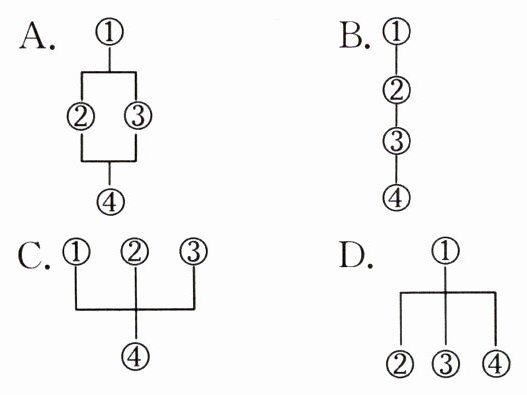
( )18. The passage mainly tells us about ________.
A. where Chinese people usually go
B. how Chinese people treat the guests
C. what food Chinese people like to eat
D. why Chinese people invite the guests to their homes
China is a nation of etiquette(礼仪). Chinese people are among the most hospitable people in the world. If foreigners visit a Chinese family, they would be surprised at the warmth that they would receive as guests.
When you visit a Chinese family, the host usually makes tea for you. Then he will serve you snacks(小吃) like biscuits or candy. Someone in the family will also chat with you, never letting you feel lonely.
At the same time, other family members will prepare a meal for you. Chinese people treat (款待) their guests with a big meal. They always present more food than the guests can eat. And the guests must be the first to eat. Perhaps one of the things that surprise Western guests most is that the Chinese host likes to pick up food for guests, which won’t happen at Western tables. The Chinese family go out of their way to make you feel at home. As you finish eating, the host usually says, “It seems that you didn’t eat much. Please have more.” Although you tell them you are full, they still put more food in your bowl.
Being warm and hospitable has long been an important part of Chinese culture and tradition. As Confucius(孔子) said thousands of years ago:
To meet friends from afar
How happy we are!
( )14. As a guest in a Chinese family, you are usually offered ________ by the host.
A. coffee and candy
B. juice and hamburgers
C. tea and biscuits
D. milk and hamburgers
( )15. Why does a Western guest feel surprised when the host picks up food for him?
A. Because he thinks it’s impolite.
B. Because he thinks it’s unnecessary.
C. Because it won’t happen in Western countries.
D. Because he never used chopsticks to eat.
( )16. 新考向 跨学科知识 What’s the meaning of the words by Confucius at the end of the passage?
A. 学而时习之,不亦说乎?
B. 有朋自远方来,不亦乐乎?
C. 人不知而不愠,不亦君子乎?
D. 己所不欲,勿施于人。
( )17. 新考向 篇章结构 Which of the following is the structure of this passage?
( )18. The passage mainly tells us about ________.
A. where Chinese people usually go
B. how Chinese people treat the guests
C. what food Chinese people like to eat
D. why Chinese people invite the guests to their homes
答案:
C@@C@@B@@A@@B
查看更多完整答案,请扫码查看

