

 搜索
搜索
2025年全品学练考九年级英语人教版内蒙古专版
注:目前有些书本章节名称可能整理的还不是很完善,但都是按照顺序排列的,请同学们按照顺序仔细查找。练习册 2025年全品学练考九年级英语人教版内蒙古专版 答案主要是用来给同学们做完题方便对答案用的,请勿直接抄袭。
第105页
- 第1页
- 第2页
- 第3页
- 第4页
- 第5页
- 第6页
- 第7页
- 第8页
- 第9页
- 第10页
- 第11页
- 第12页
- 第13页
- 第14页
- 第15页
- 第16页
- 第17页
- 第18页
- 第19页
- 第20页
- 第21页
- 第22页
- 第23页
- 第24页
- 第25页
- 第26页
- 第27页
- 第28页
- 第29页
- 第30页
- 第31页
- 第32页
- 第33页
- 第34页
- 第35页
- 第36页
- 第37页
- 第38页
- 第39页
- 第40页
- 第41页
- 第42页
- 第43页
- 第44页
- 第45页
- 第46页
- 第47页
- 第48页
- 第49页
- 第50页
- 第51页
- 第52页
- 第53页
- 第54页
- 第55页
- 第56页
- 第57页
- 第58页
- 第59页
- 第60页
- 第61页
- 第62页
- 第63页
- 第64页
- 第65页
- 第66页
- 第67页
- 第68页
- 第69页
- 第70页
- 第71页
- 第72页
- 第73页
- 第74页
- 第75页
- 第76页
- 第77页
- 第78页
- 第79页
- 第80页
- 第81页
- 第82页
- 第83页
- 第84页
- 第85页
- 第86页
- 第87页
- 第88页
- 第89页
- 第90页
- 第91页
- 第92页
- 第93页
- 第94页
- 第95页
- 第96页
- 第97页
- 第98页
- 第99页
- 第100页
- 第101页
- 第102页
- 第103页
- 第104页
- 第105页
- 第106页
- 第107页
- 第108页
- 第109页
- 第110页
- 第111页
- 第112页
- 第113页
- 第114页
- 第115页
- 第116页
- 第117页
- 第118页
- 第119页
- 第120页
- 第121页
- 第122页
- 第123页
- 第124页
- 第125页
- 第126页
- 第127页
- 第128页
- 第129页
- 第130页
Ⅰ. 用括号中所给单词的适当形式完成句子(每空仅限1个单词)
1. You're
2. Don't be angry. He is just
3. My father met John while
4. Jack is always the
5. Tony is the
1. You're
supposed
to bow when you meet a Japanese friend. (suppose)2. Don't be angry. He is just
kidding
. (kid)3. My father met John while
working
on the farm. (work)4. Jack is always the
first
student to come to school. (one)5. Tony is the
youngest
son in his family. He has two elder brothers. (young)
答案:
1. supposed 2. kidding 3. working 4. first 5. youngest
Ⅱ. 从方框中选出合适的短语,并用其适当形式填空
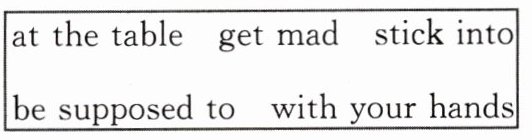
6. You
7. You'd better not eat
8. Your father won't
9. In China, it's impolite to get chopsticks
10. We should let the old people sit down
6. You
aren't supposed to
smoke. It's bad for your health.7. You'd better not eat
with your hands
before washing them.8. Your father won't
get mad
about your mistake.9. In China, it's impolite to get chopsticks
stuck into
the rice at the dinner table.10. We should let the old people sit down
at the table
first.
答案:
6. aren't supposed to 7. with your hands 8. get mad 9. stuck into 10. at the table
For most 11.
Spring refers to not only the season 13.
Chinese people often eat spring pancakes on the day called “Lichun”. This tradition means “bite the spring” in Chinese. In the past, people 15.
In Japan, families and friends celebrate spring by gathering in the parks to enjoy the beauty of cherry blossoms. It is a 16.
In the US, 18.
countries
(country) in the northern hemisphere, such as China and the US, spring begins in March and ends in May. However, September, October and November are spring months in 12. southern
(south) hemisphere countries like Australia and New Zealand.Spring refers to not only the season 13.
but
also the idea of rebirth. Therefore, most countries have special traditions 14. to celebrate
(celebrate) the arrival of this beautiful season.Chinese people often eat spring pancakes on the day called “Lichun”. This tradition means “bite the spring” in Chinese. In the past, people 15.
believed
(believe) that this would lead to a good harvest year.In Japan, families and friends celebrate spring by gathering in the parks to enjoy the beauty of cherry blossoms. It is a 16.
traditional
(tradition) custom known as “hanami”, meaning “watching flowers”, which usually lasts from late March to early May. People hold parties or picnics under the cherry trees. Food, drinks and even dancing 17. are
(be) all part of “hanami”.In the US, 18.
a
groundhog helps to tell the coming of spring. There's even a special day, Groundhog Day, on February 2. If a groundhog 19. sees
(see) its shadow when it comes out, people can expect six more weeks of winter. If there's no shadow, spring is 20. on
the way! But the groundhog isn't always right.
答案:
11. countries 12. southern 13. but 14. to celebrate 15. believed 16. traditional 17. are 18. a 19. sees 20. on
查看更多完整答案,请扫码查看

