

 搜索
搜索
第69页
- 第1页
- 第2页
- 第3页
- 第4页
- 第5页
- 第6页
- 第7页
- 第8页
- 第9页
- 第10页
- 第11页
- 第12页
- 第13页
- 第14页
- 第15页
- 第16页
- 第17页
- 第18页
- 第19页
- 第20页
- 第21页
- 第22页
- 第23页
- 第24页
- 第25页
- 第26页
- 第27页
- 第28页
- 第29页
- 第30页
- 第31页
- 第32页
- 第33页
- 第34页
- 第35页
- 第36页
- 第37页
- 第38页
- 第39页
- 第40页
- 第41页
- 第42页
- 第43页
- 第44页
- 第45页
- 第46页
- 第47页
- 第48页
- 第49页
- 第50页
- 第51页
- 第52页
- 第53页
- 第54页
- 第55页
- 第56页
- 第57页
- 第58页
- 第59页
- 第60页
- 第61页
- 第62页
- 第63页
- 第64页
- 第65页
- 第66页
- 第67页
- 第68页
- 第69页
- 第70页
- 第71页
- 第72页
- 第73页
- 第74页
- 第75页
- 第76页
- 第77页
- 第78页
- 第79页
- 第80页
( )1. The fish is in the river.
A. sleep B. swimming C. flies
( )2. -- pears are these?
-- Mine.
A. Who B. Where C. Whose
( )3. Do you want to swim a fish?
A. to like B. like C. likes
( )4. The girl is to meet her grandpa.
A. excited B. exciting C. excite
A. sleep B. swimming C. flies
( )2. -- pears are these?
-- Mine.
A. Who B. Where C. Whose
( )3. Do you want to swim a fish?
A. to like B. like C. likes
( )4. The girl is to meet her grandpa.
A. excited B. exciting C. excite
答案:
1. B [点拨]“be + 动词 - ing形式”是现在进行时的构成。
2. C [点拨]由答语“Mine.”(我的。)判断问句提问“这些梨是谁的?”,故选C。
3. B [点拨]此处like意为“像……样”。
4. A [点拨]“be excited to + 动词原形”是固定用法,意为“做某事很兴奋”。
2. C [点拨]由答语“Mine.”(我的。)判断问句提问“这些梨是谁的?”,故选C。
3. B [点拨]此处like意为“像……样”。
4. A [点拨]“be excited to + 动词原形”是固定用法,意为“做某事很兴奋”。
1. What are the ducks doing?
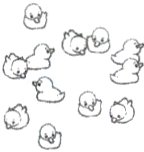 (根据图片回答问题)
____________________________
2. Amy is riding a bike. (改为一般疑问句)
________ Amy ________ a bike?
3. That dog is Sarah's. (对画线部分提问)
________ ________ is that?
4. The cat is climbing a tree. (对画线部分提问)
________ is the cat ________?
(根据图片回答问题)____________________________
2. Amy is riding a bike. (改为一般疑问句)
________ Amy ________ a bike?
3. That dog is Sarah's. (对画线部分提问)
________ ________ is that?
4. The cat is climbing a tree. (对画线部分提问)
________ is the cat ________?
答案:
1. They are swimming.
2. Is; riding
3. Whose dog
4. What; doing
2. Is; riding
3. Whose dog
4. What; doing
Miss Lin: Look! There are lots of things in my bag. Whose English book is it?
John: It's my book. It's 1.________.
Miss Lin: Whose Chinese book is it? Is it 2.________, Lucy?
Lucy: No, it's Lily's book. It's 3.________.
Miss Lin: Whose toys are these?
Lucy: They are Zhang Peng and Oliver's. They are 4.________.
Zhang Peng & Oliver: Yes! They are 5.________.
John: It's my book. It's 1.________.
Miss Lin: Whose Chinese book is it? Is it 2.________, Lucy?
Lucy: No, it's Lily's book. It's 3.________.
Miss Lin: Whose toys are these?
Lucy: They are Zhang Peng and Oliver's. They are 4.________.
Zhang Peng & Oliver: Yes! They are 5.________.
答案:
1. mine [点拨]mine是名词性物主代词,等同于“my book”。
2. yours [点拨]yours是名词性物主代词,等同于“your book”。
3. hers [点拨]Lily是女孩。hers是名词性物主代词,等同于“her book”。
4. theirs [点拨]Lucy转述玩具是Zhang Peng和Oliver的。theirs是名词性物主代词,等同于“their toys”。
5. ours [点拨]ours是名词性物主代词,等同于“our toys”
2. yours [点拨]yours是名词性物主代词,等同于“your book”。
3. hers [点拨]Lily是女孩。hers是名词性物主代词,等同于“her book”。
4. theirs [点拨]Lucy转述玩具是Zhang Peng和Oliver的。theirs是名词性物主代词,等同于“their toys”。
5. ours [点拨]ours是名词性物主代词,等同于“our toys”
Hello, everyone. Welcome to the Lego Contest. The theme(主题) is "Animals in the Nature".
Look at this pretty girl. She is Huahua. The Lego pandas are hers. The mother panda is playing on the Lego grass. The baby panda is eating bamboo. They are so cute. That boy is Diandian. The Lego cat and the Lego mouse are his. Look! The gray mouse is sleeping. But the big cat is looking at it. How funny! That girl is Mengmeng. She has many Lego ducks. The mother duck is walking with her babies. A pond is in front of them. Will they swim in the pond? So lovely!
任务一;新考法.表文转换 根据短文内容,完成表格。
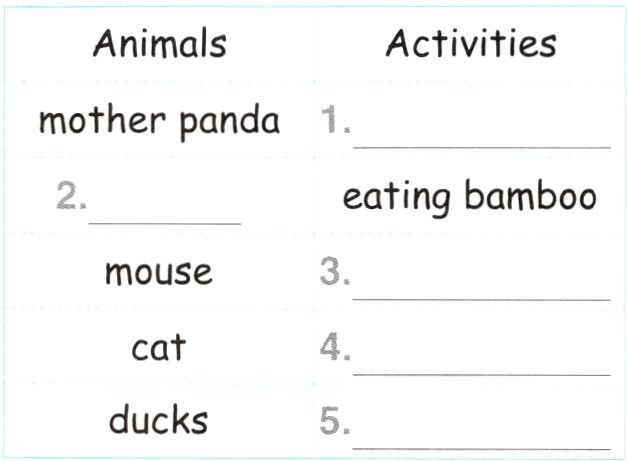
任务二;根据短文内容,回答问题。
1. Whose pandas are these? ________________
2. What does the word "pond" mean in Chinese? It means “__________________“. 新考法.词义推断
Look at this pretty girl. She is Huahua. The Lego pandas are hers. The mother panda is playing on the Lego grass. The baby panda is eating bamboo. They are so cute. That boy is Diandian. The Lego cat and the Lego mouse are his. Look! The gray mouse is sleeping. But the big cat is looking at it. How funny! That girl is Mengmeng. She has many Lego ducks. The mother duck is walking with her babies. A pond is in front of them. Will they swim in the pond? So lovely!
任务一;新考法.表文转换 根据短文内容,完成表格。
任务二;根据短文内容,回答问题。
1. Whose pandas are these? ________________
2. What does the word "pond" mean in Chinese? It means “__________________“. 新考法.词义推断
答案:
任务一:
1. playing
2. baby panda
3. sleeping
4. looking at the mouse
5. walking
任务二:
1. They are Huahua’s.
2. 池塘 [点拨]根据“A pond is in front of them. Will they swim in the pond?”可知句意为“它们前面有一个 ,他们将要在里面游泳吗?”,判断pond是“池塘”的意思。
1. playing
2. baby panda
3. sleeping
4. looking at the mouse
5. walking
任务二:
1. They are Huahua’s.
2. 池塘 [点拨]根据“A pond is in front of them. Will they swim in the pond?”可知句意为“它们前面有一个 ,他们将要在里面游泳吗?”,判断pond是“池塘”的意思。
查看更多完整答案,请扫码查看

