

 搜索
搜索
二、阅读理解
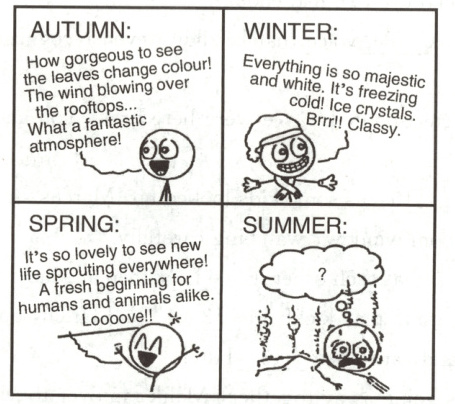
()1. In the underlined word “Loooove”, the author used four “o”s because he/she
A. made such a silly mistake
B. kept reading the “o” four times
C. wanted to show strong feelings for spring
D. really loved humans and animals
(
A. Ice cream is popular among children! YUMMY!
B. Everyone enjoys swimming in the pool! COOL!
C. I like summer more than any other season! YEAH!
D. It’s burning hot every day. DON’T GO OUT!
()1. In the underlined word “Loooove”, the author used four “o”s because he/she
C
.A. made such a silly mistake
B. kept reading the “o” four times
C. wanted to show strong feelings for spring
D. really loved humans and animals
(
D
)2. According to the picture, which of the following sentences is suitable in SUMMER?A. Ice cream is popular among children! YUMMY!
B. Everyone enjoys swimming in the pool! COOL!
C. I like summer more than any other season! YEAH!
D. It’s burning hot every day. DON’T GO OUT!
答案:
1. C
2. D
2. D
A well-known poem by the Tang Dynasty poet Du Mu tells of a sad scene in early April, “Rains fall heavily as Qingming comes, and passers-by with lowered spirits go. ”
This scene takes place on Tomb Sweeping Day, also known as Qingming Festival. Tomb Sweeping Day is a traditional Chinese festival. It began in the Zhou Dynasty, over 2,500 years ago. Chinese people celebrate it to remember and honour their ancestors(祖先). Tomb Sweeping Day became a public holiday in the Chinese mainland in 2008. People have one day off for that day.
On this day, families bring flowers, food and wine to the grave sites(墓地) of their ancestors. They place cakes and fruits in front of the graves and some may burn joss paper, as money for the dead. After that, they sweep the tombs and cherish(怀念) the memories of their dead family members.
Tomb Sweeping Day gives us a chance to show respect to our ancestors and family members who have passed away and show that we miss them. This tradition shows that family values are an important part of Chinese culture.
Tomb Sweeping Day is also the beginning of the time for gardening and outdoor activities in China. Families often get together for outings or to fly kites at this time.
(
A. 行人
B. 陌生人
C. 故人
D. 古代人
(
A. go out to fly kites
B. have a public holiday
C. get together with families
D. remember and honour ancestors
(
A. Flowers, food, fruits and umbrellas.
B. Flowers, food, wine and joss paper.
C. Food, fruits, joss paper and kites.
D. Flowers, wine and pets.
(
A. We have one day off for Tomb Sweeping Day.
B. Tomb Sweeping Day began in the Zhou Dynasty.
C. People in the world celebrate Tomb Sweeping Day.
D. Family values play an important role in Chinese culture.
This scene takes place on Tomb Sweeping Day, also known as Qingming Festival. Tomb Sweeping Day is a traditional Chinese festival. It began in the Zhou Dynasty, over 2,500 years ago. Chinese people celebrate it to remember and honour their ancestors(祖先). Tomb Sweeping Day became a public holiday in the Chinese mainland in 2008. People have one day off for that day.
On this day, families bring flowers, food and wine to the grave sites(墓地) of their ancestors. They place cakes and fruits in front of the graves and some may burn joss paper, as money for the dead. After that, they sweep the tombs and cherish(怀念) the memories of their dead family members.
Tomb Sweeping Day gives us a chance to show respect to our ancestors and family members who have passed away and show that we miss them. This tradition shows that family values are an important part of Chinese culture.
Tomb Sweeping Day is also the beginning of the time for gardening and outdoor activities in China. Families often get together for outings or to fly kites at this time.
(
A
) 1. The Chinese meaning of the underlined word “passers-by” is “A
”.A. 行人
B. 陌生人
C. 故人
D. 古代人
(
D
) 2. Tomb Sweeping Day is celebrated for people to D
.A. go out to fly kites
B. have a public holiday
C. get together with families
D. remember and honour ancestors
(
B
) 3. What can people take to the grave sites according to the passage?A. Flowers, food, fruits and umbrellas.
B. Flowers, food, wine and joss paper.
C. Food, fruits, joss paper and kites.
D. Flowers, wine and pets.
(
C
) 4. Which of the following is NOT mentioned in the passage?A. We have one day off for Tomb Sweeping Day.
B. Tomb Sweeping Day began in the Zhou Dynasty.
C. People in the world celebrate Tomb Sweeping Day.
D. Family values play an important role in Chinese culture.
答案:
1. A
2. D
3. B
4. C
2. D
3. B
4. C
查看更多完整答案,请扫码查看

