

 搜索
搜索
第24页
- 第1页
- 第2页
- 第3页
- 第4页
- 第5页
- 第6页
- 第7页
- 第8页
- 第9页
- 第10页
- 第11页
- 第12页
- 第13页
- 第14页
- 第15页
- 第16页
- 第17页
- 第18页
- 第19页
- 第20页
- 第21页
- 第22页
- 第23页
- 第24页
- 第25页
- 第26页
- 第27页
- 第28页
- 第29页
- 第30页
- 第31页
- 第32页
- 第33页
- 第34页
- 第35页
- 第36页
- 第37页
- 第38页
- 第39页
- 第40页
- 第41页
- 第42页
- 第43页
- 第44页
- 第45页
- 第46页
- 第47页
- 第48页
- 第49页
- 第50页
- 第51页
- 第52页
- 第53页
- 第54页
- 第55页
- 第56页
- 第57页
- 第58页
- 第59页
- 第60页
- 第61页
- 第62页
- 第63页
- 第64页
- 第65页
- 第66页
- 第67页
- 第68页
- 第69页
- 第70页
- 第71页
- 第72页
- 第73页
- 第74页
- 第75页
- 第76页
- 第77页
- 第78页
- 第79页
- 第80页
- 第81页
- 第82页
- 第83页
- 第84页
- 第85页
- 第86页
- 第87页
五、(原版外刊)阅读理解
“You are about to enter the largest wild seed bank in the world,” said Sharon Balding. She is the Seed Collections Manager at the Millennium Seed Bank(MSB). This seed bank is located in Sussex, the UK. “Inside there are more than 39,000 different species of seeds from many countries,” Sharon said. She turned a key, and the heavy vault door slowly opened.
The MSB vaults are guarded 24 hours a day. Inside, rows of glass jars hold the seeds. The jars are labeled with numbers, not plant names. “This is for security,” Sharon said. “If the seeds were stolen, the thief would not know what they were!” So is the collection worth a lot of money? “It’s priceless,” said Sharon.
Collections there are dried and frozen, preserved for the future. They provide an insurance policy against the threats plants face in the wild. Once stored in the Millennium Seed Bank, they act as resources used for research in finding sustainable solutions to global challenges. “Our future survival depends on these seeds. Without them, we could lose important things, like food and medicines,” Sharon said.
Some of the seeds here have already been used. In early 2020, for example, wildfires in Australia burned down the habitat of a rare plant. The MSB sent 250 seeds to help it grow back in the wild.
Sadly, today, two out of five plant species are at risk of extinction. And as the world gets warmer because of climate change, it will be harder for some plants to survive. “We are looking for and studying trees from other parts of the world,” said Owen Blake. He is part of the UK Tree Seed Collecting Team. “Some of these trees will be able to grow in the warmer UK climate,” he said. These scientists are working hard to solve our planet’s problems!
(素材选自 National Geographic Kids)
1. How does the writer start the passage?
A. By giving a fact.
B. By telling a story.
C. By using a saying.
2. From Paragraph 2 we can know that
A. we can find some plant names on the jars
B. the prices of the plants are on the jars
C. we can see the number of the plant on the jar
3. The underlined word “them” here refers to “
A. the threats
B. the seeds
C. global challenges
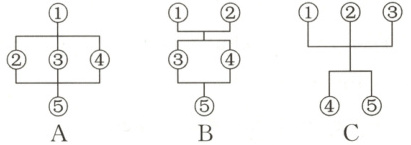
4. (创新考法·篇章结构)Which is the structure of the passage?
5. What’s the best title for the passage?
A. The location of the MSB
B. The glass jars in the MSB
C. The seed collections in the MSB
“You are about to enter the largest wild seed bank in the world,” said Sharon Balding. She is the Seed Collections Manager at the Millennium Seed Bank(MSB). This seed bank is located in Sussex, the UK. “Inside there are more than 39,000 different species of seeds from many countries,” Sharon said. She turned a key, and the heavy vault door slowly opened.
The MSB vaults are guarded 24 hours a day. Inside, rows of glass jars hold the seeds. The jars are labeled with numbers, not plant names. “This is for security,” Sharon said. “If the seeds were stolen, the thief would not know what they were!” So is the collection worth a lot of money? “It’s priceless,” said Sharon.
Collections there are dried and frozen, preserved for the future. They provide an insurance policy against the threats plants face in the wild. Once stored in the Millennium Seed Bank, they act as resources used for research in finding sustainable solutions to global challenges. “Our future survival depends on these seeds. Without them, we could lose important things, like food and medicines,” Sharon said.
Some of the seeds here have already been used. In early 2020, for example, wildfires in Australia burned down the habitat of a rare plant. The MSB sent 250 seeds to help it grow back in the wild.
Sadly, today, two out of five plant species are at risk of extinction. And as the world gets warmer because of climate change, it will be harder for some plants to survive. “We are looking for and studying trees from other parts of the world,” said Owen Blake. He is part of the UK Tree Seed Collecting Team. “Some of these trees will be able to grow in the warmer UK climate,” he said. These scientists are working hard to solve our planet’s problems!
(素材选自 National Geographic Kids)
1. How does the writer start the passage?
A. By giving a fact.
B. By telling a story.
C. By using a saying.
2. From Paragraph 2 we can know that
C
.A. we can find some plant names on the jars
B. the prices of the plants are on the jars
C. we can see the number of the plant on the jar
3. The underlined word “them” here refers to “
B
”.A. the threats
B. the seeds
C. global challenges
4. (创新考法·篇章结构)Which is the structure of the passage?
5. What’s the best title for the passage?
A. The location of the MSB
B. The glass jars in the MSB
C. The seed collections in the MSB
答案:
1.A 2.C 3.B 4.B 5.C
查看更多完整答案,请扫码查看

