

 搜索
搜索
第15页
- 第1页
- 第2页
- 第3页
- 第4页
- 第5页
- 第6页
- 第7页
- 第8页
- 第9页
- 第10页
- 第11页
- 第12页
- 第13页
- 第14页
- 第15页
- 第16页
- 第17页
- 第18页
- 第19页
- 第20页
- 第21页
- 第22页
- 第23页
- 第24页
- 第25页
- 第26页
- 第27页
- 第28页
- 第29页
- 第30页
- 第31页
- 第32页
- 第33页
- 第34页
- 第35页
- 第36页
- 第37页
- 第38页
- 第39页
- 第40页
- 第41页
- 第42页
- 第43页
- 第44页
- 第45页
- 第46页
- 第47页
- 第48页
- 第49页
- 第50页
- 第51页
- 第52页
- 第53页
- 第54页
- 第55页
- 第56页
- 第57页
- 第58页
- 第59页
- 第60页
- 第61页
- 第62页
- 第63页
- 第64页
- 第65页
- 第66页
- 第67页
- 第68页
- 第69页
- 第70页
- 第71页
- 第72页
- 第73页
- 第74页
- 第75页
- 第76页
- 第77页
- 第78页
- 第79页
- 第80页
- 第81页
- 第82页
- 第83页
- 第84页
- 第85页
- 第86页
- 第87页
五、(2024·武威期末)阅读理解。
人与社会——节日(传统文化)
The dragon is a great animal in Chinese culture. It brings the wind and rain. It is said that every year on the second day of the second lunar(阴历的) month the dragon wakes up from its winter sleep and raises its head. Because of this, the day is called the Longtaitou Festival. In 2024, it was on March 11. Ancient people believed that after Longtaitou, there would be more rain. And rain was very important to farming. So Longtaitou was the start of spring and farming.
People have many ways to celebrate the Longtaitou Festival. The most popular one is to have a haircut. Many believe that a haircut during the first lunar month may bring bad luck to their uncles. They hope getting a haircut on Longtaitou can help them get rid of bad luck.
Among Chinese people's festival traditions, there is always a place for food. During the Longtaitou Festival, people eat food named after the dragon. Noodles are the dragon's beard(longxu). Dumplings are the dragon's ears(long'er). And spring rolls are the dragon's scales(鳞片)(longlin).
People also hold activities like dragon dancing on the day. In some places in Shandong Province, people make dragon lanterns. Small reed(芦苇) boats go down the rivers and carry the lanterns, which represent people's best wishes for the rest of the year.
1. What did ancient people think of Longtaitou?
A. It was a good time for sleeping.
B. It was the end of the Spring Festival.
C. It was the start of spring and farming.
D. It meant the weather would become colder.
2. (创新考法·语篇结构题)Which of the following best shows the structure of the passage?
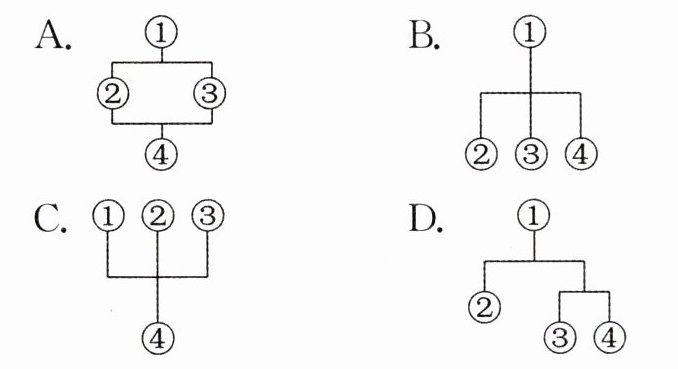
3. (创新考法·写作目的题)What's the writer's purpose in writing the passage?
A. To introduce a traditional festival—the Longtaitou Festival.
B. To tell people how to avoid bad luck.
C. To make a traditional festival popular again.
D. To introduce some tasty foods and fun activities.
人与社会——节日(传统文化)
The dragon is a great animal in Chinese culture. It brings the wind and rain. It is said that every year on the second day of the second lunar(阴历的) month the dragon wakes up from its winter sleep and raises its head. Because of this, the day is called the Longtaitou Festival. In 2024, it was on March 11. Ancient people believed that after Longtaitou, there would be more rain. And rain was very important to farming. So Longtaitou was the start of spring and farming.
People have many ways to celebrate the Longtaitou Festival. The most popular one is to have a haircut. Many believe that a haircut during the first lunar month may bring bad luck to their uncles. They hope getting a haircut on Longtaitou can help them get rid of bad luck.
Among Chinese people's festival traditions, there is always a place for food. During the Longtaitou Festival, people eat food named after the dragon. Noodles are the dragon's beard(longxu). Dumplings are the dragon's ears(long'er). And spring rolls are the dragon's scales(鳞片)(longlin).
People also hold activities like dragon dancing on the day. In some places in Shandong Province, people make dragon lanterns. Small reed(芦苇) boats go down the rivers and carry the lanterns, which represent people's best wishes for the rest of the year.
1. What did ancient people think of Longtaitou?
A. It was a good time for sleeping.
B. It was the end of the Spring Festival.
C. It was the start of spring and farming.
D. It meant the weather would become colder.
2. (创新考法·语篇结构题)Which of the following best shows the structure of the passage?
3. (创新考法·写作目的题)What's the writer's purpose in writing the passage?
A. To introduce a traditional festival—the Longtaitou Festival.
B. To tell people how to avoid bad luck.
C. To make a traditional festival popular again.
D. To introduce some tasty foods and fun activities.
答案:
1~3. CBA
查看更多完整答案,请扫码查看

