

 搜索
搜索
第71页
- 第1页
- 第2页
- 第3页
- 第4页
- 第5页
- 第6页
- 第7页
- 第8页
- 第9页
- 第10页
- 第11页
- 第12页
- 第13页
- 第14页
- 第15页
- 第16页
- 第17页
- 第18页
- 第19页
- 第20页
- 第21页
- 第22页
- 第23页
- 第24页
- 第25页
- 第26页
- 第27页
- 第28页
- 第29页
- 第30页
- 第31页
- 第32页
- 第33页
- 第34页
- 第35页
- 第36页
- 第37页
- 第38页
- 第39页
- 第40页
- 第41页
- 第42页
- 第43页
- 第44页
- 第45页
- 第46页
- 第47页
- 第48页
- 第49页
- 第50页
- 第51页
- 第52页
- 第53页
- 第54页
- 第55页
- 第56页
- 第57页
- 第58页
- 第59页
- 第60页
- 第61页
- 第62页
- 第63页
- 第64页
- 第65页
- 第66页
- 第67页
- 第68页
- 第69页
- 第70页
- 第71页
- 第72页
- 第73页
- 第74页
- 第75页
- 第76页
- 第77页
- 第78页
- 第79页
- 第80页
- 第81页
- 第82页
- 第83页
- 第84页
- 第85页
- 第86页
- 第87页
一、用括号中所给单词的适当形式填空
1. Where are the
2. The
3. We can’t bring
4. I like rice
5. —Are you ready
1. Where are the
menus
(menu) for the dishes?2. The
waitresses
(waitress) often have a meeting in the early morning.3. We can’t bring
snacks
(snack) to school, but we can eat them after school.4. I like rice
dumplings
(dumpling) and rice noodles. Are they on the shopping list?5. —Are you ready
to order
(order), sir? —Yes, I would like two bowls of beef noodles.
答案:
1. menus 2. waitresses 3. snacks 4. dumplings 5. to order
二、从方框中选择单词并用其适当形式填空
lunchtime, problem, pleasure, code, restaurant
6. We often go to the school dining hall at
7. How many Chinese
8. — Can you pass me that glass of water, Kate? — No
9. — Thank you for lending me your favourite book. — My
10. — Do you know the
— No, I don’t. Only he can turn on his computer.
lunchtime, problem, pleasure, code, restaurant
6. We often go to the school dining hall at
lunchtime
.7. How many Chinese
restaurants
are there around your home?8. — Can you pass me that glass of water, Kate? — No
problem
, Mrs. Green.9. — Thank you for lending me your favourite book. — My
pleasure
.10. — Do you know the
code
of your father’s computer?— No, I don’t. Only he can turn on his computer.
答案:
6. lunchtime 7. restaurants 8. problem 9. pleasure 10. code
A surprising cross-culture (跨文化) food—Pasta (意大利面食)
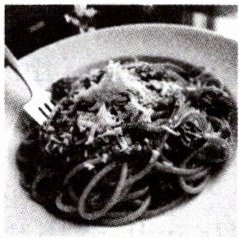
As a boy from Italy, I remember one thing when I was on vacation in China. It showed me how food could cross cultures. A Chinese friend took me to a restaurant in Beijing to show me a popular dish. It was a bowl of banmian. It was delicious, but I couldn’t help feeling I ate this dish before. It was just like Spaghetti Bolognese (意大利番茄肉酱面) with Chinese characteristics (特色), so I was surprised at the dish.
When I ate banmian, it made me think about the history of pasta. Some people believe that the Italian explorer (探险家) Marco Polo brought back pasta from China in the 13th century (世纪). Spaghetti Bolognese shows that after it arrived in Italy, this kind of food doesn’t stop changing (改变).
My grandma tells me throwing (扔) the spaghetti on the wall (墙) can help to see if it’s cooked well. If it sticks (粘住), then it’s ready to eat. But if it falls, it still needs time to cook. “Is there banmian on the walls of the kitchen at this restaurant?” I thought to myself. Through this, I learn food can cross cultures and change over time.
1. Who took the writer to the restaurant in Beijing?
As a boy from Italy, I remember one thing when I was on vacation in China. It showed me how food could cross cultures. A Chinese friend took me to a restaurant in Beijing to show me a popular dish. It was a bowl of banmian. It was delicious, but I couldn’t help feeling I ate this dish before. It was just like Spaghetti Bolognese (意大利番茄肉酱面) with Chinese characteristics (特色), so I was surprised at the dish.
When I ate banmian, it made me think about the history of pasta. Some people believe that the Italian explorer (探险家) Marco Polo brought back pasta from China in the 13th century (世纪). Spaghetti Bolognese shows that after it arrived in Italy, this kind of food doesn’t stop changing (改变).
My grandma tells me throwing (扔) the spaghetti on the wall (墙) can help to see if it’s cooked well. If it sticks (粘住), then it’s ready to eat. But if it falls, it still needs time to cook. “Is there banmian on the walls of the kitchen at this restaurant?” I thought to myself. Through this, I learn food can cross cultures and change over time.
1. Who took the writer to the restaurant in Beijing?
A Chinese friend.
2. Why was the writer surprised at banmian?Because it was just like Spaghetti Bolognese with Chinese characteristics.
3. Who do people believe brought pasta from China to Italy?Marco Polo.
4. If the spaghetti sticks on the wall, is it ready to eat?Yes.
5. [新考法·开放题] What does the writer learn about food?Through this incident, the writer learns that food can cross cultures and change over time.
答案:
【主旨大意】本文是一篇记叙文,主要讲述了作者在中国的一家餐馆品尝拌面的经历。1. A Chinese friend. 2. Because it was just like Spaghetti Bolognese with Chinese characteristics. 3. Marco Polo. 4. Yes. 5. Through this incident, the writer learns that food can cross cultures and change over time.(答案合理即可)
查看更多完整答案,请扫码查看

