

 搜索
搜索
第62页
- 第2页
- 第3页
- 第4页
- 第5页
- 第6页
- 第7页
- 第8页
- 第9页
- 第10页
- 第11页
- 第12页
- 第13页
- 第14页
- 第15页
- 第16页
- 第17页
- 第18页
- 第19页
- 第20页
- 第21页
- 第22页
- 第23页
- 第24页
- 第25页
- 第26页
- 第27页
- 第28页
- 第29页
- 第30页
- 第31页
- 第32页
- 第33页
- 第34页
- 第35页
- 第36页
- 第37页
- 第38页
- 第39页
- 第40页
- 第41页
- 第42页
- 第43页
- 第44页
- 第45页
- 第46页
- 第47页
- 第48页
- 第49页
- 第50页
- 第51页
- 第52页
- 第53页
- 第54页
- 第55页
- 第56页
- 第57页
- 第58页
- 第59页
- 第60页
- 第61页
- 第62页
- 第63页
- 第64页
- 第65页
- 第66页
- 第67页
- 第68页
- 第69页
- 第70页
- 第71页
- 第72页
- 第73页
- 第74页
- 第75页
- 第76页
- 第77页
- 第78页
- 第79页
- 第80页
- 第81页
- 第82页
- 第83页
- 第84页
- 第85页
- 第86页
- 第87页
- 第88页
- 第89页
- 第90页
- 第91页
- 第92页
- 第93页
- 第94页
- 第95页
- 第96页
- 第97页
- 第98页
- 第99页
- 第100页
Ⅰ. Listen to the sentences and circle the words you hear.
( ) 1. A. memory B. memories C. memorize
( ) 2. A. soldier B. sell C. seldom
( ) 3. A. model B. modern C. made
( ) 4. A. highway B. hallway C. weigh
( ) 5. A. wild B. widen C. wide
( ) 1. A. memory B. memories C. memorize
( ) 2. A. soldier B. sell C. seldom
( ) 3. A. model B. modern C. made
( ) 4. A. highway B. hallway C. weigh
( ) 5. A. wild B. widen C. wide
答案:
1.B 2.C 3.B 4.A 5.C
Ⅱ. Listen and choose the right pictures.
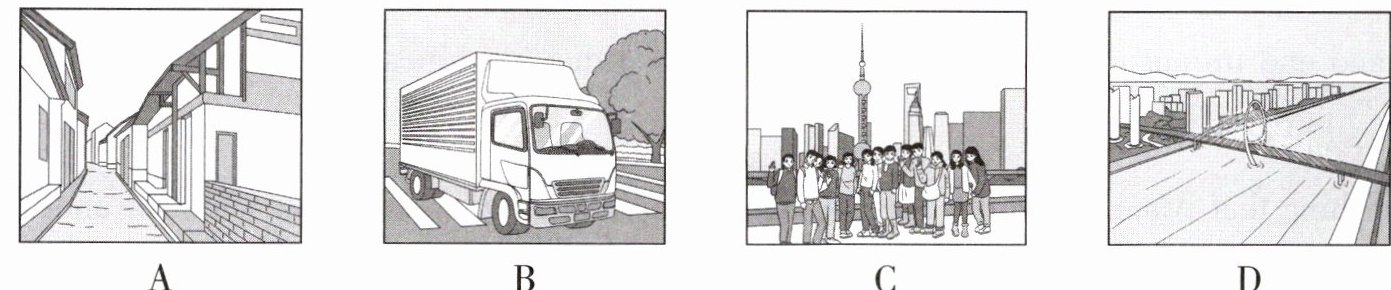 1. ______ 2. ______ 3. ______ 4. ______
1. ______ 2. ______ 3. ______ 4. ______
答案:
1.B 2.D 3.A 4.C
Ⅲ. Listen to the passage and complete the sentences.
1. People live in shikumen houses often chatted and shared ______.
2. People mainly relied on ______ industries like textile and handicrafts for a living.
3. With the development, Shanghai has become a ______ international city.
4. The transportation in Shanghai is very ______ with subways, maglev trains etc.
5. There are various exhibitions, concerts, and international ______ every year.
1. People live in shikumen houses often chatted and shared ______.
2. People mainly relied on ______ industries like textile and handicrafts for a living.
3. With the development, Shanghai has become a ______ international city.
4. The transportation in Shanghai is very ______ with subways, maglev trains etc.
5. There are various exhibitions, concerts, and international ______ every year.
答案:
1. daily life 2. traditional 3. modern 4. convenient 5. cultural festivals
( ) 1.The colourful flowers in the garden look ______ in the morning sunlight.
A.beautifully
B.beautiful
C.beauty
D.more beautifully
A.beautifully
B.beautiful
C.beauty
D.more beautifully
答案:
B
( ) 2.My parents always make me ______ my homework before watching TV.
A.finish
B.finishing
C.to finish
D.finishes
A.finish
B.finishing
C.to finish
D.finishes
答案:
A
( ) 3.I ______ my bike to school every day when I was in high school, but now I take a bus.
A.am used to riding
B.used to riding
C.used to ride
D.was used to ride
A.am used to riding
B.used to riding
C.used to ride
D.was used to ride
答案:
C
( ) 4.The number of students in hour school ______ about 2,000 this year.
A.are
B.were
C.is
D.was
A.are
B.were
C.is
D.was
答案:
C
( ) 5.These sweaters are very special and expensive, because they are made ______.
A.with hand
B.in hand
C.on hand
D.by hand
A.with hand
B.in hand
C.on hand
D.by hand
答案:
D
Ⅴ. Choose the best answer.
Shenzhen, located in southern China, has experienced dramatic changes over the past few decades.
Before 1980, Shenzhen was just a small fishing village with a small population. The economy mainly relied on fishing and agriculture. People lived in simple houses, and the infrastructure was quite basic. There were only a few narrow roads, and transportation was limited to bicycles and a small number of buses. The educational and medical resources were scarce, providing only the most basic services to the local residents.
In 1980, Shenzhen was established as China's first special economic zone. This was a turning - point for the city. Since then, a large number of people from all over the country have flocked to Shenzhen. They brought new ideas and energy. Many factories were built.
As time went by, Shenzhen began to transform its economic structure. It gradually shifted from relying mainly on traditional manufacturing to focusing on high - tech industries. Companies like Huawei, Tencent, and DJI were founded and grew into global giants in Shenzhen. These high - tech enterprises attracted a large number of high - end talents, driving innovation and development in the city.
Nowadays, Shenzhen is a modern metropolis. Skyscrapers stand tall everywhere, representing the city's economic strength. The transportation network has become extremely convenient, with an extensive subway system, high - speed trains, and well - planned roads. The city also has top - notch educational and medical facilities. It has become a popular destination for people seeking career opportunities, high - quality education, and better living standards. Additionally, Shenzhen hosts various international events, such as the China Hi - Tech Fair, which further enhances its global influence.
The transformation of Shenzhen from a small fishing village to a global high - tech and economic hub is a remarkable example of China's reform and opening - up policy. It continues to develop and create more miracles in the future.
( ) 1. What was Shenzhen mainly like before 1980?
A. A modern city with high - tech industries.
B. A small fishing village relying on fishing and agriculture.
C. A commercial centre with many large companies.
D. A city with advanced infrastructure.
( ) 2. Which of the following companies is NOT mentioned as a high - tech giant in Shenzhen?
A. Alibaba. B. Huawei. C. Tencent. D. DJI.
( ) 3. What changes have taken place in Shenzhen's transportation?
A. From having no roads to having wide highways.
B. From relying only on bicycles to having a convenient transportation network.
C. From having a few buses to having only high - speed trains.
D. From having an old - fashioned subway system to a modern one.
( ) 4. What can we learn from the passage about Shenzhen's development?
A. It is mainly due to its geographical location.
B. It has no connection with China's reform and opening - up policy.
C. It only focuses on the development of high - tech industries.
D. It is a result of continuous efforts in economic transformation and attracting talents.
Shenzhen, located in southern China, has experienced dramatic changes over the past few decades.
Before 1980, Shenzhen was just a small fishing village with a small population. The economy mainly relied on fishing and agriculture. People lived in simple houses, and the infrastructure was quite basic. There were only a few narrow roads, and transportation was limited to bicycles and a small number of buses. The educational and medical resources were scarce, providing only the most basic services to the local residents.
In 1980, Shenzhen was established as China's first special economic zone. This was a turning - point for the city. Since then, a large number of people from all over the country have flocked to Shenzhen. They brought new ideas and energy. Many factories were built.
As time went by, Shenzhen began to transform its economic structure. It gradually shifted from relying mainly on traditional manufacturing to focusing on high - tech industries. Companies like Huawei, Tencent, and DJI were founded and grew into global giants in Shenzhen. These high - tech enterprises attracted a large number of high - end talents, driving innovation and development in the city.
Nowadays, Shenzhen is a modern metropolis. Skyscrapers stand tall everywhere, representing the city's economic strength. The transportation network has become extremely convenient, with an extensive subway system, high - speed trains, and well - planned roads. The city also has top - notch educational and medical facilities. It has become a popular destination for people seeking career opportunities, high - quality education, and better living standards. Additionally, Shenzhen hosts various international events, such as the China Hi - Tech Fair, which further enhances its global influence.
The transformation of Shenzhen from a small fishing village to a global high - tech and economic hub is a remarkable example of China's reform and opening - up policy. It continues to develop and create more miracles in the future.
( ) 1. What was Shenzhen mainly like before 1980?
A. A modern city with high - tech industries.
B. A small fishing village relying on fishing and agriculture.
C. A commercial centre with many large companies.
D. A city with advanced infrastructure.
( ) 2. Which of the following companies is NOT mentioned as a high - tech giant in Shenzhen?
A. Alibaba. B. Huawei. C. Tencent. D. DJI.
( ) 3. What changes have taken place in Shenzhen's transportation?
A. From having no roads to having wide highways.
B. From relying only on bicycles to having a convenient transportation network.
C. From having a few buses to having only high - speed trains.
D. From having an old - fashioned subway system to a modern one.
( ) 4. What can we learn from the passage about Shenzhen's development?
A. It is mainly due to its geographical location.
B. It has no connection with China's reform and opening - up policy.
C. It only focuses on the development of high - tech industries.
D. It is a result of continuous efforts in economic transformation and attracting talents.
答案:
1.B 2.A 3.B 4.D
查看更多完整答案,请扫码查看

