

 搜索
搜索
第40页
- 第2页
- 第3页
- 第4页
- 第5页
- 第6页
- 第7页
- 第8页
- 第9页
- 第10页
- 第11页
- 第12页
- 第13页
- 第14页
- 第15页
- 第16页
- 第17页
- 第18页
- 第19页
- 第20页
- 第21页
- 第22页
- 第23页
- 第24页
- 第25页
- 第26页
- 第27页
- 第28页
- 第29页
- 第30页
- 第31页
- 第32页
- 第33页
- 第34页
- 第35页
- 第36页
- 第37页
- 第38页
- 第39页
- 第40页
- 第41页
- 第42页
- 第43页
- 第44页
- 第45页
- 第46页
- 第47页
- 第48页
- 第49页
- 第50页
- 第51页
- 第52页
- 第53页
- 第54页
- 第55页
- 第56页
- 第57页
- 第58页
- 第59页
- 第60页
- 第61页
- 第62页
- 第63页
- 第64页
- 第65页
- 第66页
- 第67页
- 第68页
- 第69页
- 第70页
- 第71页
- 第72页
- 第73页
- 第74页
- 第75页
- 第76页
- 第77页
- 第78页
- 第79页
- 第80页
- 第81页
- 第82页
- 第83页
- 第84页
- 第85页
- 第86页
- 第87页
- 第88页
- 第89页
- 第90页
- 第91页
- 第92页
- 第93页
- 第94页
- 第95页
- 第96页
- 第97页
- 第98页
- 第99页
- 第100页
Ⅰ. Make sentences with words or phrases.
1. shelf, a, box, saw, I, shaking, on, the___
2. suddenly, fell, hands, the, my, cup, of, out___
3. jumped, and, a, loudly, barking, puppy, out, started___
4. birthday, how, is, this, curiosity, my, ruined, a, party, surprising___
1. shelf, a, box, saw, I, shaking, on, the___
2. suddenly, fell, hands, the, my, cup, of, out___
3. jumped, and, a, loudly, barking, puppy, out, started___
4. birthday, how, is, this, curiosity, my, ruined, a, party, surprising___
答案:
Ⅰ. 1. I saw a box shaking on the shelf.
2. The cup suddenly fell out of my hands./Suddenly, the cup fell out of my hands.
3. A puppy jumped out and started barking loudly.
4. This is how my curiosity ruined a surprising birthday party.
2. The cup suddenly fell out of my hands./Suddenly, the cup fell out of my hands.
3. A puppy jumped out and started barking loudly.
4. This is how my curiosity ruined a surprising birthday party.
Ⅱ. Translate the following sentences into Chinese.
1. Every now and then I heard a little yap, “What can that be?” I wondered.___
2. A puppy jumped out and started barking loudly—in the middle of the night!___
3. This is how my curiosity ruined a birthday surprise!___
1. Every now and then I heard a little yap, “What can that be?” I wondered.___
2. A puppy jumped out and started barking loudly—in the middle of the night!___
3. This is how my curiosity ruined a birthday surprise!___
答案:
Ⅱ. 1. 时不时地,我听到一声小小的吠叫。"那会是什么呢?"我心里琢磨着。
2. 半夜里,一只小狗跳了出来,开始大声吠叫!
3. 我的好奇心就这样毁掉了一个生日惊喜!
2. 半夜里,一只小狗跳了出来,开始大声吠叫!
3. 我的好奇心就这样毁掉了一个生日惊喜!
Ⅲ. Translate the following sentences into English.
1. 我想知道他是如何在这么短的时间内学好英语的。(wonder)___
2. 地震发生时,整栋大楼都在摇晃。(shake)___
3. 你能看到那边鸟儿在湖面上方飞吗?(see)___
4. 每当有人路过,院子里的小狗就会对着他们汪汪叫。(bark)___
5. 在好奇心的驱使下,我决定在父母回家之前打开那个盒子。(curiosity)___
1. 我想知道他是如何在这么短的时间内学好英语的。(wonder)___
2. 地震发生时,整栋大楼都在摇晃。(shake)___
3. 你能看到那边鸟儿在湖面上方飞吗?(see)___
4. 每当有人路过,院子里的小狗就会对着他们汪汪叫。(bark)___
5. 在好奇心的驱使下,我决定在父母回家之前打开那个盒子。(curiosity)___
答案:
Ⅲ. 1. I wonder how he learned English well in such a short time.
2. The whole building was shaking when the earthquake happened.
3. Can you see birds flying above the lake over there?
4. The little dog in the yard barks at people whenever they pass by.
5. Driven by curiosity, I decided to open that box before my parents came back.
2. The whole building was shaking when the earthquake happened.
3. Can you see birds flying above the lake over there?
4. The little dog in the yard barks at people whenever they pass by.
5. Driven by curiosity, I decided to open that box before my parents came back.
Ⅳ. Writing—complete the table according to the requirements.
| Reason for your curiosity |
| Your thoughts/feelings |
| Sensory details (see, hear, touch etc. ) |
| Actions |
| Result |
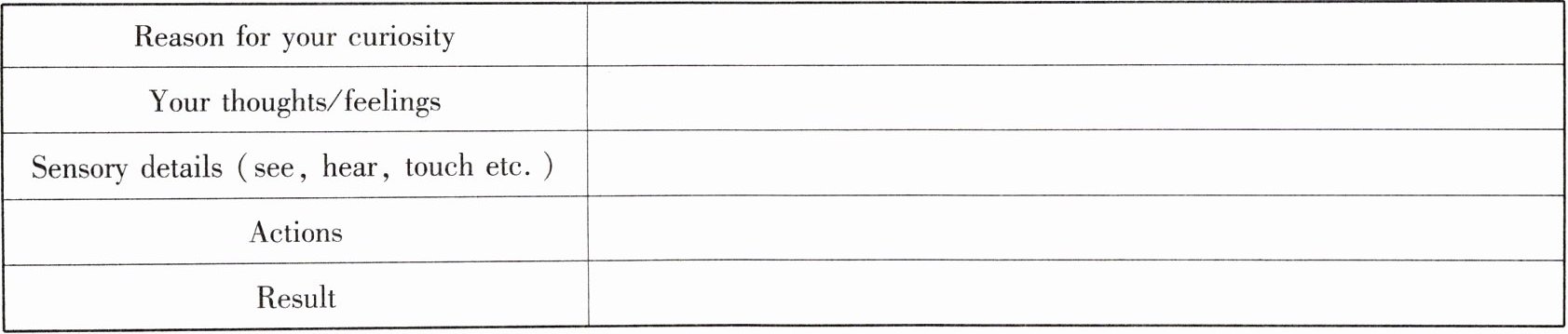
| Reason for your curiosity |
| Your thoughts/feelings |
| Sensory details (see, hear, touch etc. ) |
| Actions |
| Result |
答案:
| Reason for your curiosity | I saw a strange-looking fruit at the market and was curious about what it was. |
| ---- | ---- |
| Your thoughts/feelings | I felt excited and eager to know more about this unknown fruit. |
| Sensory details (see, hear, touch etc.) | I saw its bright purple color and unique shape. When I picked it up, it felt a bit rough to the touch. I didn't hear any sound from it. |
| Actions | I asked the vendor about the fruit's name and origin. Then I bought one to take home for further exploration. |
| Result | I learned that it was a dragon fruit. After tasting it, I found it sweet and refreshing. |
| ---- | ---- |
| Your thoughts/feelings | I felt excited and eager to know more about this unknown fruit. |
| Sensory details (see, hear, touch etc.) | I saw its bright purple color and unique shape. When I picked it up, it felt a bit rough to the touch. I didn't hear any sound from it. |
| Actions | I asked the vendor about the fruit's name and origin. Then I bought one to take home for further exploration. |
| Result | I learned that it was a dragon fruit. After tasting it, I found it sweet and refreshing. |
Ⅴ. Answer the questions.
You may know that bees make delicious honey. But do you know they keep us all alive?
Every year on May 20, it's World Bee Day. It's a day to thank bees for all they do. Without bees, we wouldn't have any food! When bees fly from plant to plant, they carry pollen (花粉). The pollen makes new plants grow. It is said that three fourths of the world's flowering plants and about 35% of the world's food crops depend on bees and other animals to grow. Bees not only help flowers grow. They also help fruit and vegetables grow.
It's also a day to learn more about the problems bees are facing. “Loss of natural habitat, getting sick from chemicals used on crops, and higher temperatures with climate change are making the number of bees drop,” said an organisation of the United Nations.
People are now looking to modern technology to help save the bees. One example is the robotic bee project called Robot Royale. The European Commission offers money for it. The project makes robot bees to help feed and look after the queen bee. This will get the queen bee to lay more eggs and make more bees.
1. When is World Bee Day?___
2. What do bees do when they fly from plant to plant?___
3. How many problems are bees facing according to an organisation of the United Nations?___
4. How do people help save the bees now?___
5. What will you do to celebrate World Bee Day?___
You may know that bees make delicious honey. But do you know they keep us all alive?
Every year on May 20, it's World Bee Day. It's a day to thank bees for all they do. Without bees, we wouldn't have any food! When bees fly from plant to plant, they carry pollen (花粉). The pollen makes new plants grow. It is said that three fourths of the world's flowering plants and about 35% of the world's food crops depend on bees and other animals to grow. Bees not only help flowers grow. They also help fruit and vegetables grow.
It's also a day to learn more about the problems bees are facing. “Loss of natural habitat, getting sick from chemicals used on crops, and higher temperatures with climate change are making the number of bees drop,” said an organisation of the United Nations.
People are now looking to modern technology to help save the bees. One example is the robotic bee project called Robot Royale. The European Commission offers money for it. The project makes robot bees to help feed and look after the queen bee. This will get the queen bee to lay more eggs and make more bees.
1. When is World Bee Day?___
2. What do bees do when they fly from plant to plant?___
3. How many problems are bees facing according to an organisation of the United Nations?___
4. How do people help save the bees now?___
5. What will you do to celebrate World Bee Day?___
答案:
Ⅴ. 1. It is on May 20 every year.
2. They carry pollen.
3. Three.
4. People are now looking to modern technology to help save the bees.
5. Any reasonable answer is OK.
2. They carry pollen.
3. Three.
4. People are now looking to modern technology to help save the bees.
5. Any reasonable answer is OK.
查看更多完整答案,请扫码查看

