

 搜索
搜索
第123页
- 第1页
- 第2页
- 第3页
- 第4页
- 第5页
- 第6页
- 第7页
- 第8页
- 第9页
- 第10页
- 第11页
- 第12页
- 第13页
- 第14页
- 第15页
- 第16页
- 第17页
- 第18页
- 第19页
- 第20页
- 第21页
- 第22页
- 第23页
- 第24页
- 第25页
- 第26页
- 第27页
- 第28页
- 第29页
- 第30页
- 第31页
- 第32页
- 第33页
- 第34页
- 第35页
- 第36页
- 第37页
- 第38页
- 第39页
- 第40页
- 第41页
- 第42页
- 第43页
- 第44页
- 第45页
- 第46页
- 第47页
- 第48页
- 第49页
- 第50页
- 第51页
- 第52页
- 第53页
- 第54页
- 第55页
- 第56页
- 第57页
- 第58页
- 第59页
- 第60页
- 第61页
- 第62页
- 第63页
- 第64页
- 第65页
- 第66页
- 第67页
- 第68页
- 第69页
- 第70页
- 第71页
- 第72页
- 第73页
- 第74页
- 第75页
- 第76页
- 第77页
- 第78页
- 第79页
- 第80页
- 第81页
- 第82页
- 第83页
- 第84页
- 第85页
- 第86页
- 第87页
- 第88页
- 第89页
- 第90页
- 第91页
- 第92页
- 第93页
- 第94页
- 第95页
- 第96页
- 第97页
- 第98页
- 第99页
- 第100页
- 第101页
- 第102页
- 第103页
- 第104页
- 第105页
- 第106页
- 第107页
- 第108页
- 第109页
- 第110页
- 第111页
- 第112页
- 第113页
- 第114页
- 第115页
- 第116页
- 第117页
- 第118页
- 第119页
- 第120页
- 第121页
- 第122页
- 第123页
- 第124页
- 第125页
- 第126页
- 第127页
- 第128页
- 第129页
- 第130页
- 第131页
- 第132页
- 第133页
- 第134页
- 第135页
- 第136页
We'll come back
A.after
B.in
C.at
D.for
B
an hour.A.after
B.in
C.at
D.for
答案:
2.B
Ⅰ. 根据句意及首字母或汉语提示拼写单词
1. Everyone wishes to have health, w
2. He is ill and his face looks
3. The doctor e
4. Have you ever visited the P
5. He works in the bank. He's a
1. Everyone wishes to have health, w
ealth
and happiness.2. He is ill and his face looks
pale
(苍白的).3. The doctor e
xamined
the patient (病人) very carefully.4. Have you ever visited the P
alace
Museum (故宫博物院)?5. He works in the bank. He's a
banker
(银行家).
答案:
Ⅰ.1.wealth 2.pale 3.examined 4.Palace 5.banker
(
A.To be honest
B.To start with
C.To my surprise
D.To tell you the truth
B
)1.Welcome to our school, ladies and gentlemen., I'd like to introduce myself.A.To be honest
B.To start with
C.To my surprise
D.To tell you the truth
答案:
Ⅱ.1.B
(
A.at
B.of
C.in
D.to
C
)2.He did quite well the exam.A.at
B.of
C.in
D.to
答案:
Ⅱ.2.C
(
A.rubbish; angry
B.rubbishes; angrily
C.rubbish; angrily
D.rubbishes; angry
A
)3.When the boy throws on the ground, it makes me.A.rubbish; angry
B.rubbishes; angrily
C.rubbish; angrily
D.rubbishes; angry
答案:
Ⅱ.3.A
(
A.followed by
B.being followed by
C.followed
D.follow by
B
)4.He's always worrying about others.A.followed by
B.being followed by
C.followed
D.follow by
答案:
Ⅱ.4.B
(
A.Both; and
B.Neither; nor
C.Either; or
D.Not only; but also
B
)5. I Tom wants to stay at home. We need to do sports outside.A.Both; and
B.Neither; nor
C.Either; or
D.Not only; but also
答案:
Ⅱ.5.B
Ⅲ. 阅读理解
It's not just women who wear skirts. Men can wear them, too. In Scotland, men wear a kind of skirt called a kilt. The kilt is their national dress and an important part of their tradition.
A kilt is a colored skirt reaching down to the knee. It has checks (格子) on it with different colors, like red or blue. Each family in Scotland has its own colors.
How did the Scots start to wear kilts? There are many stories about it. One story is that the kilt was invented in the 1720s by an English factory owner, Thomas Rawlinson.
Rawlinson had a number of Scottish workers in his factory and he thought their clothing got in the way of their work. So he cut their long clothes into a shorter skirt.
Today, most Scotsmen see kilts as formal (正式的) dresses. They usually wear them only at weddings or big dinners. There are only a few men who still wear a kilt every day. Scots also wear kilts in parades (游行) when they play their traditional musical instrument: bagpipes (风笛). The army still has kilts as the dress uniform, but they no longer wear them to fight.
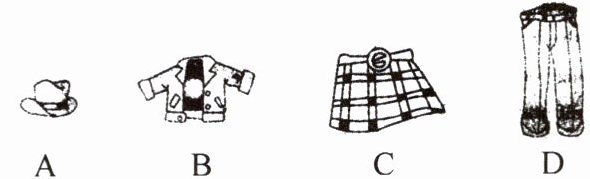
(
A B C D
(
A. colors
B. checks
C. rules
D. shapes
(
A. 到达
B. 得到
C. 在路上
D. 妨碍
(
A. At weddings.
B. At big dinners.
C. In parades.
D. All of the above.
(
A. things about Scotsmen's traditional kilts
B. how to wear kilts
C. when to wear kilts
D. Scotsmen's important tradition
It's not just women who wear skirts. Men can wear them, too. In Scotland, men wear a kind of skirt called a kilt. The kilt is their national dress and an important part of their tradition.
A kilt is a colored skirt reaching down to the knee. It has checks (格子) on it with different colors, like red or blue. Each family in Scotland has its own colors.
How did the Scots start to wear kilts? There are many stories about it. One story is that the kilt was invented in the 1720s by an English factory owner, Thomas Rawlinson.
Rawlinson had a number of Scottish workers in his factory and he thought their clothing got in the way of their work. So he cut their long clothes into a shorter skirt.
Today, most Scotsmen see kilts as formal (正式的) dresses. They usually wear them only at weddings or big dinners. There are only a few men who still wear a kilt every day. Scots also wear kilts in parades (游行) when they play their traditional musical instrument: bagpipes (风笛). The army still has kilts as the dress uniform, but they no longer wear them to fight.
(
C
)1. A kilt is.A B C D
(
A
)2. In Scotland, different families have different for their kilts.A. colors
B. checks
C. rules
D. shapes
(
D
)3. What does the underlined phrase “got in the way of” mean in Chinese?A. 到达
B. 得到
C. 在路上
D. 妨碍
(
D
)4. When do Scotsmen wear kilts?A. At weddings.
B. At big dinners.
C. In parades.
D. All of the above.
(
A
)5. The story mainly tells us.A. things about Scotsmen's traditional kilts
B. how to wear kilts
C. when to wear kilts
D. Scotsmen's important tradition
答案:
Ⅲ.1.C 2.A 3.D 4.D 5.A
查看更多完整答案,请扫码查看

