

 搜索
搜索
第55页
- 第1页
- 第2页
- 第3页
- 第4页
- 第5页
- 第6页
- 第7页
- 第8页
- 第9页
- 第10页
- 第11页
- 第12页
- 第13页
- 第14页
- 第15页
- 第16页
- 第17页
- 第18页
- 第19页
- 第20页
- 第21页
- 第22页
- 第23页
- 第24页
- 第25页
- 第26页
- 第27页
- 第28页
- 第29页
- 第30页
- 第31页
- 第32页
- 第33页
- 第34页
- 第35页
- 第36页
- 第37页
- 第38页
- 第39页
- 第40页
- 第41页
- 第42页
- 第43页
- 第44页
- 第45页
- 第46页
- 第47页
- 第48页
- 第49页
- 第50页
- 第51页
- 第52页
- 第53页
- 第54页
- 第55页
- 第56页
- 第57页
- 第58页
- 第59页
- 第60页
- 第61页
- 第62页
- 第63页
- 第64页
- 第65页
- 第66页
- 第67页
- 第68页
- 第69页
- 第70页
- 第71页
- 第72页
- 第73页
- 第74页
- 第75页
- 第76页
- 第77页
- 第78页
- 第79页
- 第80页
- 第81页
- 第82页
- 第83页
- 第84页
- 第85页
- 第86页
- 第87页
- 第88页
- 第89页
- 第90页
- 第91页
- 第92页
- 第93页
- 第94页
- 第95页
- 第96页
- 第97页
- 第98页
- 第99页
- 第100页
- 第101页
- 第102页
- 第103页
- 第104页
- 第105页
- 第106页
- 第107页
- 第108页
- 第109页
- 第110页
- 第111页
- 第112页
- 第113页
- 第114页
- 第115页
- 第116页
- 第117页
- 第118页
- 第119页
- 第120页
- 第121页
- 第122页
- 第123页
- 第124页
- 第125页
- 第126页
- 第127页
- 第128页
- 第129页
- 第130页
- 第131页
- 第132页
- 第133页
- 第134页
- 第135页
- 第136页
- 第137页
- 第138页
- 第139页
- 第140页
- 第141页
- 第142页
- 第143页
- 第144页
- 第145页
- 第146页
- 第147页
- 第148页
- 第149页
- 第150页
1. When the lanterns are lit, they slowly rise into the air like small hot - air balloons for all to see.
【感知】(1)The river has risen (by) several metres.
(2)We must raise the living standard.
【思考】rise 为不及物动词,意为
【运用】
根据汉语意思完成下列句子,每空一词。
(1)那家商店商品的价格天天上涨。
Prices
(2)他的发言激起了我的兴趣。
His speech
(3)我们在太阳升起的时候升旗。
We
【感知】(1)The river has risen (by) several metres.
(2)We must raise the living standard.
【思考】rise 为不及物动词,意为
上升;升起
,其过去式是rose
,过去分词是risen
。raise 为及物
动词,意为提高;筹集;养育
。【运用】
根据汉语意思完成下列句子,每空一词。
(1)那家商店商品的价格天天上涨。
Prices
rise
every day in that shop.(2)他的发言激起了我的兴趣。
His speech
raised
my interest.(3)我们在太阳升起的时候升旗。
We
raise
the flag at the time when the sun rises/is rising
.
答案:
【思考】rise 为不及物动词,意为“上升;升起”,其过去式是 rose,过去分词是 risen。raise 为及物动词,意为“提高;筹集;养育”。
【运用】(1)rise (2)raised (3)raise;rises/is rising
【运用】(1)rise (2)raised (3)raise;rises/is rising
2. Paper cutting has been around for over 1,500 years.
【感知】(1)He is the most intelligent artist around today.
(2)There're around 1,000 employees in this company.
(3)He runs around the playground.
(4)He looked around as he heard a noise.
【思考】(1)句中 around 是
【运用】
(1)他大约 5 点到达了这儿。
He
(2)我们在欧洲各地旅行了 6 个星期。
We
(3)地球绕着太阳转。
The earth
(4)有大量新车上市。
There are many new cars
【感知】(1)He is the most intelligent artist around today.
(2)There're around 1,000 employees in this company.
(3)He runs around the playground.
(4)He looked around as he heard a noise.
【思考】(1)句中 around 是
副
词,意为“存在,出现”;(2)句中 around 是副
词,相当于 about,意为“大约
”,主要用于数字或时间前;(3)句中 around 是介
词,意为“围绕
”;(4)句中是副词,意为“到处,周围”。【运用】
(1)他大约 5 点到达了这儿。
He
arrived
here
around
five o'clock.(2)我们在欧洲各地旅行了 6 个星期。
We
has
been
around
in Europe for six weeks.(3)地球绕着太阳转。
The earth
goes/moves
around
the sun.(4)有大量新车上市。
There are many new cars
around
.
答案:
【思考】
(1) 副
(2) 副;大约
(3) 介;围绕
【运用】(1)arrived here around (2)has been around (3)goes/moves around (4)around
(1) 副
(2) 副;大约
(3) 介;围绕
【运用】(1)arrived here around (2)has been around (3)goes/moves around (4)around
3. The pieces are usually cute children or lively characters from a Chinese fairy tale or historical story.
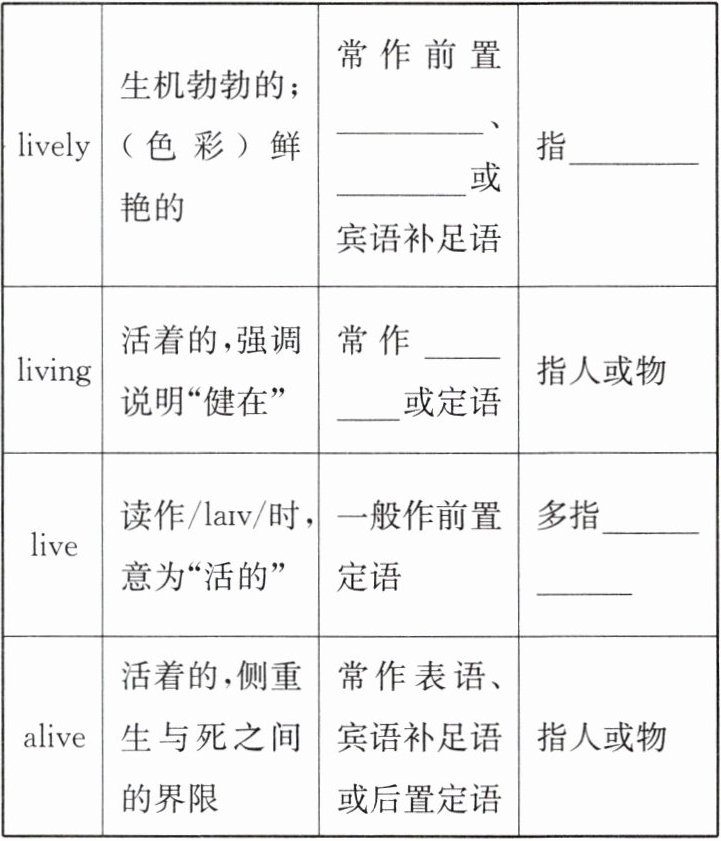
【感知】(1)The lecture is very lively.
(2)The old woman is still living.
(3)Don't touch it. It's a live snake.
(4)She was alive when they took her to the hospital.
【思考】辨析 lively,living,live 与 alive
【运用】
用 lively,living,live 或 alive 填空。
(1)She was a
(2)We are so excited to see real
(3)He is one of the greatest
(4)She had to steal food just to stay
【感知】(1)The lecture is very lively.
(2)The old woman is still living.
(3)Don't touch it. It's a live snake.
(4)She was alive when they took her to the hospital.
【思考】辨析 lively,living,live 与 alive
【运用】
用 lively,living,live 或 alive 填空。
(1)She was a
lively
young woman with patience and imagination.(2)We are so excited to see real
live
elephants.(3)He is one of the greatest
living
writers.(4)She had to steal food just to stay
alive
.
答案:
【思考】
定语、表语 指人或物(强调有活力、生动等)
表语
多指物(如动物等)
【运用】(1)lively (2)live (3)living (4)alive
定语、表语 指人或物(强调有活力、生动等)
表语
多指物(如动物等)
【运用】(1)lively (2)live (3)living (4)alive
查看更多完整答案,请扫码查看

