

 搜索
搜索
第30页
- 第1页
- 第2页
- 第3页
- 第4页
- 第5页
- 第6页
- 第7页
- 第8页
- 第9页
- 第10页
- 第11页
- 第12页
- 第13页
- 第14页
- 第15页
- 第16页
- 第17页
- 第18页
- 第19页
- 第20页
- 第21页
- 第22页
- 第23页
- 第24页
- 第25页
- 第26页
- 第27页
- 第28页
- 第29页
- 第30页
- 第31页
- 第32页
- 第33页
- 第34页
- 第35页
- 第36页
- 第37页
- 第38页
- 第39页
- 第40页
- 第41页
- 第42页
- 第43页
- 第44页
- 第45页
- 第46页
- 第47页
- 第48页
- 第49页
- 第50页
- 第51页
- 第52页
- 第53页
- 第54页
- 第55页
- 第56页
- 第57页
- 第58页
- 第59页
- 第60页
- 第61页
- 第62页
- 第63页
- 第64页
- 第65页
- 第66页
- 第67页
- 第68页
- 第69页
- 第70页
- 第71页
- 第72页
- 第73页
- 第74页
- 第75页
- 第76页
- 第77页
- 第78页
- 第79页
- 第80页
- 第81页
- 第82页
- 第83页
- 第84页
- 第85页
- 第86页
- 第87页
- 第88页
- 第89页
- 第90页
- 第91页
- 第92页
- 第93页
- 第94页
- 第95页
- 第96页
- 第97页
- 第98页
- 第99页
- 第100页
- 第101页
- 第102页
- 第103页
- 第104页
- 第105页
- 第106页
- 第107页
- 第108页
- 第109页
- 第110页
- 第111页
- 第112页
- 第113页
- 第114页
- 第115页
- 第116页
- 第117页
- 第118页
- 第119页
- 第120页
- 第121页
- 第122页
- 第123页
- 第124页
- 第125页
- 第126页
- 第127页
- 第128页
- 第129页
- 第130页
- 第131页
- 第132页
- 第133页
- 第134页
- 第135页
- 第136页
- 第137页
- 第138页
- 第139页
- 第140页
- 第141页
- 第142页
- 第143页
- 第144页
- 第145页
- 第146页
- 第147页
- 第148页
- 第149页
- 第150页
1. When you visit a foreign country, it is important to know how to ask for help politely.
【感知】(1)She answered the guest's questions politely.
(2)We also need to learn how to be polite when we ask for help.
(3)Don't stare at others. It's impolite.
【思考】polite 是形容词,意为"
【运用】
(1)We need to learn how to make
(2)He is a nice boy. He always talks to others
(3)It's
【感知】(1)She answered the guest's questions politely.
(2)We also need to learn how to be polite when we ask for help.
(3)Don't stare at others. It's impolite.
【思考】polite 是形容词,意为"
礼貌的
"。politely 是副词,意为"礼貌地
"。polite 的反义词是impolite
。【运用】
(1)We need to learn how to make
polite
requests.(2)He is a nice boy. He always talks to others
politely
.(3)It's
impolite
to talk loudly in public places like a library.
答案:
【思考】polite 是形容词,意为"礼貌的"。politely 是副词,意为"礼貌地"。polite 的反义词是impolite。【运用】
(1)polite
(2)politely
(3)impolite
(1)polite
(2)politely
(3)impolite
2. Sometimes we even need to spend time leading into a request.
【感知】(1)We spent the night in a hotel.
(2)She spent most of her pocket money on books and magazines.
【思考】spend 表示花费时间或金钱做某事,其过去式为
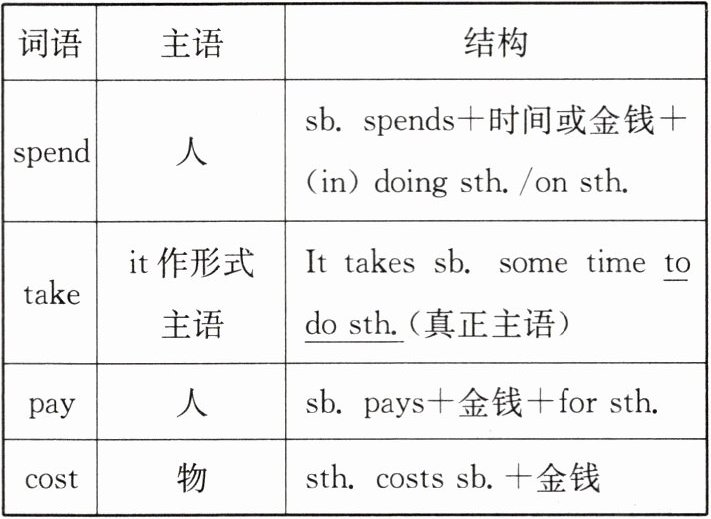
【运用】
(1)昨天我花了三个小时做作业。
I
(2)乘公共汽车去武汉花了我四个小时。
It
(3)我花了六元钱买这支笔。
I
(4)我的英语书花了我五元钱。
My English book
【感知】(1)We spent the night in a hotel.
(2)She spent most of her pocket money on books and magazines.
【思考】spend 表示花费时间或金钱做某事,其过去式为
spent
。句式结构为 spend time/moneydoing
(do)sth.或 spend time/moneyon
sth.。表示"花费"的动词有 spend,take,pay 和 cost。辨析如下:【运用】
(1)昨天我花了三个小时做作业。
I
spent
3 hoursdoing/on
my homework yesterday.(2)乘公共汽车去武汉花了我四个小时。
It
took
me four hoursto
go to Wuhan by bus.(3)我花了六元钱买这支笔。
I
paid;for/spent;on
six yuan the pen.(4)我的英语书花了我五元钱。
My English book
cost
me five yuan.
答案:
【思考】spend 表示花费时间或金钱做某事,其过去式为spent。句式结构为 spend time/money doing sth.或 spend time/money on sth.。
【运用】
(1)spent;doing/on
(2)took;to
(3)paid;for/spent;on
(4)cost
【运用】
(1)spent;doing/on
(2)took;to
(3)paid;for/spent;on
(4)cost
3. This will help you communicate better with other people.
【感知】(1)Group members have to communicate with each other through role play.
(2)Speech is the fastest method of communication between people.
【思考】"和……沟通或交流"所用的短语搭配为
【运用】
(1)我们应该学习更好地和父母沟通。
We should learn how to
(2)我们学习语言是为了交流。
We learn a language
(3)他有良好的沟通技巧。
He has good
【感知】(1)Group members have to communicate with each other through role play.
(2)Speech is the fastest method of communication between people.
【思考】"和……沟通或交流"所用的短语搭配为
communicate with
。communicate 的名词形式为communication
。【运用】
(1)我们应该学习更好地和父母沟通。
We should learn how to
communicate with
our parents better.(2)我们学习语言是为了交流。
We learn a language
in order to communicate
.(3)他有良好的沟通技巧。
He has good
communication
skills.
答案:
【思考】communicate with communication
【运用】
(1)communicate with
(2)in order to communicate
(3)communication
【运用】
(1)communicate with
(2)in order to communicate
(3)communication
查看更多完整答案,请扫码查看

