

 搜索
搜索
第17页
- 第1页
- 第2页
- 第3页
- 第4页
- 第5页
- 第6页
- 第7页
- 第8页
- 第9页
- 第10页
- 第11页
- 第12页
- 第13页
- 第14页
- 第15页
- 第16页
- 第17页
- 第18页
- 第19页
- 第20页
- 第21页
- 第22页
- 第23页
- 第24页
- 第25页
- 第26页
- 第27页
- 第28页
- 第29页
- 第30页
- 第31页
- 第32页
- 第33页
- 第34页
- 第35页
- 第36页
- 第37页
- 第38页
- 第39页
- 第40页
- 第41页
- 第42页
- 第43页
- 第44页
- 第45页
- 第46页
- 第47页
- 第48页
- 第49页
- 第50页
- 第51页
- 第52页
- 第53页
- 第54页
- 第55页
- 第56页
- 第57页
- 第58页
- 第59页
- 第60页
- 第61页
- 第62页
- 第63页
- 第64页
- 第65页
- 第66页
- 第67页
- 第68页
- 第69页
- 第70页
- 第71页
- 第72页
- 第73页
- 第74页
- 第75页
- 第76页
- 第77页
- 第78页
- 第79页
- 第80页
- 第81页
- 第82页
- 第83页
- 第84页
- 第85页
- 第86页
- 第87页
- 第88页
- 第89页
- 第90页
- 第91页
- 第92页
- 第93页
- 第94页
- 第95页
- 第96页
- 第97页
- 第98页
- 第99页
- 第100页
- 第101页
- 第102页
- 第103页
- 第104页
- 第105页
- 第106页
- 第107页
- 第108页
- 第109页
- 第110页
- 第111页
- 第112页
- 第113页
- 第114页
- 第115页
- 第116页
- 第117页
- 第118页
- 第119页
- 第120页
- 第121页
- 第122页
- 第123页
- 第124页
- 第125页
- 第126页
- 第127页
- 第128页
- 第129页
- 第130页
- 第131页
- 第132页
- 第133页
- 第134页
- 第135页
- 第136页
- 第137页
- 第138页
- 第139页
- 第140页
- 第141页
- 第142页
- 第143页
- 第144页
- 第145页
- 第146页
- 第147页
- 第148页
- 第149页
- 第150页
3. What fun the Water Festival is!
【感知】(1)What a great day!
(2)How fantastic the dragon boat teams were!
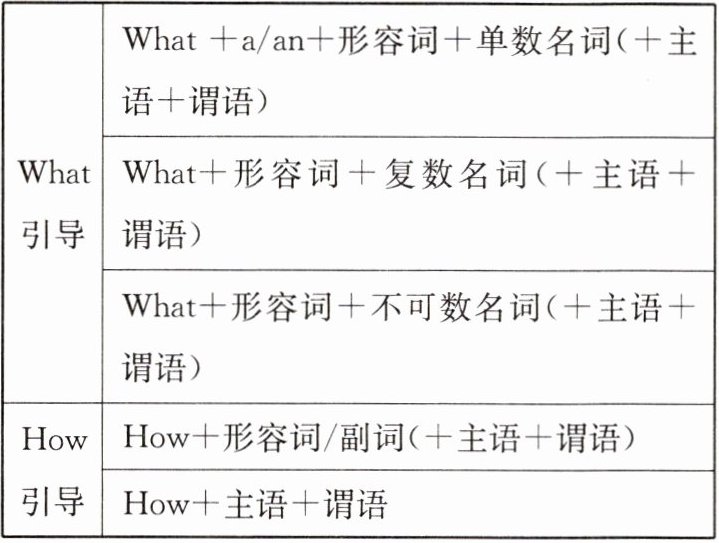
【思考】以上句子都是
常见结构:
【运用】
(1)
(2)
(3)
【感知】(1)What a great day!
(2)How fantastic the dragon boat teams were!
【思考】以上句子都是
感叹句
。表示惊讶、赞美、喜悦、愤怒等情感时,通常由what
或how
引导。常见结构:
【运用】
(1)
What a
brave boy he is! 他是个多么勇敢的男孩呀!(2)
What
good weather it is! 今天天气真好呀!(3)
How fast
he runs! 他跑得真快呀!
答案:
感叹句 what how
(1)What a
(2)What
(3)How fast
(1)What a
(2)What
(3)How fast
一、单词拼写与运用
根据句意完成已给出首字母或汉语提示的单词,使补全后的句子意思通顺、语法正确。
1. If you buy some
2. I often offer
3. During the Spring Festival, I always visit my
4. A thief went into her house and
5. I
根据句意完成已给出首字母或汉语提示的单词,使补全后的句子意思通顺、语法正确。
1. If you buy some
mooncakes
(月饼)in that store, you can get some gifts.2. I often offer
strangers
(陌生人)help if they need.3. During the Spring Festival, I always visit my
relatives
(亲戚)with my parents.4. A thief went into her house and
stole
some money.5. I
admire
her for her wisdom and bravery.
答案:
1. mooncakes 2. strangers 3. relatives 4. stole 5. admire
二、选词填空
用方框内单词或短语的适当形式填空。
shape,garden,lay,dessert,put on,tradition,crowd
1. I
2. We call them mooncakes because they are in the
3. The bus is too
4. Lunch was ready and Jane
5. The Spring Festival is one of the most important
6. In some countries, people usually eat some
7. My grandfather plants a lot of flowers in the small
用方框内单词或短语的适当形式填空。
shape,garden,lay,dessert,put on,tradition,crowd
1. I
have put on
five pounds for the last three months, so I can’t afford it.2. We call them mooncakes because they are in the
shape
of a full moon.3. The bus is too
crowded
. Let’s wait for next one.4. Lunch was ready and Jane
laid
out the table for it.5. The Spring Festival is one of the most important
traditional
festivals in China.6. In some countries, people usually eat some
desserts
after dinner.7. My grandfather plants a lot of flowers in the small
garden
.
答案:
1. have put on 2. shape 3. crowded 4. laid 5. traditional 6. desserts 7. garden
三、任务型阅读
阅读短文,根据要求完成文后的题目。
Dragons are not real animals, but they look like a combination of many animals such as snakes, fish and deer. They have two horns (角) and a long moustache (胡子). With fantastic powers, they fly in the sky or swim in the sea. They can make rain, too. The Chinese dragon is a symbol of strength and good luck. The emperors of ancient China loved dragons. Their clothes were covered with pictures of dragons.
In China, “excellent” people are often called “dragons”. A number of Chinese sayings and idioms talk about dragons, for example, “Hoping one’s child will become a dragon”, which means he or she will be successful.
It is said that people born in the Year of the Dragon have certain characteristics. They are creative, confident, brave and quick - tempered. There are some famous “dragons” who have done excellent things in China’s history.
There are also some traditional festivals about dragons in China, such as Dragon Head - Raising Day and the Dragon Boat Festival. We have different kinds of activities to celebrate them. These two festivals come every year, but the Year of the Dragon comes every twelve years.
The dragon is very important in Chinese culture. It is necessary for us to know the views on dragons in our culture. It can help us understand why our parents always want us to be “dragons”.
The year 2024 is the Year of the Dragon. Good luck to you!
1. What does the Chinese dragon symbolize?
2. Translate the underlined sentence in Paragraph 2 into Chinese.
3. What characteristics may the people born in the Year of the Dragon have?
4. Which of the following years is the Year of the Dragon?
(
A. 1988.
B. 1998.
C. 2008.
D. 2018.
5. 请给短文拟一个适当的英文题目。
阅读短文,根据要求完成文后的题目。
Dragons are not real animals, but they look like a combination of many animals such as snakes, fish and deer. They have two horns (角) and a long moustache (胡子). With fantastic powers, they fly in the sky or swim in the sea. They can make rain, too. The Chinese dragon is a symbol of strength and good luck. The emperors of ancient China loved dragons. Their clothes were covered with pictures of dragons.
In China, “excellent” people are often called “dragons”. A number of Chinese sayings and idioms talk about dragons, for example, “Hoping one’s child will become a dragon”, which means he or she will be successful.
It is said that people born in the Year of the Dragon have certain characteristics. They are creative, confident, brave and quick - tempered. There are some famous “dragons” who have done excellent things in China’s history.
There are also some traditional festivals about dragons in China, such as Dragon Head - Raising Day and the Dragon Boat Festival. We have different kinds of activities to celebrate them. These two festivals come every year, but the Year of the Dragon comes every twelve years.
The dragon is very important in Chinese culture. It is necessary for us to know the views on dragons in our culture. It can help us understand why our parents always want us to be “dragons”.
The year 2024 is the Year of the Dragon. Good luck to you!
1. What does the Chinese dragon symbolize?
Strength and good luck.
2. Translate the underlined sentence in Paragraph 2 into Chinese.
望子成龙。
3. What characteristics may the people born in the Year of the Dragon have?
Creative,confident,brave and quick-tempered.
4. Which of the following years is the Year of the Dragon?
(
A
)A. 1988.
B. 1998.
C. 2008.
D. 2018.
5. 请给短文拟一个适当的英文题目。
The Dragon Culture of China
答案:
1. Strength and good luck. 2. 望子成龙。 3. Creative,confident,brave and quick-tempered. 4. A 5. The Dragon Culture of China
查看更多完整答案,请扫码查看

