

 搜索
搜索
第16页
- 第1页
- 第2页
- 第3页
- 第4页
- 第5页
- 第6页
- 第7页
- 第8页
- 第9页
- 第10页
- 第11页
- 第12页
- 第13页
- 第14页
- 第15页
- 第16页
- 第17页
- 第18页
- 第19页
- 第20页
- 第21页
- 第22页
- 第23页
- 第24页
- 第25页
- 第26页
- 第27页
- 第28页
- 第29页
- 第30页
- 第31页
- 第32页
- 第33页
- 第34页
- 第35页
- 第36页
- 第37页
- 第38页
- 第39页
- 第40页
- 第41页
- 第42页
- 第43页
- 第44页
- 第45页
- 第46页
- 第47页
- 第48页
- 第49页
- 第50页
- 第51页
- 第52页
- 第53页
- 第54页
- 第55页
- 第56页
- 第57页
- 第58页
- 第59页
- 第60页
- 第61页
- 第62页
- 第63页
- 第64页
- 第65页
- 第66页
- 第67页
- 第68页
- 第69页
- 第70页
- 第71页
- 第72页
- 第73页
- 第74页
- 第75页
- 第76页
- 第77页
- 第78页
- 第79页
- 第80页
- 第81页
- 第82页
- 第83页
- 第84页
- 第85页
- 第86页
- 第87页
- 第88页
- 第89页
- 第90页
- 第91页
- 第92页
- 第93页
- 第94页
- 第95页
- 第96页
- 第97页
- 第98页
- 第99页
- 第100页
- 第101页
- 第102页
- 第103页
- 第104页
- 第105页
- 第106页
- 第107页
- 第108页
- 第109页
- 第110页
- 第111页
- 第112页
- 第113页
- 第114页
- 第115页
- 第116页
- 第117页
- 第118页
- 第119页
- 第120页
- 第121页
- 第122页
- 第123页
- 第124页
- 第125页
- 第126页
- 第127页
- 第128页
- 第129页
- 第130页
- 第131页
- 第132页
- 第133页
- 第134页
- 第135页
- 第136页
- 第137页
- 第138页
- 第139页
- 第140页
- 第141页
- 第142页
- 第143页
- 第144页
- 第145页
- 第146页
- 第147页
- 第148页
- 第149页
- 第150页
1. I’ve put on five pounds!
【感知】(1)I can eat whatever I want because I never put on weight.
(2)She put on her coat and went out.
(3)Tom will put on a worldwide tour next year.
【思考】put on 意为“
由 put 构成的短语:
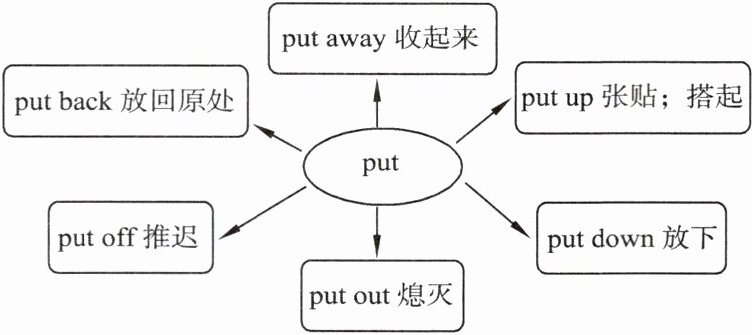
【运用】
(1)The sports meeting was put
(2)Put
(3)Put
【感知】(1)I can eat whatever I want because I never put on weight.
(2)She put on her coat and went out.
(3)Tom will put on a worldwide tour next year.
【思考】put on 意为“
增重
”,其后可以跟具体的体重数。它还有其他的意思,即“穿上
,上演
”。由 put 构成的短语:
【运用】
(1)The sports meeting was put
off
because of the bad weather.(2)Put
on
your coat, Tom! It’s cold outside.(3)Put
away
your toys and do your homework right way.
答案:
【思考】put on 意为“$增重$”,其后可以跟具体的体重数。它还有其他的意思,即“$穿上$,$上演$”。
【运用】(1)off (2)on (3)away
【运用】(1)off (2)on (3)away
2. I know that the Water Festival is really fun.
【感知】(1)Bill thinks that the races were not that interesting to watch.
(2)I wonder whether June is a good time to visit Hong Kong.
(3)Bill wonders if they will have zongzi next year.
(4)If it rains heavily tomorrow, we won’t come to school.
【思考】以上(1)(2)(3)句都是含宾语从句的复合句。(1)句的从句是陈述句,用
★宾语从句的时态:①主句是一般现在时,从句根据实际情况使用任何时态;②主句是过去时态,从句需要用过去的相应形式;③当宾语从句表示的是一个客观真理或者事实时,即使主句是过去时态,从句也用一般现在时。如:The teacher told his students that light travels faster than sound.
【运用】
(1)I don’t know if he
(2)He wonders
(3)Mike says, “I don’t like swimming.”(改为宾语从句)
Mike says
(4)—What did Tom say to you just now?
—He asked
A. why I am so happy today
B. what will I do for the weekend
C. who did I play football with
D. if I could go to the movies with him
【感知】(1)Bill thinks that the races were not that interesting to watch.
(2)I wonder whether June is a good time to visit Hong Kong.
(3)Bill wonders if they will have zongzi next year.
(4)If it rains heavily tomorrow, we won’t come to school.
【思考】以上(1)(2)(3)句都是含宾语从句的复合句。(1)句的从句是陈述句,用
that
引导,可被省略。(2)句的主句是“I wonder”,从句“Is June a good time to visit Hong Kong?”是一般疑问句,此时需要用连词 whether 或 if 引导,意为“是否
”,但从句要用陈述句序。通常情况下,if 和 whether 可以互换,但当句中有 or not 时,只能用 whether,而不能用 if。(4)句中 if 引导条件
状语从句时,if 意为“如果”,主句如果是一般将来时,从句要用一般现在时
。★宾语从句的时态:①主句是一般现在时,从句根据实际情况使用任何时态;②主句是过去时态,从句需要用过去的相应形式;③当宾语从句表示的是一个客观真理或者事实时,即使主句是过去时态,从句也用一般现在时。如:The teacher told his students that light travels faster than sound.
【运用】
(1)I don’t know if he
will come
(come)to the party tomorrow. If he goes
(go)there, I will go
(go), too.(2)He wonders
whether
(if/whether)there will be a meeting or not.(3)Mike says, “I don’t like swimming.”(改为宾语从句)
Mike says
that
he doesn't like
swimming.(4)—What did Tom say to you just now?
—He asked
D
.A. why I am so happy today
B. what will I do for the weekend
C. who did I play football with
D. if I could go to the movies with him
答案:
【思考】
1. that
2. 是否
3. 条件;一般现在时
【运用】
(1)will come;goes;will go
(2)whether
(3)that;doesn't like
(4)D
1. that
2. 是否
3. 条件;一般现在时
【运用】
(1)will come;goes;will go
(2)whether
(3)that;doesn't like
(4)D
查看更多完整答案,请扫码查看

