

 搜索
搜索
第58页
- 第1页
- 第2页
- 第3页
- 第4页
- 第5页
- 第6页
- 第7页
- 第8页
- 第9页
- 第10页
- 第11页
- 第12页
- 第13页
- 第14页
- 第15页
- 第16页
- 第17页
- 第18页
- 第19页
- 第20页
- 第21页
- 第22页
- 第23页
- 第24页
- 第25页
- 第26页
- 第27页
- 第28页
- 第29页
- 第30页
- 第31页
- 第32页
- 第33页
- 第34页
- 第35页
- 第36页
- 第37页
- 第38页
- 第39页
- 第40页
- 第41页
- 第42页
- 第43页
- 第44页
- 第45页
- 第46页
- 第47页
- 第48页
- 第49页
- 第50页
- 第51页
- 第52页
- 第53页
- 第54页
- 第55页
- 第56页
- 第57页
- 第58页
- 第59页
- 第60页
- 第61页
- 第62页
- 第63页
- 第64页
- 第65页
- 第66页
- 第67页
- 第68页
- 第69页
- 第70页
- 第71页
- 第72页
- 第73页
- 第74页
- 第75页
- 第76页
- 第77页
- 第78页
- 第79页
- 第80页
- 第81页
- 第82页
- 第83页
- 第84页
- 第85页
- 第86页
- 第87页
- 第88页
- 第89页
- 第90页
- 第91页
- 第92页
- 第93页
- 第94页
- 第95页
- 第96页
- 第97页
- 第98页
- 第99页
- 第100页
- 第101页
- 第102页
- 第103页
- 第104页
- 第105页
- 第106页
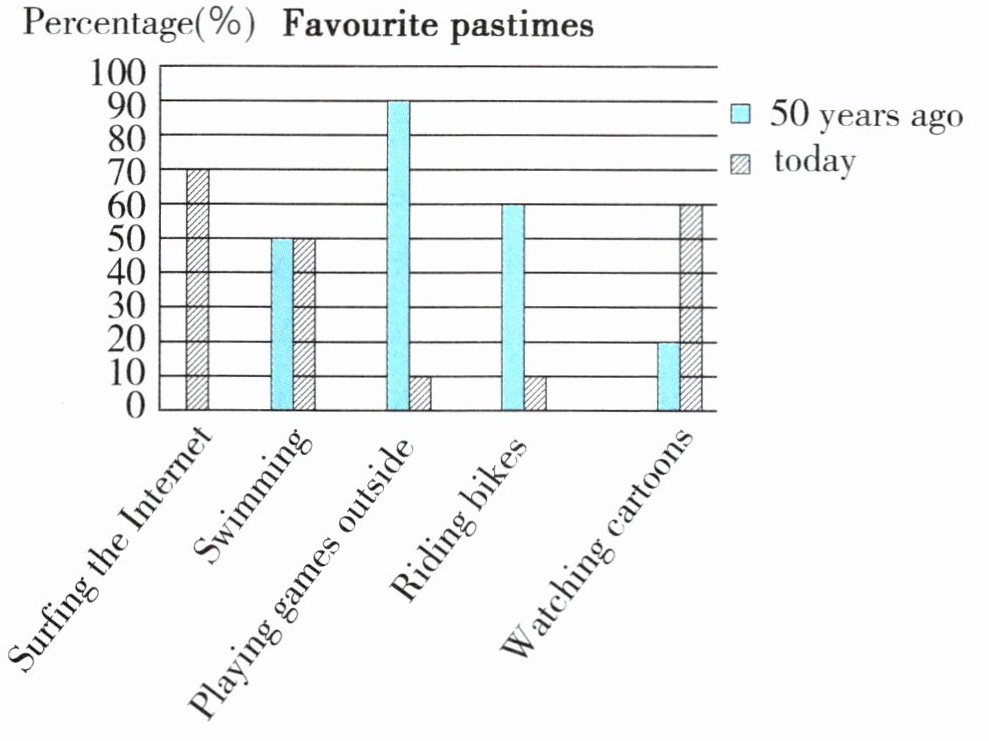
一 新语篇 统计图表 根据图表,判断句子正(T)误(F)。
(
(
(
(
(
(
F
)1. The most popular(最受欢迎的) pastime 50 years ago was riding bikes.(
F
)2. Today more and more children like playing games outside.(
F
)3. Swimming was popular before, but now it is not so popular.(
F
)4. Most children like watching cartoons now.(
T
)5. Fifty years ago, children didn't surf the Internet.
答案:
1.F 2.F 3.F 4.F 5.T
解析
解析
1. 观察“50年前”的柱状,“Playing games outside(户外玩游戏)”占比80%,是50年前最受欢迎的消遣方式,而非“riding bikes(骑自行车)”。句子说法错误。
2. 句子:Today more and more children like playing games outside.
分析:观察“如今”的柱状,“Playing games outside(户外玩游戏)”占比极低,说明如今孩子并不喜欢户外玩游戏。句子说法错误。
3. 句子:Swimming was popular before, but now it is not so popular.
分析:“50年前”游泳占比约50%,“如今”占比约20%,可见游泳过去受欢迎,现在没那么受欢迎了。句子说法正确。
4. 句子:Most children like watching cartoons now.
分析:观察“如今”的柱状,“Watching cartoons(看动画片)”占比最高,说明现在大多数孩子喜欢看动画片。句子说法正确。
5. 句子:Fifty years ago, children didn't surf the Internet.
分析:“50年前”的柱状中,“Surfing the Internet(上网)”占比为0,说明50年前孩子不上网。句子说法正确。
二 新素养 生活运用 完形填空。
Changes in life
Simon is from Beijing. He is a Grade 6 (
Grandpa: When I was young, many (
Simon: Really? I (
Grandpa: When I was a young boy, most Chinese people could not (
Simon: I can't believe it. Now almost everyone can go to (
Grandpa: There are more things you can't imagine(想象). I (
Simon: Now we live in a tall building and I have my own (
Grandpa: I used to write to my brother in Shanghai. But now, we can (
Simon: What great changes!
Changes in life
Simon is from Beijing. He is a Grade 6 (
C
). He is chatting with his (D
) about the changes in their lives.Grandpa: When I was young, many (
C
) were poor. Most people could spend only about 50 yuan a year.Simon: Really? I (
A
) some pocket money, about 50 yuan a month! I use it to buy my favourite toys and books.Grandpa: When I was a young boy, most Chinese people could not (
D
) or write. Going to school was a dream for many people.Simon: I can't believe it. Now almost everyone can go to (
D
). In some poor areas, students even have free meals.Grandpa: There are more things you can't imagine(想象). I (
D
) in a small hutong with my family. My brother and I shared a small (C
).Simon: Now we live in a tall building and I have my own (
A
), but I think life in the hutong sounds interesting!Grandpa: I used to write to my brother in Shanghai. But now, we can (
B
) to each other on WeChat whenever we want.Simon: What great changes!
答案:
1. C
句意:他是一名六年级学生。
A. 同学
B. 老师
C. 学生
D. 朋友
解析:根据“Grade 6(六年级)”可知,Simon的身份是学生,“student”符合语境,故选C。
2. D
句意:他正在和爷爷聊他们生活中的变化。
A. 爸爸
B. 兄弟
C. 妈妈
D. 爷爷
解析:下文对话中称呼为“Grandpa(爷爷)”,可知聊天对象是爷爷,故选D。
3. C
句意:我年轻的时候,很多家庭都很穷。
A. 农场
B. 医院
C. 家庭
D. 班级
解析:根据“poor(贫穷的)”和“spend only about 50 yuan a year(一年只花大约50元)”可知,描述的是家庭的经济状况,“families”符合语境,故选C。
4. A
句意:我有一些零花钱,大约一个月50元!
A. 有
B. 赢得
C. 给予
D. 知道
解析:结合语境,此处表达“拥有零花钱”,“have”表示“拥有”,符合句意,故选A。
5. D
句意:我小时候,大多数中国人不会读也不会写。
A. 走路
B. 跑步
C. 说话
D. 阅读
解析:与“write(写)”并列,且后文提到“Going to school was a dream(上学是一种梦想)”,可知此处指“不会读也不会写”,“read”符合语境,故选D。
6. D
句意:现在几乎每个人都能去上学。
A. 班级
B. 科目
C. 课程
D. 学校
解析:前文对比过去“上学是梦想”,此处指现在“能去上学”,“go to school”是固定搭配,意为“上学”,故选D。
7. D
句意:我过去和家人住在一个小胡同里。
A. 做
B. 工作
C. 睡觉
D. 居住
解析:结合“in a small hutong(在一个小胡同里)”,可知此处表示“居住”,“lived”是“live”的过去式,符合语境,故选D。
8. C
句意:我和哥哥共用一个小房间。
A. 教室
B. 家庭
C. 房间
D. 家
解析:根据“shared(共用)”,结合居住在胡同的背景,可知是“共用一个小房间”,“room”符合语境,故选C。
9. A
句意:现在我们住在高楼里,我有自己的卧室。
A. 卧室
B. 浴室
C. 客厅
D. 厨房
解析:对比过去“和哥哥共用房间”,此处指现在“有自己的卧室”,“bedroom”符合“自己专属空间”的语境,故选A。
10. B
句意:但现在,我们可以随时通过微信聊天。
A. 玩
B. 聊天、交谈
C. 看
D. 观看
解析:“on WeChat(通过微信)”提示此处是“互相聊天”,“talk to each other”意为“互相交谈”,符合语境,故选B。
查看更多完整答案,请扫码查看

