

 搜索
搜索
第21页
- 第1页
- 第2页
- 第3页
- 第4页
- 第5页
- 第6页
- 第7页
- 第8页
- 第9页
- 第10页
- 第11页
- 第12页
- 第13页
- 第14页
- 第15页
- 第16页
- 第17页
- 第18页
- 第19页
- 第20页
- 第21页
- 第22页
- 第23页
- 第24页
- 第25页
- 第26页
- 第27页
- 第28页
- 第29页
- 第30页
- 第31页
- 第32页
- 第33页
- 第34页
- 第35页
- 第36页
- 第37页
- 第38页
- 第39页
- 第40页
- 第41页
- 第42页
- 第43页
- 第44页
- 第45页
- 第46页
- 第47页
- 第48页
- 第49页
- 第50页
- 第51页
- 第52页
- 第53页
- 第54页
- 第55页
- 第56页
- 第57页
- 第58页
- 第59页
- 第60页
- 第61页
- 第62页
- 第63页
- 第64页
- 第65页
- 第66页
- 第67页
- 第68页
- 第69页
- 第70页
- 第71页
- 第72页
- 第73页
- 第74页
- 第75页
- 第76页
- 第77页
- 第78页
- 第79页
- 第80页
- 第81页
- 第82页
- 第83页
- 第84页
- 第85页
- 第86页
- 第87页
- 第88页
Ⅰ 根据汉语意思完成句子,每空一词
1. 跨艺术·相声(2024 贵州中考)相声中有说学逗唱四种主要艺术手段。
______ ______ four key skills of xiangsheng—shuo, xue, dou and chang.
2. 跨物理·冰点温度(2024 江苏扬州中考改编)如果把盐撒在冰上,冰点温度就会低于0℃。
______ salt is spread onto the ice, the freezing temperature will ______ lower than 0℃.
3. 跨语文·古诗(2024 吉林长春中考改编)王之涣的《登鹳雀楼》是一首中国古诗。
On the Stork Tower ______ Wang Zhihuan is ______ ancient Chinese poem.
4. 跨信息科技·北斗系统(2024 云南中考改编)中国的北斗系统发展迅速,在许多领域发挥着重要作用。
China’s Beidou system has developed ______ and it plays an important role in many ______.
5. 跨地理·青海湖(2024 吉林长春中考改编)青海湖是中国最大的湖泊。它在青海省。
Qinghai Lake is the largest lake ______ ______. It is in Qinghai Province.
1. 跨艺术·相声(2024 贵州中考)相声中有说学逗唱四种主要艺术手段。
______ ______ four key skills of xiangsheng—shuo, xue, dou and chang.
2. 跨物理·冰点温度(2024 江苏扬州中考改编)如果把盐撒在冰上,冰点温度就会低于0℃。
______ salt is spread onto the ice, the freezing temperature will ______ lower than 0℃.
3. 跨语文·古诗(2024 吉林长春中考改编)王之涣的《登鹳雀楼》是一首中国古诗。
On the Stork Tower ______ Wang Zhihuan is ______ ancient Chinese poem.
4. 跨信息科技·北斗系统(2024 云南中考改编)中国的北斗系统发展迅速,在许多领域发挥着重要作用。
China’s Beidou system has developed ______ and it plays an important role in many ______.
5. 跨地理·青海湖(2024 吉林长春中考改编)青海湖是中国最大的湖泊。它在青海省。
Qinghai Lake is the largest lake ______ ______. It is in Qinghai Province.
答案:
1.There are 2.If;be 3.by;an 4.quickly;fields 5.in China
Ⅱ 阅读理解
跨生物·大象(2024 山西和顺期中改编)
How do elephants use their trunks? You may think that elephants use their trunks to drink water and to make loud sounds. You may be surprised at all the different ways elephants use their trunks.

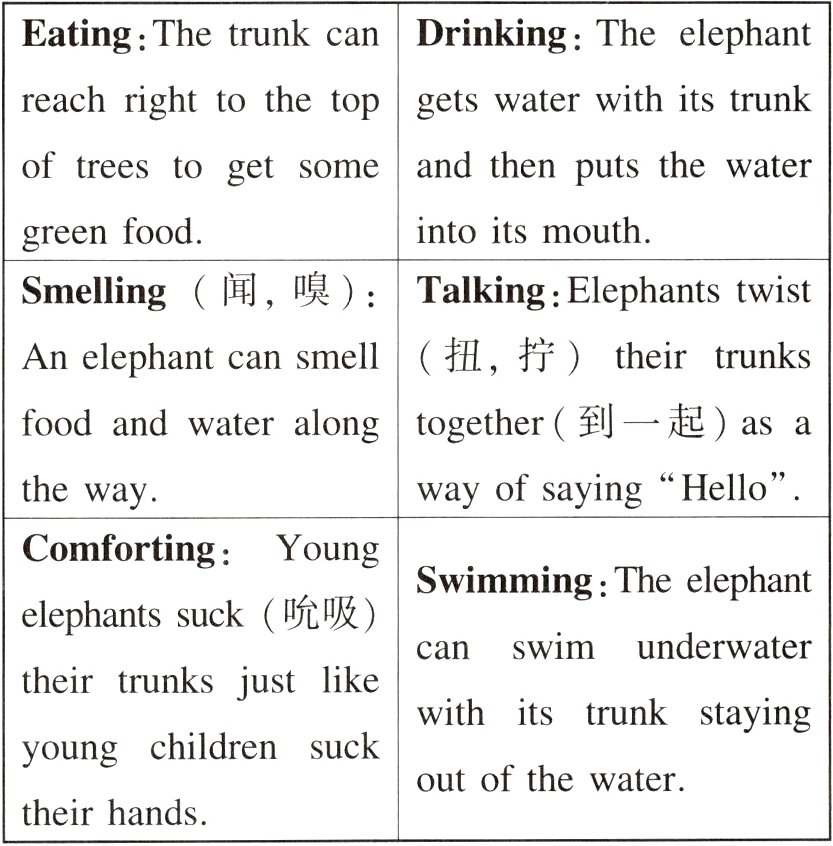
6. Why do elephants get their trunks to the top of trees?
A. To get food. B. To have fun.
C. To get fresh air.
7. How do elephants say hi to their friends?
A. They shower water on their friends.
B. They twist their trunks together.
C. They give their friends some green food.
8. In what way are elephants like children?
A. They drink a lot.
B. They suck their trunks.
C. They climb trees.
9. Where are elephants’ trunks when they are swimming in a river?
A. Under the water. B. In the mouths.
C. Out of the water.
10. Where can we read the text?
A. In a travel guide. B. In a health report.
C. In a nature magazine.
跨生物·大象(2024 山西和顺期中改编)
How do elephants use their trunks? You may think that elephants use their trunks to drink water and to make loud sounds. You may be surprised at all the different ways elephants use their trunks.
6. Why do elephants get their trunks to the top of trees?
A. To get food. B. To have fun.
C. To get fresh air.
7. How do elephants say hi to their friends?
A. They shower water on their friends.
B. They twist their trunks together.
C. They give their friends some green food.
8. In what way are elephants like children?
A. They drink a lot.
B. They suck their trunks.
C. They climb trees.
9. Where are elephants’ trunks when they are swimming in a river?
A. Under the water. B. In the mouths.
C. Out of the water.
10. Where can we read the text?
A. In a travel guide. B. In a health report.
C. In a nature magazine.
答案:
6.A 7.B 8.B 9.C 10.C
查看更多完整答案,请扫码查看

