

 搜索
搜索
第35页
- 第1页
- 第2页
- 第3页
- 第4页
- 第5页
- 第6页
- 第7页
- 第8页
- 第9页
- 第10页
- 第11页
- 第12页
- 第13页
- 第14页
- 第15页
- 第16页
- 第17页
- 第18页
- 第19页
- 第20页
- 第21页
- 第22页
- 第23页
- 第24页
- 第25页
- 第26页
- 第27页
- 第28页
- 第29页
- 第30页
- 第31页
- 第32页
- 第33页
- 第34页
- 第35页
- 第36页
- 第37页
- 第38页
- 第39页
- 第40页
- 第41页
- 第42页
- 第43页
- 第44页
- 第45页
- 第46页
- 第47页
- 第48页
- 第49页
- 第50页
- 第51页
- 第52页
- 第53页
- 第54页
- 第55页
- 第56页
- 第57页
- 第58页
- 第59页
- 第60页
- 第61页
- 第62页
- 第63页
- 第64页
- 第65页
- 第66页
- 第67页
- 第68页
- 第69页
- 第70页
- 第71页
- 第72页
- 第73页
- 第74页
Ⅳ. 短文填空:用方框中所给单词的适当形式填空,使短文完整正确。(每个单词限用一次,每空限填一个单词。)

There is a big yard in my grandparents' house. In the east of the yard is the vegetable field. In spring, my grandmother 21.
There is a big apple tree in the south of the yard. My grandfather 26.
There is a big yard in my grandparents' house. In the east of the yard is the vegetable field. In spring, my grandmother 21.
plants
different kinds of vegetables in the yard. In summer, we can pick fresh vegetables in it, such as carrots and 22. tomatoes
. In autumn, the potatoes there are very big and 23. fresh
, and my grandmother usually spends some time 24. cooking
delicious food with them. In winter, there is 25. nothing
.There is a big apple tree in the south of the yard. My grandfather 26.
usually
records (记录) my height on that tree. What a special way! When autumn 27. comes
, there are red apples on the tree. The colour of the 28. leaves
changes with the season. In the west of the yard, you can hear different sounds of animals. There 29. are
many kinds of animals in the yard. Every morning, I would like to pick up eggs of the chickens and geese there. What else? In the north 30. part
, there is a big house. My grandparents live there.
答案:
21.plants 22.tomatoes 23.fresh 24.cooking 25.nothing 26.usually 27.comes 28.leaves 29.are 30.part
Ⅴ. 任务型阅读:阅读下面短文,根据短文内容,完成下列各题。
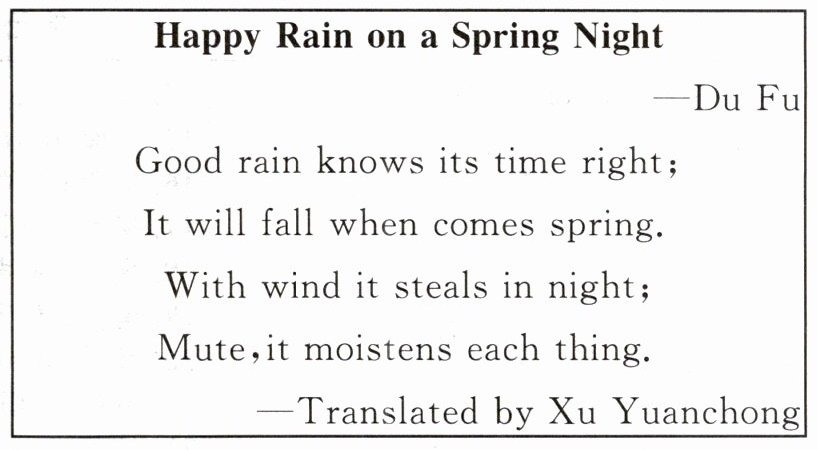
This famous poem was written by Du Fu (712 - 770, the Tang Dynasty) when he was living and farming in Chengdu. His farming experience taught him to be thankful to nature.
This poem is mainly about the good rain in spring. The very first word, “good”, shows the poet's (诗人的) joy and love for the spring rain. The rain is good
When the rain comes, it appears during the night without making any noise in spring. Unlike the summer storms, the spring rain finishes its task without being known.
31. What did Du Fu's farming experience teach him when he was farming in Chengdu?
His farming experience taught him to
32. What word(s) can you put in the “
I can put “
33. Which English word means “拟人化” in Paragraph 2?
It is
34. When does the rain come in the poem?
It comes during
35. What is the poem mainly about?
It is mainly about the
This famous poem was written by Du Fu (712 - 770, the Tang Dynasty) when he was living and farming in Chengdu. His farming experience taught him to be thankful to nature.
This poem is mainly about the good rain in spring. The very first word, “good”, shows the poet's (诗人的) joy and love for the spring rain. The rain is good
because
it “knows” the proper time to come. Here the poet used personification, as if the rain was clever enough to come in time for the farmer's busy season.When the rain comes, it appears during the night without making any noise in spring. Unlike the summer storms, the spring rain finishes its task without being known.
31. What did Du Fu's farming experience teach him when he was farming in Chengdu?
His farming experience taught him to
be thankful to nature
. 32. What word(s) can you put in the “
because
”?I can put “
because
” there. 33. Which English word means “拟人化” in Paragraph 2?
It is
personification
in Paragraph 2. 34. When does the rain come in the poem?
It comes during
the night
without making any noise in spring. 35. What is the poem mainly about?
It is mainly about the
good rain
in spring.
答案:
31.be thankful to nature 32.because 33.personification 34.the night 35.good rain
查看更多完整答案,请扫码查看

