

 搜索
搜索
第69页
- 第1页
- 第2页
- 第3页
- 第4页
- 第5页
- 第6页
- 第7页
- 第8页
- 第9页
- 第10页
- 第11页
- 第12页
- 第13页
- 第14页
- 第15页
- 第16页
- 第17页
- 第18页
- 第19页
- 第20页
- 第21页
- 第22页
- 第23页
- 第24页
- 第25页
- 第26页
- 第27页
- 第28页
- 第29页
- 第30页
- 第31页
- 第32页
- 第33页
- 第34页
- 第35页
- 第36页
- 第37页
- 第38页
- 第39页
- 第40页
- 第41页
- 第42页
- 第43页
- 第44页
- 第45页
- 第46页
- 第47页
- 第48页
- 第49页
- 第50页
- 第51页
- 第52页
- 第53页
- 第54页
- 第55页
- 第56页
- 第57页
- 第58页
- 第59页
- 第60页
- 第61页
- 第62页
- 第63页
- 第64页
- 第65页
- 第66页
- 第67页
- 第68页
- 第69页
- 第70页
- 第71页
- 第72页
- 第73页
- 第74页
- 第75页
- 第76页
- 第77页
- 第78页
- 第79页
- 第80页
- 第81页
- 第82页
- 第83页
- 第84页
- 第85页
- 第86页
- 第87页
- 第88页
- 第89页
- 第90页
- 第91页
- 第92页
- 第93页
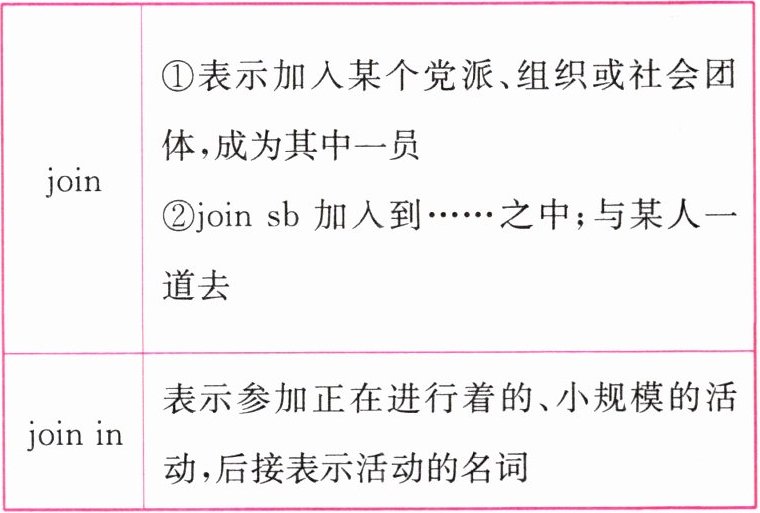
1. join
【感知】
» Why do we join school clubs?(教材第 51页)我们为什么要加入学校社团?
» Will you join us for lunch?
你愿意和我们一起吃午饭吗?
» They are talking about how to learn English well. Let's join in the conversation.
他们正在谈论如何学好英语。我们加入谈话吧。
【探究】
(1)join 动词,意为“
(2)join 与 join in 的用法辨析
【应用】
完成句子
①他的哥哥想参军。
His brother wants
②我们参加篮球比赛吧。
Let's
【感知】
» Why do we join school clubs?(教材第 51页)我们为什么要加入学校社团?
» Will you join us for lunch?
你愿意和我们一起吃午饭吗?
» They are talking about how to learn English well. Let's join in the conversation.
他们正在谈论如何学好英语。我们加入谈话吧。
【探究】
(1)join 动词,意为“
参加;加入
”。(2)join 与 join in 的用法辨析
【应用】
完成句子
①他的哥哥想参军。
His brother wants
to
join
the army.②我们参加篮球比赛吧。
Let's
join
in
the basketball game.
答案:
[探究]
(1)参加;加入
[应用]①to join ②join in
(1)参加;加入
[应用]①to join ②join in
2. choose
【感知】
» How do you choose a school club?(教材第 52 页)你怎样选择学校社团?
» Many women choose to go out to work.
许多妇女选择出去工作。
【探究】
(1)choose既可以作及物动词也可以作不及物动词,意为“选择;挑选”。常用结构:
(2)choose 的名词形式是 choice,意为“选择;挑选”。
【应用】
①完成句子:我选择加入音乐社团。
I
②用所给单词的适当形式填空:You are not a kid now. You need to make a
【感知】
» How do you choose a school club?(教材第 52 页)你怎样选择学校社团?
» Many women choose to go out to work.
许多妇女选择出去工作。
【探究】
(1)choose既可以作及物动词也可以作不及物动词,意为“选择;挑选”。常用结构:
choose (not) to do sth
(2)choose 的名词形式是 choice,意为“选择;挑选”。
【应用】
①完成句子:我选择加入音乐社团。
I
choose to
join the music club.②用所给单词的适当形式填空:You are not a kid now. You need to make a
choice
(choose) by yourself.
答案:
[探究]
(1)choose(not)to do sth
[应用]①choose to ②choice
(1)choose(not)to do sth
[应用]①choose to ②choice
3. exactly
【感知】
»—Oh, but you can sing well. 哦,但是你可以唱得很好。
—Exactly!(教材第 53 页)的确如此!
» Many people can’t remember exactly when their mothers’ birthdays are. 许多人不能准确地记得他们母亲的生日是什么时候。
【探究】
(1)exactly 副词,意为“正是如此;准确地”,常用来修饰形容词、动词或整个句子。其形容词形式为
(2)exactly 可单独使用,用在答语中表示赞同,意为
【应用】
①单项选择:—What time is it now?
—I can’t tell you the time ______, but I know it’s too late.
A. exactly B. suddenly
C. politely D. wisely
(
②用所给单词的适当形式填空:—He is so humorous and kind. All his students love him.
—______ (exact). He is my favourite teacher.
【感知】
»—Oh, but you can sing well. 哦,但是你可以唱得很好。
—Exactly!(教材第 53 页)的确如此!
» Many people can’t remember exactly when their mothers’ birthdays are. 许多人不能准确地记得他们母亲的生日是什么时候。
【探究】
(1)exactly 副词,意为“正是如此;准确地”,常用来修饰形容词、动词或整个句子。其形容词形式为
exact
,意为“精确的;准确的”。(2)exactly 可单独使用,用在答语中表示赞同,意为
的确如此
。not exactly 意为“不完全如此”,用于纠正对方刚说过的话。【应用】
①单项选择:—What time is it now?
—I can’t tell you the time ______, but I know it’s too late.
A. exactly B. suddenly
C. politely D. wisely
(
A
)②用所给单词的适当形式填空:—He is so humorous and kind. All his students love him.
—______ (exact). He is my favourite teacher.
Exactly
答案:
[探究]
(1)exact (2)的确如此
[应用]①A ②Exactly
(1)exact (2)的确如此
[应用]①A ②Exactly
查看更多完整答案,请扫码查看

