

 搜索
搜索
第48页
- 第1页
- 第2页
- 第3页
- 第4页
- 第5页
- 第6页
- 第7页
- 第8页
- 第9页
- 第10页
- 第11页
- 第12页
- 第13页
- 第14页
- 第15页
- 第16页
- 第17页
- 第18页
- 第19页
- 第20页
- 第21页
- 第22页
- 第23页
- 第24页
- 第25页
- 第26页
- 第27页
- 第28页
- 第29页
- 第30页
- 第31页
- 第32页
- 第33页
- 第34页
- 第35页
- 第36页
- 第37页
- 第38页
- 第39页
- 第40页
- 第41页
- 第42页
- 第43页
- 第44页
- 第45页
- 第46页
- 第47页
- 第48页
- 第49页
- 第50页
- 第51页
- 第52页
- 第53页
- 第54页
- 第55页
- 第56页
- 第57页
- 第58页
- 第59页
- 第60页
- 第61页
- 第62页
- 第63页
- 第64页
- 第65页
- 第66页
- 第67页
- 第68页
- 第69页
- 第70页
- 第71页
- 第72页
- 第73页
- 第74页
- 第75页
- 第76页
- 第77页
- 第78页
- 第79页
- 第80页
- 第81页
- 第82页
- 第83页
- 第84页
- 第85页
- 第86页
- 第87页
- 第88页
- 第89页
- 第90页
- 第91页
- 第92页
- 第93页
1. do exercises
【感知】
- All the students go there and do exercises together in the morning. (教材第40页) 所有学生在早上去那里一起做体操。
- I often do exercise with my friends after school. 我放学后经常和朋友一起锻炼。
- We exercise about one hour at school every day. 我们每天在学校大约锻炼一个小时。
【探究】
(1) exercise 作
(2) exercise 作
(3) exercise 作动词,意为“
【应用】
(1) 完成句子
① 做眼保健操是保护我们视力的一种好方法。
Doing
② 他的爸爸有时候在家附近的公园做锻炼。
His father sometimes
(2) 用所给单词的适当形式填空
My grandfather often
【感知】
- All the students go there and do exercises together in the morning. (教材第40页) 所有学生在早上去那里一起做体操。
- I often do exercise with my friends after school. 我放学后经常和朋友一起锻炼。
- We exercise about one hour at school every day. 我们每天在学校大约锻炼一个小时。
【探究】
(1) exercise 作
可数
(可数/不可数)名词,表示“一套动作,练习”。(2) exercise 作
不可数
(可数/不可数)名词,表示“活动,锻炼”,常和 take、do、get 等连用。(3) exercise 作动词,意为“
锻炼
”。【应用】
(1) 完成句子
① 做眼保健操是保护我们视力的一种好方法。
Doing
eye
exercises
is a good way to protect our eyesight.② 他的爸爸有时候在家附近的公园做锻炼。
His father sometimes
does
some exercise
in the park near his home.(2) 用所给单词的适当形式填空
My grandfather often
exercises
(exercise) in the morning.
答案:
[探究]
(1)可数 (2)不可数
(3)锻炼 [应用]
(1)①eye exercises ②does;exercise
(2)exercises
(1)可数 (2)不可数
(3)锻炼 [应用]
(1)①eye exercises ②does;exercise
(2)exercises
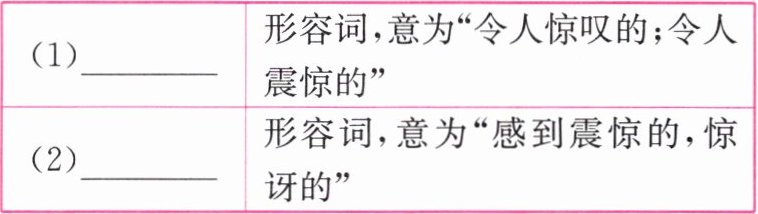
2. amazing
【感知】
- It's amazing! (教材第40页) 令人震惊!
- He is amazed at the news. 他对这个消息感到震惊。
【探究】
|序号|描述|
|(1)|形容词,意为“令人惊叹的;令人震惊的”
|(2)|形容词,意为“感到震惊的,惊讶的”
【应用】
用所给单词的适当形式填空
① She is
② What an
【感知】
- It's amazing! (教材第40页) 令人震惊!
- He is amazed at the news. 他对这个消息感到震惊。
【探究】
|序号|描述|
|(1)|形容词,意为“令人惊叹的;令人震惊的”
amazing
||(2)|形容词,意为“感到震惊的,惊讶的”
amazed
|【应用】
用所给单词的适当形式填空
① She is
amazed
(amaze) at the changes.② What an
amazing
(amaze) girl she is!
答案:
[探究]
(1)amazing
(2)amazed [应用]①amazed ②amazing
(1)amazing
(2)amazed [应用]①amazed ②amazing
3. most
【感知】
- We spend most of the time in our classroom. (教材第40页) 我们大部分时间都在教室里度过。
- Most of the students in the class are from China. 班上大部分学生都来自中国。
- Most people like apples. 大多数人喜欢苹果。
【探究】
(1) most 作代词,意为“大多数;大部分”;most of... 表示……“的大多数/大部分”,后接名词或代词。most of... 作主语时,谓语动词的单复数形式跟 of 后的名词或代词的数保持一致。
(2) most 作形容词,意为“大多数;大部分”,后面接名词。
【应用】
用所给单词的适当形式填空
① Most of
② Most
③ Most of the rooms
【感知】
- We spend most of the time in our classroom. (教材第40页) 我们大部分时间都在教室里度过。
- Most of the students in the class are from China. 班上大部分学生都来自中国。
- Most people like apples. 大多数人喜欢苹果。
【探究】
(1) most 作代词,意为“大多数;大部分”;most of... 表示……“的大多数/大部分”,后接名词或代词。most of... 作主语时,谓语动词的单复数形式跟 of 后的名词或代词的数保持一致。
(2) most 作形容词,意为“大多数;大部分”,后面接名词。
【应用】
用所给单词的适当形式填空
① Most of
them
(they) want to have a picnic.② Most
children
(child) like going out at weekends.③ Most of the rooms
face
(face) the sea.
答案:
①them ②children ③face
查看更多完整答案,请扫码查看

