

 搜索
搜索
第62页
- 第1页
- 第2页
- 第3页
- 第4页
- 第5页
- 第6页
- 第7页
- 第8页
- 第9页
- 第10页
- 第11页
- 第12页
- 第13页
- 第14页
- 第15页
- 第16页
- 第17页
- 第18页
- 第19页
- 第20页
- 第21页
- 第22页
- 第23页
- 第24页
- 第25页
- 第26页
- 第27页
- 第28页
- 第29页
- 第30页
- 第31页
- 第32页
- 第33页
- 第34页
- 第35页
- 第36页
- 第37页
- 第38页
- 第39页
- 第40页
- 第41页
- 第42页
- 第43页
- 第44页
- 第45页
- 第46页
- 第47页
- 第48页
- 第49页
- 第50页
- 第51页
- 第52页
- 第53页
- 第54页
- 第55页
- 第56页
- 第57页
- 第58页
- 第59页
- 第60页
- 第61页
- 第62页
- 第63页
- 第64页
- 第65页
- 第66页
- 第67页
- 第68页
- 第69页
- 第70页
- 第71页
- 第72页
- 第73页
- 第74页
- 第75页
- 第76页
- 第77页
- 第78页
- 第79页
- 第80页
- 第81页
- 第82页
- 第83页
- 第84页
- 第85页
- 第86页
- 第87页
四、听录音,补全表格。(11 分,听三遍)
| People | Jobs | Hobbies |
| Jack's grandmother | A 1. ______ teacher | Playing the 2. ______ |
| Jack's father | A 3. ______ | Playing 4. ______ |
| Jack's mother | A 5. ______ worker | 6. ______ in the street |
| Jack's 7. ______ | A 8. ______ | Playing 9. ______ |
| Jack | A 10. ______ | Playing 11. ______ |
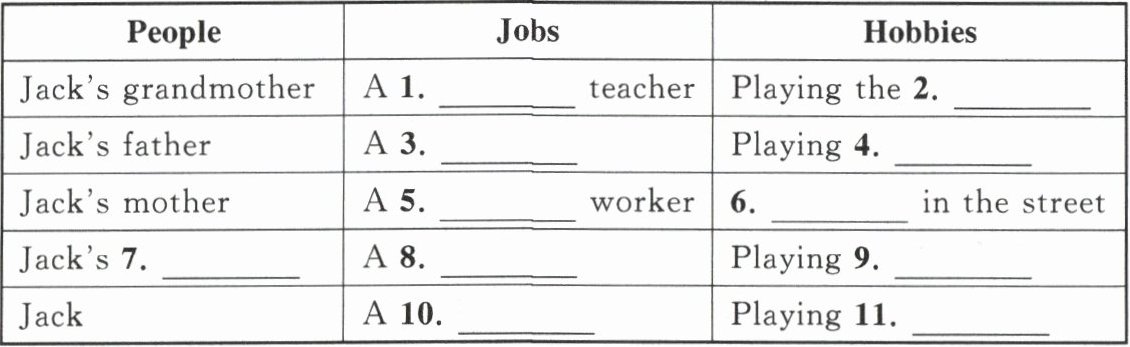
| People | Jobs | Hobbies |
| Jack's grandmother | A 1. ______ teacher | Playing the 2. ______ |
| Jack's father | A 3. ______ | Playing 4. ______ |
| Jack's mother | A 5. ______ worker | 6. ______ in the street |
| Jack's 7. ______ | A 8. ______ | Playing 9. ______ |
| Jack | A 10. ______ | Playing 11. ______ |
答案:
1. Chinese (示例,可能为English/Music等)
2. piano (示例,乐器类,需加the)
3. doctor (示例,职业类)
4. football (示例,球类,不加the)
5. factory (示例,职业场所类)
6. Walking (示例,动词-ing形式)
7. uncle (示例,家庭成员类)
8. driver (示例,职业类)
9. basketball (示例,球类)
10. student (示例,Jack的身份)
11. table tennis (示例,球类)
说明:以上答案仅为常见题型示例,具体需以实际录音内容为准。听录音时注意捕捉关键词(如职业名称、动词、球类/乐器名词等),并注意名词的单复数和冠词用法。
1. Chinese (示例,可能为English/Music等)
2. piano (示例,乐器类,需加the)
3. doctor (示例,职业类)
4. football (示例,球类,不加the)
5. factory (示例,职业场所类)
6. Walking (示例,动词-ing形式)
7. uncle (示例,家庭成员类)
8. driver (示例,职业类)
9. basketball (示例,球类)
10. student (示例,Jack的身份)
11. table tennis (示例,球类)
说明:以上答案仅为常见题型示例,具体需以实际录音内容为准。听录音时注意捕捉关键词(如职业名称、动词、球类/乐器名词等),并注意名词的单复数和冠词用法。
一、根据句意选择词汇,有一项多余。(5 分)
A. ant B. telephone C. plastic D. the Summer Palace E. the Bund F. bin
( ) 1. We can use it to make bags and bottles.
( ) 2. It is very small,but it can carry big things. It likes working in groups.
( ) 3. We can see it beside the road. We can put rubbish in it.
( ) 4. We use it to make a call. But we can't hold it to call people anywhere.
( ) 5. It's a beautiful place. It's in Beijing.
A. ant B. telephone C. plastic D. the Summer Palace E. the Bund F. bin
( ) 1. We can use it to make bags and bottles.
( ) 2. It is very small,but it can carry big things. It likes working in groups.
( ) 3. We can see it beside the road. We can put rubbish in it.
( ) 4. We use it to make a call. But we can't hold it to call people anywhere.
( ) 5. It's a beautiful place. It's in Beijing.
答案:
1. C
2. A
3. F
4. B
5. D
2. A
3. F
4. B
5. D
( ) 1.There ______ any children in the park this morning because there ______ heavy rain.
A.were;was
B.weren't;were
C.weren't;was
D.were;wasn't
A.were;was
B.weren't;were
C.weren't;was
D.were;wasn't
答案:
C
( ) 2.—How's the weather in London?
—It's often ______.
A.fog
B.foggy
C.snowy
D.sunny
—It's often ______.
A.fog
B.foggy
C.snowy
D.sunny
答案:
B
( ) 3.—What did you do for the summer holiday?
—I went to Hangzhou and visited the ______.
A.Palace Museum
B.Bund
C.West Lake
D.Great wall
—I went to Hangzhou and visited the ______.
A.Palace Museum
B.Bund
C.West Lake
D.Great wall
答案:
C
( ) 4.My father always ______. It's a good habit.
A.goes to bed late
B.runs in the morning
C.drinks much
D.get up late
A.goes to bed late
B.runs in the morning
C.drinks much
D.get up late
答案:
B
( ) 5.请选出下列四个单词中画线部分发音不同的一项:
A.near
B.year
C.wear
D.ear
A.near
B.year
C.wear
D.ear
答案:
C
( ) 6.______ invented the compass.
A.The Chinese
B.The British
C.The Americans
D.The Canadian
A.The Chinese
B.The British
C.The Americans
D.The Canadian
答案:
A
查看更多完整答案,请扫码查看

