

 搜索
搜索
第123页
- 第1页
- 第2页
- 第3页
- 第4页
- 第5页
- 第6页
- 第7页
- 第8页
- 第9页
- 第10页
- 第11页
- 第12页
- 第13页
- 第14页
- 第15页
- 第16页
- 第17页
- 第18页
- 第19页
- 第20页
- 第21页
- 第22页
- 第23页
- 第24页
- 第25页
- 第26页
- 第27页
- 第28页
- 第29页
- 第30页
- 第31页
- 第32页
- 第33页
- 第34页
- 第35页
- 第36页
- 第37页
- 第38页
- 第39页
- 第40页
- 第41页
- 第42页
- 第43页
- 第44页
- 第45页
- 第46页
- 第47页
- 第48页
- 第49页
- 第50页
- 第51页
- 第52页
- 第53页
- 第54页
- 第55页
- 第56页
- 第57页
- 第58页
- 第59页
- 第60页
- 第61页
- 第62页
- 第63页
- 第64页
- 第65页
- 第66页
- 第67页
- 第68页
- 第69页
- 第70页
- 第71页
- 第72页
- 第73页
- 第74页
- 第75页
- 第76页
- 第77页
- 第78页
- 第79页
- 第80页
- 第81页
- 第82页
- 第83页
- 第84页
- 第85页
- 第86页
- 第87页
- 第88页
- 第89页
- 第90页
- 第91页
- 第92页
- 第93页
- 第94页
- 第95页
- 第96页
- 第97页
- 第98页
- 第99页
- 第100页
- 第101页
- 第102页
- 第103页
- 第104页
- 第105页
- 第106页
- 第107页
- 第108页
- 第109页
- 第110页
- 第111页
- 第112页
- 第113页
- 第114页
- 第115页
- 第116页
- 第117页
- 第118页
- 第119页
- 第120页
- 第121页
- 第122页
- 第123页
- 第124页
- 第125页
- 第126页
- 第127页
- 第128页
- 第129页
- 第130页
- 第131页
- 第132页
- 第133页
- 第134页
- 第135页
四、按要求完成下列句子
1. What's wrong with him?(改为同义句)
What's
2. Tom would rather watch TV at home than go shopping with his wife.(改为同义句)
Tom
3. Both Bill and Bob play soccer after school every afternoon.(改为否定句)
★4. Worrying about being followed by others makes him unhappy.(改为同义句)
5. We're not sure what we will do next.(改为同义句)
We're not sure
1. What's wrong with him?(改为同义句)
What's
the matter
with him?2. Tom would rather watch TV at home than go shopping with his wife.(改为同义句)
Tom
prefers
watching TV at home to
going shopping with his wife.3. Both Bill and Bob play soccer after school every afternoon.(改为否定句)
Neither
Bill nor
Bob plays
soccer after school every afternoon.★4. Worrying about being followed by others makes him unhappy.(改为同义句)
It makes
him unhappy to worry
about being followed by others.5. We're not sure what we will do next.(改为同义句)
We're not sure
what to do
next.
答案:
1. the matter 2. prefers; to 3. Neither; nor; plays 4. It makes; to worry 5. what to do
任务:小组活动。续接故事:想一想,国王派出去的大臣能够找到快乐的人吗?最终国王能够得到快乐之人的衬衫吗?请各小组成员展开合理的想象,为故事设想几种结局,然后完成下面的表格,与大家分享。
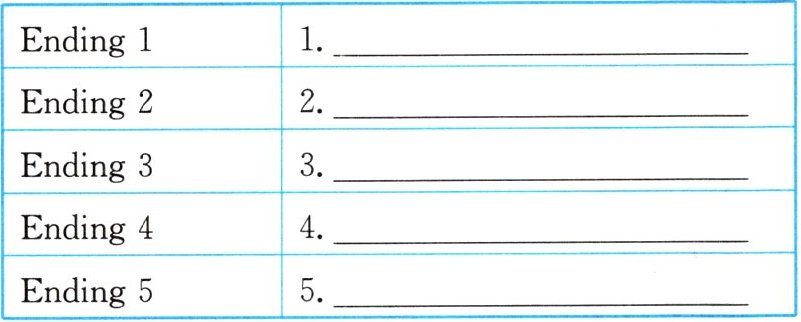
1. 大臣找到了快乐的人,是一个农夫,他很满足于自己的生活。但他没有衬衫,因为他太穷了,国王最终没有得到衬衫。
2. 大臣找到了快乐的人,是一个诗人,他觉得能创作就是快乐。他有衬衫,但他不愿意给国王,因为他觉得快乐不是靠衬衫传递的,国王最终没得到衬衫。
3. 大臣没找到快乐的人,因为每个人都有烦恼。国王很失望,后来他自己去体验生活,发现帮助别人能带来快乐,不再执着于衬衫。
4. 大臣找到了快乐的人,是一个小孩,小孩的快乐很简单。小孩有衬衫,国王得到了衬衫,但穿上后也没觉得多快乐,最后明白快乐要自己寻找。
5. 大臣找到了快乐的人,是一个隐士。隐士的衬衫很破旧,国王拿到后,看着这件衬衫,思考快乐到底是什么,最终有所领悟。
1. 大臣找到了快乐的人,是一个农夫,他很满足于自己的生活。但他没有衬衫,因为他太穷了,国王最终没有得到衬衫。
2. 大臣找到了快乐的人,是一个诗人,他觉得能创作就是快乐。他有衬衫,但他不愿意给国王,因为他觉得快乐不是靠衬衫传递的,国王最终没得到衬衫。
3. 大臣没找到快乐的人,因为每个人都有烦恼。国王很失望,后来他自己去体验生活,发现帮助别人能带来快乐,不再执着于衬衫。
4. 大臣找到了快乐的人,是一个小孩,小孩的快乐很简单。小孩有衬衫,国王得到了衬衫,但穿上后也没觉得多快乐,最后明白快乐要自己寻找。
5. 大臣找到了快乐的人,是一个隐士。隐士的衬衫很破旧,国王拿到后,看着这件衬衫,思考快乐到底是什么,最终有所领悟。
答案:
1. 大臣找到了快乐的人,是一个农夫,他很满足于自己的生活。但他没有衬衫,因为他太穷了,国王最终没有得到衬衫。
2. 大臣找到了快乐的人,是一个诗人,他觉得能创作就是快乐。他有衬衫,但他不愿意给国王,因为他觉得快乐不是靠衬衫传递的,国王最终没得到衬衫。
3. 大臣没找到快乐的人,因为每个人都有烦恼。国王很失望,后来他自己去体验生活,发现帮助别人能带来快乐,不再执着于衬衫。
4. 大臣找到了快乐的人,是一个小孩,小孩的快乐很简单。小孩有衬衫,国王得到了衬衫,但穿上后也没觉得多快乐,最后明白快乐要自己寻找。
5. 大臣找到了快乐的人,是一个隐士。隐士的衬衫很破旧,国王拿到后,看着这件衬衫,思考快乐到底是什么,最终有所领悟。
2. 大臣找到了快乐的人,是一个诗人,他觉得能创作就是快乐。他有衬衫,但他不愿意给国王,因为他觉得快乐不是靠衬衫传递的,国王最终没得到衬衫。
3. 大臣没找到快乐的人,因为每个人都有烦恼。国王很失望,后来他自己去体验生活,发现帮助别人能带来快乐,不再执着于衬衫。
4. 大臣找到了快乐的人,是一个小孩,小孩的快乐很简单。小孩有衬衫,国王得到了衬衫,但穿上后也没觉得多快乐,最后明白快乐要自己寻找。
5. 大臣找到了快乐的人,是一个隐士。隐士的衬衫很破旧,国王拿到后,看着这件衬衫,思考快乐到底是什么,最终有所领悟。
一、用方框内所给单词的适当形式填空
with realize search sudden return
1. What are they
2. They found a poor person
3. She
4. They didn’t
5. The little girl
with realize search sudden return
1. What are they
searching
for in the forest?2. They found a poor person
without
power or money.3. She
returned
to collect her umbrella.4. They didn’t
realize
the importance of the problem.5. The little girl
suddenly
began to cry for no reason.
答案:
1. searching 2. without 3. returned 4. realize 5. suddenly
1. I think she’ll come on time
A.ever since
B.only when
C.even though
D.only if
C
it rains tomorrow.A.ever since
B.only when
C.even though
D.only if
答案:
C
2. The peaceful music in the CD made the students
A.feel
B.feels
C.felt
D.to feel
A
relaxed.A.feel
B.feels
C.felt
D.to feel
答案:
A
3. The policemen
A.found
B.searched
C.looked
D.discovered
B
every room in the house.A.found
B.searched
C.looked
D.discovered
答案:
B
4. We must do everything we can
A.made
B.to making
C.make
D.to make
D
our earth cleaner and safer.A.made
B.to making
C.make
D.to make
答案:
D
查看更多完整答案,请扫码查看

