

 搜索
搜索
第19页
- 第2页
- 第3页
- 第4页
- 第5页
- 第6页
- 第7页
- 第8页
- 第9页
- 第10页
- 第11页
- 第12页
- 第13页
- 第14页
- 第15页
- 第16页
- 第17页
- 第18页
- 第19页
- 第20页
- 第21页
- 第22页
- 第23页
- 第24页
- 第25页
- 第26页
- 第27页
- 第28页
- 第29页
- 第30页
- 第31页
- 第32页
- 第33页
- 第34页
- 第35页
- 第36页
- 第37页
- 第38页
- 第39页
- 第40页
- 第41页
- 第42页
- 第43页
- 第44页
- 第45页
- 第46页
- 第47页
- 第48页
- 第49页
- 第50页
- 第51页
- 第52页
- 第53页
- 第54页
- 第55页
- 第56页
- 第57页
- 第58页
- 第59页
- 第60页
- 第61页
- 第62页
- 第63页
- 第64页
- 第65页
- 第66页
- 第67页
- 第68页
- 第69页
- 第70页
- 第71页
B 提升能力
五、阅读理解。
①Suppose(假设)you're in London and trying to find the bus to take you to Hyde Park. This should be easy. But if you can't speak the language, it can be a problem. What will you do? Here is some advice on how to ask the way in a foreign country.
②Know the place you want to go. You can always tell others the name of the place where you want to go. It may be a place of interest, or simply a street. Whatever it is, if you do a little homework to remember the name of it, you can ask the way much more easily.
③Take a map or a picture. If you're not sure about your pronunciation when asking the way, you'd better take a map or a picture of the place where you want to go. As the old saying goes, "A picture can say a thousand words."
④Use body language. Body language can be helpful in making others understand where you want to go. For example, you can draw the shape of the Eiffel Tower in the air. It gives people an idea of where you are going.
⑤With the advice above, I believe you can find your way. Just have a try!
( )26.What does the underlined word "it" in Paragraph 2 refer to?
A.The place of interest.
B.A street.
C.The place you want to go.
D.A little homework.
( )27.Why does the writer give an example in Paragraph 4?
A.To remind readers to take a picture.
B.To compare with other ways of asking ways.
C.To explain how to use body language.
D.To show the best way of using body language.
( )28.What's the RIGHT structure of the passage?
A. ①
②③④⑤
B. ①②
③④⑤
C. ①
②③④
⑤
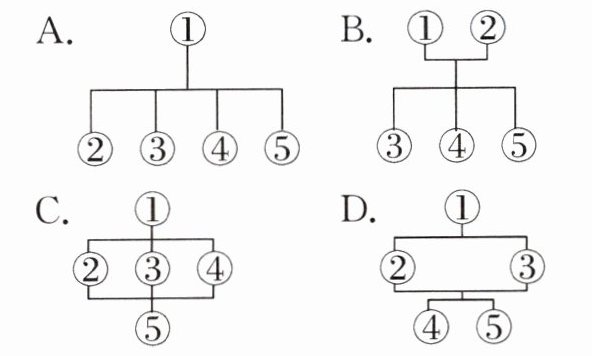
D. ①
② ③
④⑤
( )29.In which part of a magazine can we probably read this passage?
A.Travel.
B.Science.
C.Geography.
D.Language.
五、阅读理解。
①Suppose(假设)you're in London and trying to find the bus to take you to Hyde Park. This should be easy. But if you can't speak the language, it can be a problem. What will you do? Here is some advice on how to ask the way in a foreign country.
②Know the place you want to go. You can always tell others the name of the place where you want to go. It may be a place of interest, or simply a street. Whatever it is, if you do a little homework to remember the name of it, you can ask the way much more easily.
③Take a map or a picture. If you're not sure about your pronunciation when asking the way, you'd better take a map or a picture of the place where you want to go. As the old saying goes, "A picture can say a thousand words."
④Use body language. Body language can be helpful in making others understand where you want to go. For example, you can draw the shape of the Eiffel Tower in the air. It gives people an idea of where you are going.
⑤With the advice above, I believe you can find your way. Just have a try!
( )26.What does the underlined word "it" in Paragraph 2 refer to?
A.The place of interest.
B.A street.
C.The place you want to go.
D.A little homework.
( )27.Why does the writer give an example in Paragraph 4?
A.To remind readers to take a picture.
B.To compare with other ways of asking ways.
C.To explain how to use body language.
D.To show the best way of using body language.
( )28.What's the RIGHT structure of the passage?
A. ①
②③④⑤
B. ①②
③④⑤
C. ①
②③④
⑤
D. ①
② ③
④⑤
( )29.In which part of a magazine can we probably read this passage?
A.Travel.
B.Science.
C.Geography.
D.Language.
答案:
26.C 27.C 28.C 29.A
六、短文填词。
When you visit a foreign country, asking for 30.______(方向)or help is very common.
It's important to ask for help 31.______(礼貌地), especially when you are making some 32.______(请求). It can be very 33.______(有用的). You should pay 34.______(注意力)to the way you speak when talking with different people. The 35.______(表达)you use might depend on 36.______(谁)you are speaking to or how well you know them. For example, you might say "What's up today?" to your friends, but you won't say it to 37.______(陌生人). Remember,a very 38.______(直接的)order sounds impolite in English. You should be 39.______(小心的)about how you speak when you are in Western countries. In order not to cause trouble, you had better learn about language etiquette(礼仪). It will help you communicate better with others.
词汇积累
①attitude /'ætɪtju:d/ n. ______
When you visit a foreign country, asking for 30.______(方向)or help is very common.
It's important to ask for help 31.______(礼貌地), especially when you are making some 32.______(请求). It can be very 33.______(有用的). You should pay 34.______(注意力)to the way you speak when talking with different people. The 35.______(表达)you use might depend on 36.______(谁)you are speaking to or how well you know them. For example, you might say "What's up today?" to your friends, but you won't say it to 37.______(陌生人). Remember,a very 38.______(直接的)order sounds impolite in English. You should be 39.______(小心的)about how you speak when you are in Western countries. In order not to cause trouble, you had better learn about language etiquette(礼仪). It will help you communicate better with others.
词汇积累
①attitude /'ætɪtju:d/ n. ______
答案:
30.directions 31.politely 32.requests 33.useful 34.attention 35.expressions 36.whom 37.strangers 38.direct 39.careful
查看更多完整答案,请扫码查看

