

 搜索
搜索
第76页
- 第1页
- 第2页
- 第3页
- 第4页
- 第5页
- 第6页
- 第7页
- 第8页
- 第9页
- 第10页
- 第11页
- 第12页
- 第13页
- 第14页
- 第15页
- 第16页
- 第17页
- 第18页
- 第19页
- 第20页
- 第21页
- 第22页
- 第23页
- 第24页
- 第25页
- 第26页
- 第27页
- 第28页
- 第29页
- 第30页
- 第31页
- 第32页
- 第33页
- 第34页
- 第35页
- 第36页
- 第37页
- 第38页
- 第39页
- 第40页
- 第41页
- 第42页
- 第43页
- 第44页
- 第45页
- 第46页
- 第47页
- 第48页
- 第49页
- 第50页
- 第51页
- 第52页
- 第53页
- 第54页
- 第55页
- 第56页
- 第57页
- 第58页
- 第59页
- 第60页
- 第61页
- 第62页
- 第63页
- 第64页
- 第65页
- 第66页
- 第67页
- 第68页
- 第69页
- 第70页
- 第71页
- 第72页
- 第73页
- 第74页
- 第75页
- 第76页
- 第77页
- 第78页
- 第79页
- 第80页
- 第81页
- 第82页
- 第83页
- 第84页
- 第85页
- 第86页
- 第87页
- 第88页
- 第89页
- 第90页
- 第91页
- 第92页
- 第93页
- 第94页
- 第95页
- 第96页
- 第97页
- 第98页
- 第99页
- 第100页
- 第101页
- 第102页
- 第103页
- 第104页
Ⅴ. 补全对话。
根据下面的对话情景,在空白处填入一个适当的句子,使对话的意思连贯、完整。
A:Hi,Dick. Could you go fishing with me this afternoon?
B:26.
A:Do you often do housework at home?
B:27.
A:Well,I often help with housework,too. In fact,I like cooking best.
B:28.
A:Because I think it’s interesting and useful.
B:29.
A:I’m good at cooking beef noodles.
B:Really? I like eating beef noodles very much. Could you please teach me how to cook them?
A:30.
B:OK. Thank you.
A:You’re welcome.
根据下面的对话情景,在空白处填入一个适当的句子,使对话的意思连贯、完整。
A:Hi,Dick. Could you go fishing with me this afternoon?
B:26.
Sorry,I can't/I'm afraid not.
I have to do housework at home.A:Do you often do housework at home?
B:27.
Yes. / Yes,I do.
I often help to do the dishes and clean the windows. How about you?A:Well,I often help with housework,too. In fact,I like cooking best.
B:28.
Why?
A:Because I think it’s interesting and useful.
B:29.
What food are you good at cooking?
A:I’m good at cooking beef noodles.
B:Really? I like eating beef noodles very much. Could you please teach me how to cook them?
A:30.
Sure(,I'd love to). / Of course. / No problem.
You can come to my house next weekend and I’ll teach you.B:OK. Thank you.
A:You’re welcome.
答案:
26. Sorry,I can't/I'm afraid not. 27. Yes. / Yes,I do. 28. Why? 29. What food are you good at cooking? 30. Sure(,I'd love to). / Of course. / No problem.
Task 1: Labour can not only help us improve our life skills but also create a better life. What chores do you usually do at home? What do you think of work education? Make a survey among your classmates and fill in the form.
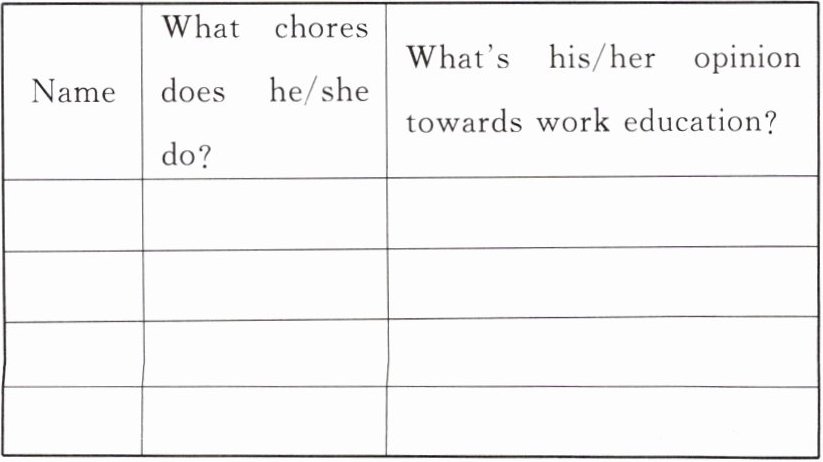
Task 2: Use the information in Activity 1 and write a text to share your survey results in the class.
________________________
________________________
________________________
________________________
________________________
________________________
________________________
________________________
Task 2: Use the information in Activity 1 and write a text to share your survey results in the class.
________________________
________________________
________________________
________________________
________________________
________________________
________________________
________________________
答案:
Task 1:| Name | What chores does he/she do? | What’s his/her opinion towards work education? || --- | --- | --- || Li Ming | Takes out the trash, Waters the plants | Work education helps develop independence and responsibility. || Wang Hong | Cleans the rooms, Washes the dishes | It teaches teamwork and the value of hard work. || Zhang Lei | Cooks simple meals, Sweeps the floor | Work education improves life skills and prepares us for the future. || Liu Fang | Makes the bed, Helps with laundry | It fosters a sense of accomplishment and self-reliance. |
Task 2:提示:根据实际情况作答。
Task 2:提示:根据实际情况作答。
查看更多完整答案,请扫码查看

