

 搜索
搜索
第33页
- 第1页
- 第2页
- 第3页
- 第4页
- 第5页
- 第6页
- 第7页
- 第8页
- 第9页
- 第10页
- 第11页
- 第12页
- 第13页
- 第14页
- 第15页
- 第16页
- 第17页
- 第18页
- 第19页
- 第20页
- 第21页
- 第22页
- 第23页
- 第24页
- 第25页
- 第26页
- 第27页
- 第28页
- 第29页
- 第30页
- 第31页
- 第32页
- 第33页
- 第34页
- 第35页
- 第36页
- 第37页
- 第38页
- 第39页
- 第40页
- 第41页
- 第42页
- 第43页
- 第44页
- 第45页
- 第46页
- 第47页
- 第48页
- 第49页
- 第50页
- 第51页
- 第52页
- 第53页
- 第54页
- 第55页
- 第56页
- 第57页
- 第58页
- 第59页
- 第60页
- 第61页
- 第62页
- 第63页
- 第64页
- 第65页
- 第66页
- 第67页
- 第68页
- 第69页
- 第70页
- 第71页
- 第72页
- 第73页
- 第74页
- 第75页
- 第76页
- 第77页
- 第78页
- 第79页
- 第80页
- 第81页
- 第82页
- 第83页
- 第84页
- 第85页
- 第86页
- 第87页
- 第88页
- 第89页
- 第90页
- 第91页
- 第92页
- 第93页
- 第94页
- 第95页
- 第96页
- 第97页
- 第98页
- 第99页
- 第100页
- 第101页
- 第102页
- 第103页
- 第104页
- 第105页
- 第106页
- 第107页
- 第108页
- 第109页
- 第110页
- 第111页
- 第112页
- 第113页
- 第114页
- 第115页
- 第116页
- 第117页
- 第118页
- 第119页
- 第120页
- 第121页
- 第122页
- 第123页
- 第124页
- 第125页
- 第126页
- 第127页
- 第128页
- 第129页
- 第130页
- 第131页
- 第132页
- 第133页
- 第134页
- 第135页
- 第136页
- 第137页
- 第138页
- 第139页
- 第140页
- 第141页
- 第142页
- 第143页
- 第144页
- 第145页
- 第146页
- 第147页
- 第148页
- 第149页
- 第150页
- 第151页
- 第152页
- 第153页
- 第154页
- 第155页
- 第156页
- 第157页
- 第158页
- 第159页
- 第160页
- 第161页
- 第162页
- 第163页
- 第164页
第二部分 听对话和短文答题
听一段对话,回答第11、12小题。
( )11. Where did Ben’s uncle get the idea?
A. From the radio.
B. On TV.
C. From his friend.
( )12. What’s the talk mainly about?
A. Teaching animals to work.
B. Teaching animals to watch house.
C. Teaching animals to buy food.
听第一篇短文,回答第13至15小题。请根据短文内容,选择正确答案,完成信息记录表。
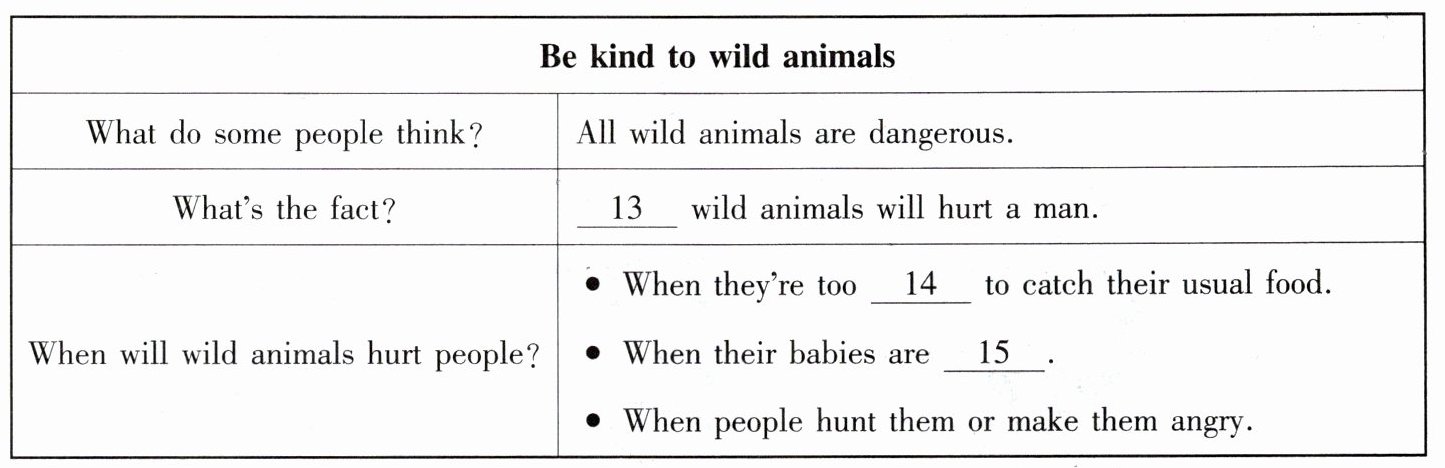
( )13. A. Most
B. Very few
C. Quite some
( )14. A. tired
B. old
C. lazy
( )15. A. angry
B. afraid
C. in danger
听第二篇短文,回答第16至20小题。
( )16. Where do wild pandas live?
A. In the south - west of China.
B. In the north - west of China.
C. In the south - east of China.
( )17. How many pandas do zoos and research centres look after?
A. About 1,700.
B. About 1,000.
C. About 700.
( )18. Where are more baby pandas born?
A. In the nature reserves.
B. In the zoos.
C. In the forest.
( )19. What’s the symbol for the World Wide Fund for Nature(世界自然基金会)?
A. The panda.
B. The whale.
C. The tiger.
( )20. What’s the text mainly about?
A. Protecting wild animals.
B. Saving pandas.
C. Learning about WWF.
听一段对话,回答第11、12小题。
( )11. Where did Ben’s uncle get the idea?
A. From the radio.
B. On TV.
C. From his friend.
( )12. What’s the talk mainly about?
A. Teaching animals to work.
B. Teaching animals to watch house.
C. Teaching animals to buy food.
听第一篇短文,回答第13至15小题。请根据短文内容,选择正确答案,完成信息记录表。
( )13. A. Most
B. Very few
C. Quite some
( )14. A. tired
B. old
C. lazy
( )15. A. angry
B. afraid
C. in danger
听第二篇短文,回答第16至20小题。
( )16. Where do wild pandas live?
A. In the south - west of China.
B. In the north - west of China.
C. In the south - east of China.
( )17. How many pandas do zoos and research centres look after?
A. About 1,700.
B. About 1,000.
C. About 700.
( )18. Where are more baby pandas born?
A. In the nature reserves.
B. In the zoos.
C. In the forest.
( )19. What’s the symbol for the World Wide Fund for Nature(世界自然基金会)?
A. The panda.
B. The whale.
C. The tiger.
( )20. What’s the text mainly about?
A. Protecting wild animals.
B. Saving pandas.
C. Learning about WWF.
答案:
查看更多完整答案,请扫码查看

