

 搜索
搜索
第13页
- 第1页
- 第2页
- 第3页
- 第4页
- 第5页
- 第6页
- 第7页
- 第8页
- 第9页
- 第10页
- 第11页
- 第12页
- 第13页
- 第14页
- 第15页
- 第16页
- 第17页
- 第18页
- 第19页
- 第20页
- 第21页
- 第22页
- 第23页
- 第24页
- 第25页
- 第26页
- 第27页
- 第28页
- 第29页
- 第30页
- 第31页
- 第32页
- 第33页
- 第34页
- 第35页
- 第36页
- 第37页
- 第38页
- 第39页
- 第40页
- 第41页
- 第42页
- 第43页
- 第44页
- 第45页
- 第46页
- 第47页
- 第48页
- 第49页
- 第50页
- 第51页
- 第52页
- 第53页
- 第54页
- 第55页
- 第56页
- 第57页
- 第58页
- 第59页
- 第60页
- 第61页
- 第62页
- 第63页
- 第64页
- 第65页
- 第66页
- 第67页
- 第68页
- 第69页
- 第70页
- 第71页
- 第72页
- 第73页
- 第74页
- 第75页
- 第76页
- 第77页
第一部分 听对话回答问题(计10分)
本部分共有10道小题,每小题你将听到一段对话,每段对话听两遍。在听每段对话前,你将有5秒钟的时间阅读题目;听完后,你仍有5秒钟的时间选择你认为最合适的备选答案。在听到“嘀”的信号后,进入下一小题。
( ) 1. Who does the boy think is the greatest man?

( ) 2. What time is it now?

( ) 3. Why does the boy admire Mother Teresa?

( ) 4. Where does the conversation probably happen?

( ) 5. Why is the boy going to Hainan for his summer holidays?
A. Because the weather is very good.
B. Because the people are friendly there.
C. Because the beaches are very beautiful there.
( ) 6. Which of the following is more important according to the man?
A. Chemistry.
B. Science.
C. History.
( ) 7. What kind of music does Peter like?
A. Pop music.
B. Folk music.
C. Country music.
( ) 8. What does the woman think of the invention of the washing machine?
A. Useless.
B. Useful.
C. Bad.
( ) 9. What are the two speakers going to do tonight?
A. They will watch a film.
B. They will go fishing.
C. They will play computer games.
( ) 10. What does Jenny want to be when she grows up?
A. A singer.
B. A dancer.
C. A host.
本部分共有10道小题,每小题你将听到一段对话,每段对话听两遍。在听每段对话前,你将有5秒钟的时间阅读题目;听完后,你仍有5秒钟的时间选择你认为最合适的备选答案。在听到“嘀”的信号后,进入下一小题。
( ) 1. Who does the boy think is the greatest man?
( ) 2. What time is it now?
( ) 3. Why does the boy admire Mother Teresa?
( ) 4. Where does the conversation probably happen?
( ) 5. Why is the boy going to Hainan for his summer holidays?
A. Because the weather is very good.
B. Because the people are friendly there.
C. Because the beaches are very beautiful there.
( ) 6. Which of the following is more important according to the man?
A. Chemistry.
B. Science.
C. History.
( ) 7. What kind of music does Peter like?
A. Pop music.
B. Folk music.
C. Country music.
( ) 8. What does the woman think of the invention of the washing machine?
A. Useless.
B. Useful.
C. Bad.
( ) 9. What are the two speakers going to do tonight?
A. They will watch a film.
B. They will go fishing.
C. They will play computer games.
( ) 10. What does Jenny want to be when she grows up?
A. A singer.
B. A dancer.
C. A host.
答案:
听一段对话,回答第11—12小题。答题完毕,请等待“嘀”的信号,进入第一篇短文。
( ) 11. What did J. K. Rowling like doing when she was young?
A. She liked reading the Harry Potter series.
B. She liked reading stories to her sister.
C. She liked listening to her father’s bedtime stories.
( ) 12. Why do children love Harry Potter?
A. Because children want to learn how to have magic like Harry Potter.
B. Because Harry Potter is clever enough to make children happy.
C. Because children want to imagine being like him.
( ) 11. What did J. K. Rowling like doing when she was young?
A. She liked reading the Harry Potter series.
B. She liked reading stories to her sister.
C. She liked listening to her father’s bedtime stories.
( ) 12. Why do children love Harry Potter?
A. Because children want to learn how to have magic like Harry Potter.
B. Because Harry Potter is clever enough to make children happy.
C. Because children want to imagine being like him.
答案:
听第一篇短文,回答第13—15小题。请根据短文内容,选择正确答案,完成信息记录表。答题完毕,请等待“嘀”的信号,进入下一篇短文。
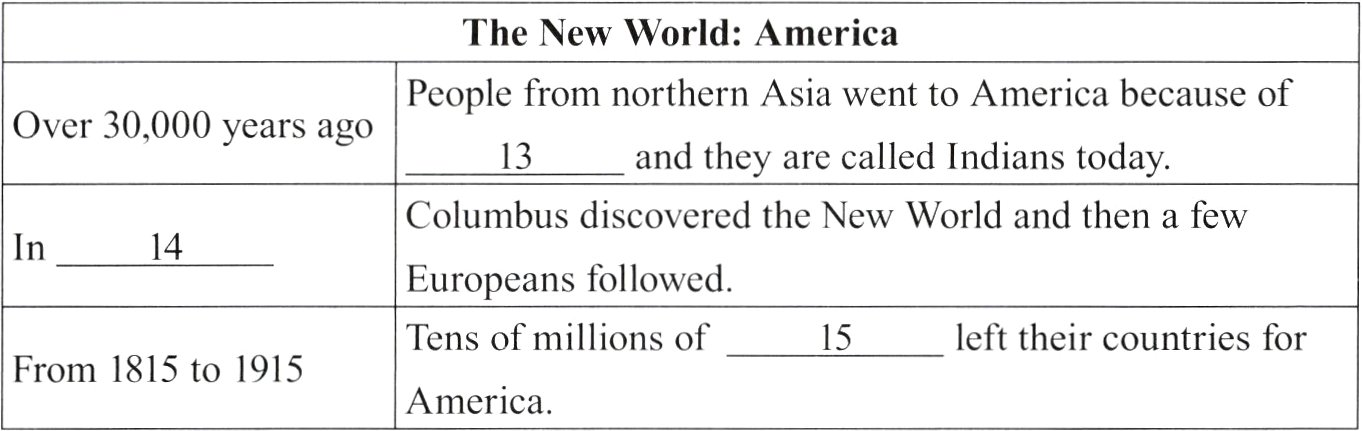
( ) 13. A. food
B. coldness
C. heat
( ) 14. A. 1492
B. 1429
C. 1420
( ) 15. A. Italians
B. Germans
C. Europeans
( ) 13. A. food
B. coldness
C. heat
( ) 14. A. 1492
B. 1429
C. 1420
( ) 15. A. Italians
B. Germans
C. Europeans
答案:
听第二篇短文,回答第16—20小题。
( ) 16. When was Einstein born?
A. In 1879.
B. In 1898.
C. In 1897.
( ) 17. What did he teach himself at the age of 12?
A. Physics.
B. Maths.
C. Music.
( ) 18. What did he do in 1901?
A. He joined the army.
B. He became a worker.
C. He studied at school.
( ) 19. What do most people think of his theory?
A. Easy.
B. Hard.
C. Useless.
( ) 20. Where did he spend the rest of his life?
A. In America.
B. In France.
C. In Germany.
( ) 16. When was Einstein born?
A. In 1879.
B. In 1898.
C. In 1897.
( ) 17. What did he teach himself at the age of 12?
A. Physics.
B. Maths.
C. Music.
( ) 18. What did he do in 1901?
A. He joined the army.
B. He became a worker.
C. He studied at school.
( ) 19. What do most people think of his theory?
A. Easy.
B. Hard.
C. Useless.
( ) 20. Where did he spend the rest of his life?
A. In America.
B. In France.
C. In Germany.
答案:
查看更多完整答案,请扫码查看

