

 搜索
搜索
2025年一本知识大盘点高中英语全一册人教版
注:目前有些书本章节名称可能整理的还不是很完善,但都是按照顺序排列的,请同学们按照顺序仔细查找。练习册 2025年一本知识大盘点高中英语全一册人教版 答案主要是用来给同学们做完题方便对答案用的,请勿直接抄袭。
第281页
- 第1页
- 第2页
- 第3页
- 第4页
- 第5页
- 第6页
- 第7页
- 第8页
- 第9页
- 第10页
- 第11页
- 第12页
- 第13页
- 第14页
- 第15页
- 第16页
- 第17页
- 第18页
- 第19页
- 第20页
- 第21页
- 第22页
- 第23页
- 第24页
- 第25页
- 第26页
- 第27页
- 第28页
- 第29页
- 第30页
- 第31页
- 第32页
- 第33页
- 第34页
- 第35页
- 第36页
- 第37页
- 第38页
- 第39页
- 第40页
- 第41页
- 第42页
- 第43页
- 第44页
- 第45页
- 第46页
- 第47页
- 第48页
- 第49页
- 第50页
- 第51页
- 第52页
- 第53页
- 第54页
- 第55页
- 第56页
- 第57页
- 第58页
- 第59页
- 第60页
- 第61页
- 第62页
- 第63页
- 第64页
- 第65页
- 第66页
- 第67页
- 第68页
- 第69页
- 第70页
- 第71页
- 第72页
- 第73页
- 第74页
- 第75页
- 第76页
- 第77页
- 第78页
- 第79页
- 第80页
- 第81页
- 第82页
- 第83页
- 第84页
- 第85页
- 第86页
- 第87页
- 第88页
- 第89页
- 第90页
- 第91页
- 第92页
- 第93页
- 第94页
- 第95页
- 第96页
- 第97页
- 第98页
- 第99页
- 第100页
- 第101页
- 第102页
- 第103页
- 第104页
- 第105页
- 第106页
- 第107页
- 第108页
- 第109页
- 第110页
- 第111页
- 第112页
- 第113页
- 第114页
- 第115页
- 第116页
- 第117页
- 第118页
- 第119页
- 第120页
- 第121页
- 第122页
- 第123页
- 第124页
- 第125页
- 第126页
- 第127页
- 第128页
- 第129页
- 第130页
- 第131页
- 第132页
- 第133页
- 第134页
- 第135页
- 第136页
- 第137页
- 第138页
- 第139页
- 第140页
- 第141页
- 第142页
- 第143页
- 第144页
- 第145页
- 第146页
- 第147页
- 第148页
- 第149页
- 第150页
- 第151页
- 第152页
- 第153页
- 第154页
- 第155页
- 第156页
- 第157页
- 第158页
- 第159页
- 第160页
- 第161页
- 第162页
- 第163页
- 第164页
- 第165页
- 第166页
- 第167页
- 第168页
- 第169页
- 第170页
- 第171页
- 第172页
- 第173页
- 第174页
- 第175页
- 第176页
- 第177页
- 第178页
- 第179页
- 第180页
- 第181页
- 第182页
- 第183页
- 第184页
- 第185页
- 第186页
- 第187页
- 第188页
- 第189页
- 第190页
- 第191页
- 第192页
- 第193页
- 第194页
- 第195页
- 第196页
- 第197页
- 第198页
- 第199页
- 第200页
- 第201页
- 第202页
- 第203页
- 第204页
- 第205页
- 第206页
- 第207页
- 第208页
- 第209页
- 第210页
- 第211页
- 第212页
- 第213页
- 第214页
- 第215页
- 第216页
- 第217页
- 第218页
- 第219页
- 第220页
- 第221页
- 第222页
- 第223页
- 第224页
- 第225页
- 第226页
- 第227页
- 第228页
- 第229页
- 第230页
- 第231页
- 第232页
- 第233页
- 第234页
- 第235页
- 第236页
- 第237页
- 第238页
- 第239页
- 第240页
- 第241页
- 第242页
- 第243页
- 第244页
- 第245页
- 第246页
- 第247页
- 第248页
- 第249页
- 第250页
- 第251页
- 第252页
- 第253页
- 第254页
- 第255页
- 第256页
- 第257页
- 第258页
- 第259页
- 第260页
- 第261页
- 第262页
- 第263页
- 第264页
- 第265页
- 第266页
- 第267页
- 第268页
- 第269页
- 第270页
- 第271页
- 第272页
- 第273页
- 第274页
- 第275页
- 第276页
- 第277页
- 第278页
- 第279页
- 第280页
- 第281页
- 第282页
- 第283页
- 第284页
- 第285页
- 第286页
- 第287页
- 第288页
- 第289页
- 第290页
- 第291页
- 第292页
- 第293页
- 第294页
- 第295页
- 第296页
- 第297页
- 第298页
- 第299页
- 第300页
- 第301页
- 第302页
- 第303页
- 第304页
- 第305页
- 第306页
- 第307页
知识点1 状语从句 [5年5考]
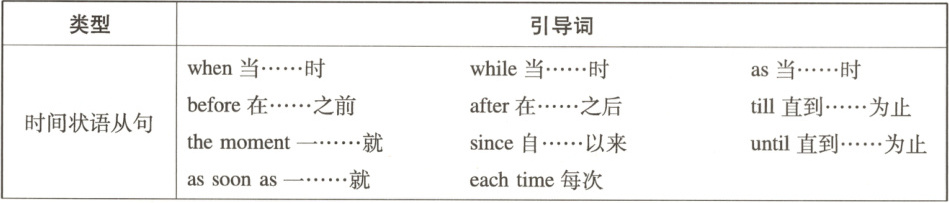
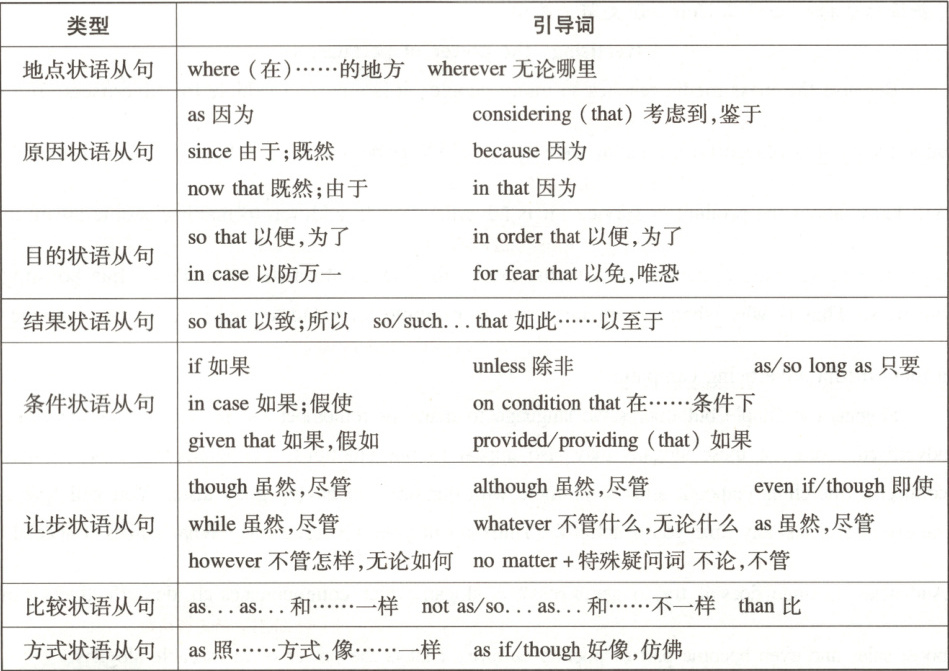
在句中作状语的从句称为状语从句,状语从句修饰主句中的谓语、定语、其他状语或整个主句,由于其功能与副词非常相似,故又称为副词性从句。常见的九种状语从句及其引导词如下:
续表
① 时间状语从句
在主从复合句中作时间状语的从句称为时间状语从句。时间状语从句可置于句首、句中或句尾。常见的引导词有 when、while、as、before 等。
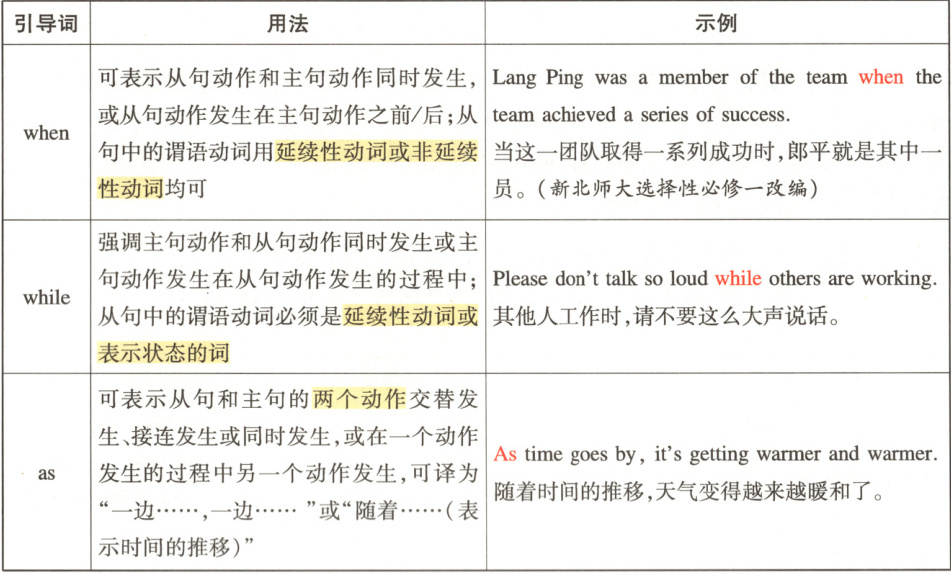
(1)when、while 和 as 的用法
易错警示
① 引导时间状语从句时,while 一般都可以用 when 来代替,而 when 一般不可以用 while 来代替。② 如果主句表示的是短暂性动作,而从句用延续性动词的进行时态表示在一段时间内正在进行的动作,此时 when、while 与 as 可互换。
When/While/As I was walking down the street, I came across an old friend of mine. 我在沿街散步时,偶然遇到了我的一个老朋友。
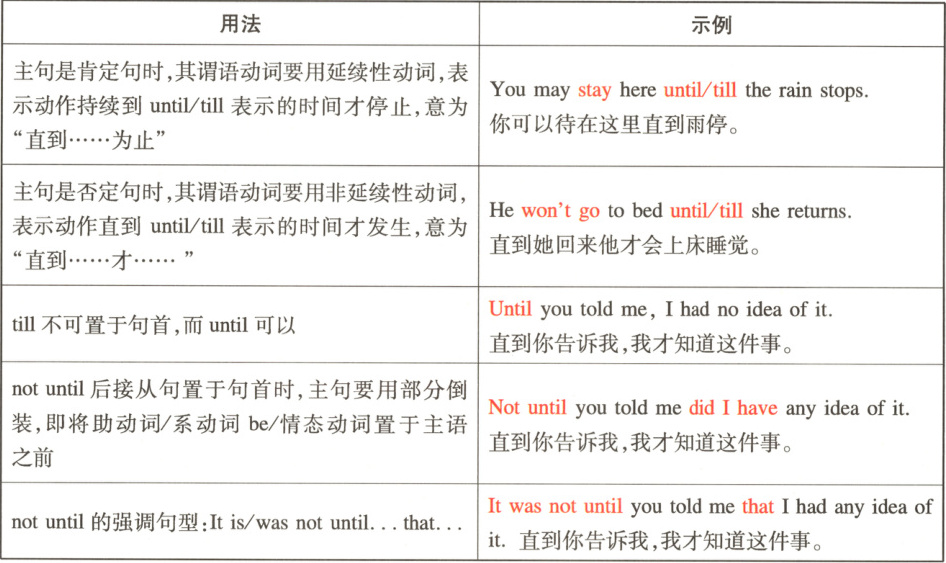
(2)until 和 till 的用法
易错警示
① till 不能用于强调句型。② until/till 除了可作连词引导时间状语从句外,还可作介词。
He continued working until/till his death. 他一直工作到去世。
The new rules won't come into effect until/till the end of this year. 新规要到今年年底才会生效。
(3)since 的用法
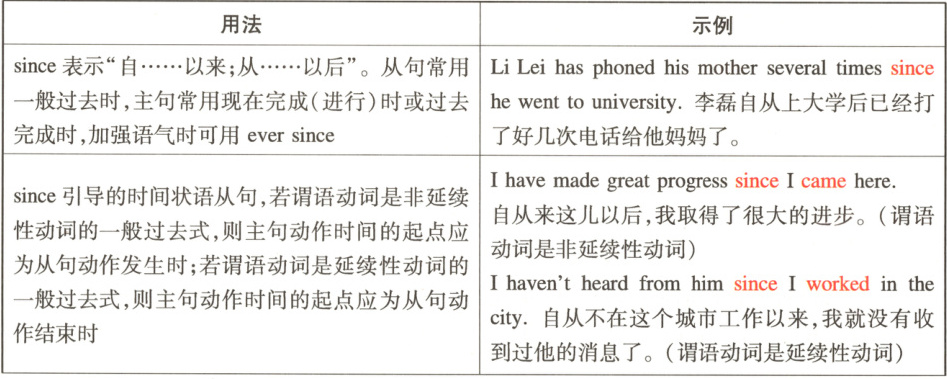
续表
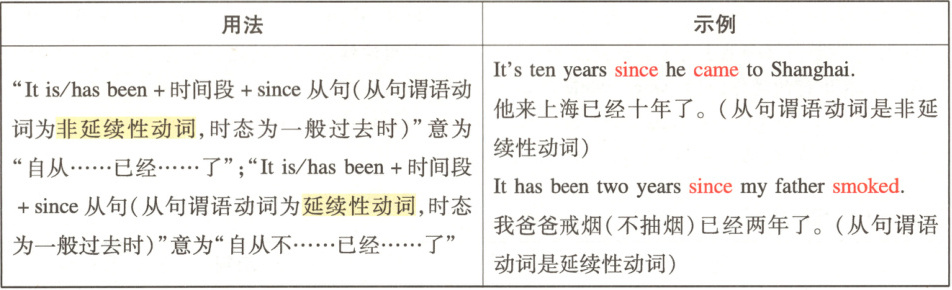
(4)before 的用法
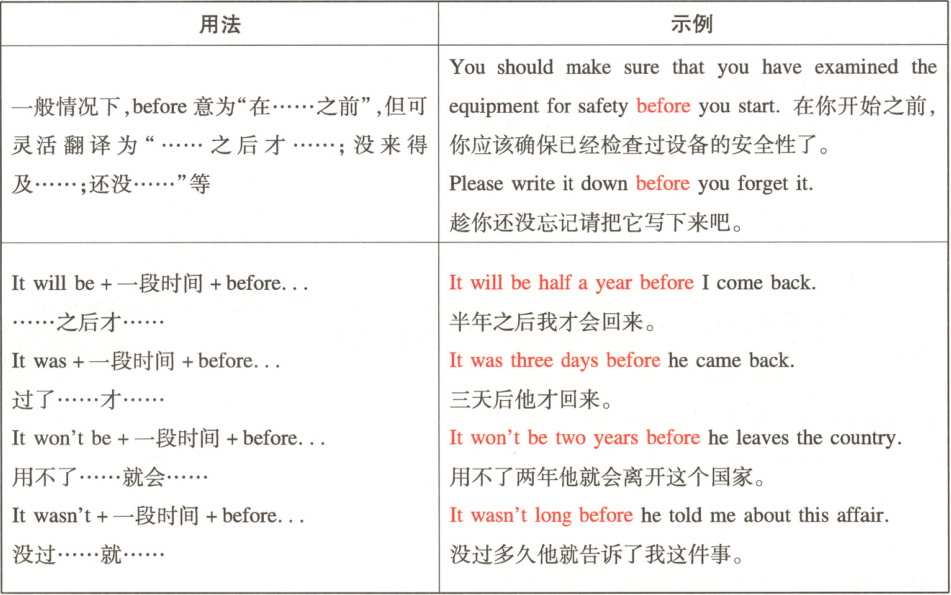
It was + 一段时间 + before... 过了……才……
It won't be + 一段时间 + before... 用不了……就会……
It was three days before he came back. 三天后他才回来。
It won't be two years before he leaves the country. 用不了两年他就会离开这个国家。
易错警示
before 与 since 的区别:before 从句的动作发生在主句动作之后;since 从句的动作发生在主句动作之前。
I'd like a second opinion before I make a decision. 我在做决定之前想听听别人的意见。
Cath hasn't phoned since she went to Berlin. Cath 自从去了柏林还没有打来过电话。
(5)each/every time、next time、any time、the last time、the first time 等名词短语可引导时间状语从句。
The first time Tommy saw the snow falling, he was very excited. Tommy 第一次看到下雪时,他很兴奋。
Every time my husband arrived home at the end of the day, we'd greet him at the door. 每次我的丈夫在一天结束回到家时,我们都会在门口迎接他。
(6)表示“一……就……”的引导词有 as soon as、the moment/minute、the instant、immediately、instantly、directly 等。
As soon as he arrives, we'll start to work. 他一到,我们就开始工作。
The moment I heard the voice, I knew my father was coming. 我一听到那个声音就知道我父亲要来了。
The boy burst into tears immediately he saw his mother. 那个男孩一见到他妈妈就大哭起来。
(7)引导词 hardly/scarcely...when...和 no sooner...than...意为“一……就……”,使用这些引导词的句子,主句常用过去完成时,when 和 than 引导的从句用一般过去时。hardly、scarcely 和 no sooner 位于句首时,主句要用部分倒装。
Hardly/Scarcely had I got into the office when the telephone rang. = I had hardly/scarcely got into the office when the telephone rang. 我刚进办公室电话就响了。
No sooner had the moon appeared than it began to cloud over. = The moon had no sooner appeared than it began to cloud over. 月亮刚出现,天空就开始阴云密布。
(8)by the time 意为“到……的时候”,在句中常起连词作用,引导时间状语从句。如果从句是一般过去时,主句常用过去完成时;如果从句是一般现在时(表示将来),主句常用将来完成时。
The movie had begun by the time we got to the cinema. 我们到达电影院的时候,电影已经开始了。
I will have finished the work by the time my father comes back. 我父亲回来时,我将已经完成这项工作了。
② 地点状语从句
在主从复合句中作地点状语的从句称为地点状语从句。地点既包括具体地点,又包括抽象地点。地点状语从句表示地点、方位,通常可置于句首、句中或句尾。常见的引导词有 where、wherever、everywhere、anywhere。
You are free to go where you like. 你可以随意到你喜欢的地方去。
Where there is a will, there is a way. 有志者,事竟成。
易错警示
where 引导的状语从句与定语从句的区别:若 where 前无表示地点的名词,则为状语从句;若前有表示地点的名词,则为定语从句,名词为先行词。
The little girl who got lost stayed where she was and waited for her mother. 那个迷路的小女孩待在原地等她的母亲。(状语从句)
The little girl who got lost stayed in the place where she was and waited for her mother. 那个迷路的小女孩待在原地
③ 原因状语从句
在主从复合句中作原因状语的从句称为原因状语从句。原因状语从句可置于句首,也可置于句尾。常见的引导词有 because、as、since、when、now that、in that、considering(that)、seeing(that)等。
(1)because、since 和 as 的用法
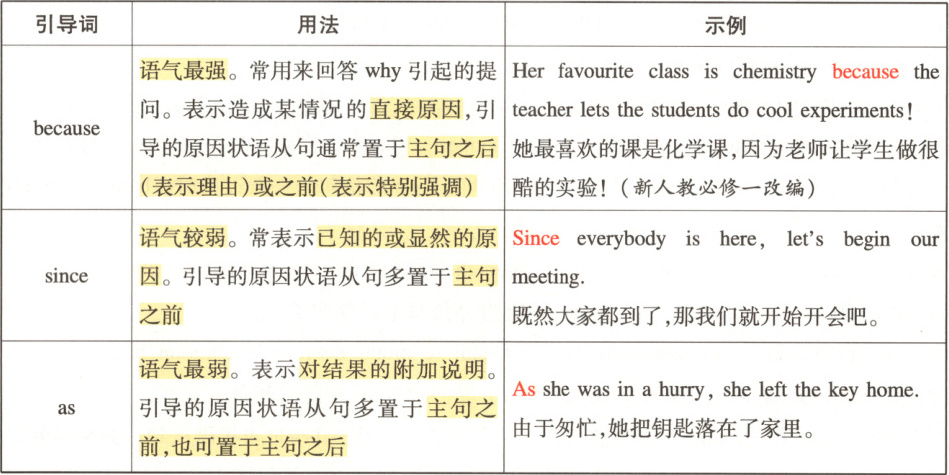
(2)when、considering/seeing(that)、in that 和 now that 的用法
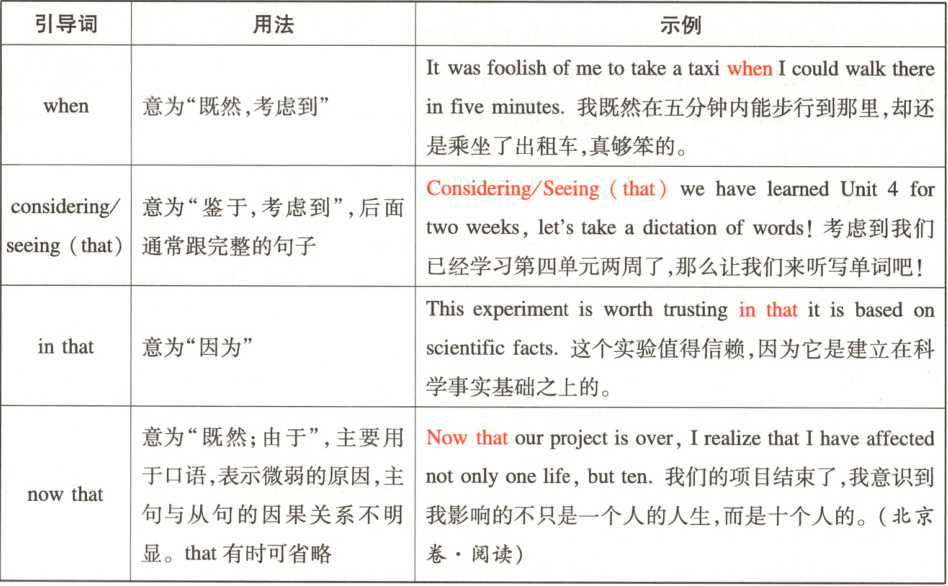
易错警示
for 表原因:for 是并列连词,用于连接并列分句,表示原因的语气很弱,一般是对结果做出推断性的补充说明或解释,for 前通常加逗号。
It must have blown last night, for there are so many fallen leaves on the ground. 昨天晚上肯定刮风了,因为地面上有很多落叶。
④ 目的状语从句
在主从复合句中作目的状语的从句称为目的状语从句。目的状语从句一般置于句尾,谓语常含有情态动词。常见的引导词有 so that、in order that、for fear that、in case、lest 等。
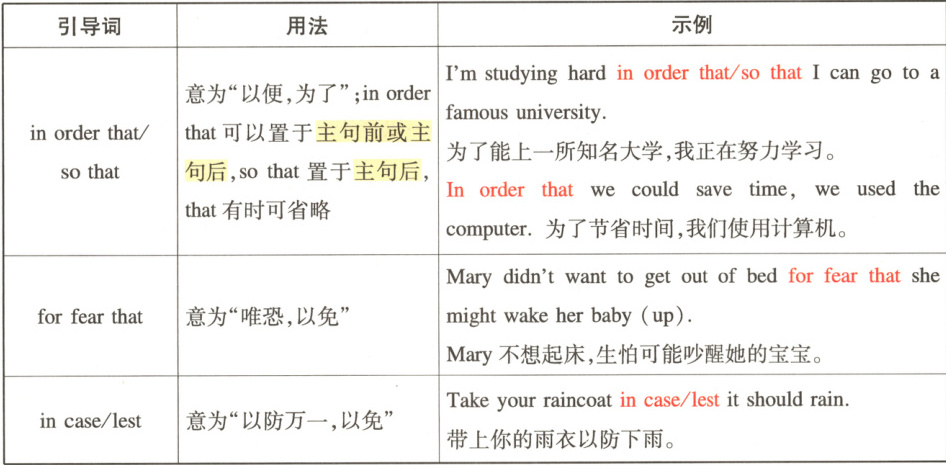
易错警示
① 目的状语从句与不定式的转换:当主句的主语与从句的主语一致时,目的状语从句可以与 in order to、so as to 等表示目的的不定式短语直接转换。
We'll sit in the front of the hall so that/in order that we can hear more clearly. = We'll sit in the front of the hall in order to/so as to hear more clearly. 为了能听得更清楚,我们将坐在大厅的前部。
② in case 也可以单独使用,放在句末,意为“以防万一”。
It may not rain, but you'd better take an umbrella in case. 天可能不会下雨,但你最好带把雨伞以防万一。
⑤ 结果状语从句
在主从复合句中作结果状语的从句称为结果状语从句。结果状语从句一般置于主句之后。常见的引导词有 such...that...、so...that...、so that 等。
(1)such...that...的用法
such...that...引导结果状语从句时意为“如此……以至于……”,常见结构如下:
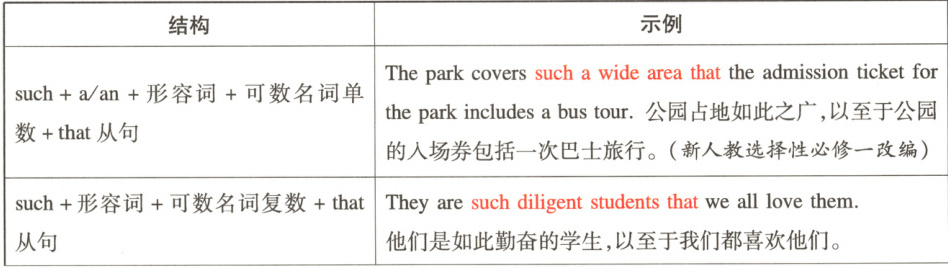
续表

(2)so...that...的用法
so...that...引导结果状语从句时意为“如此……以至于……”,常见结构如下:
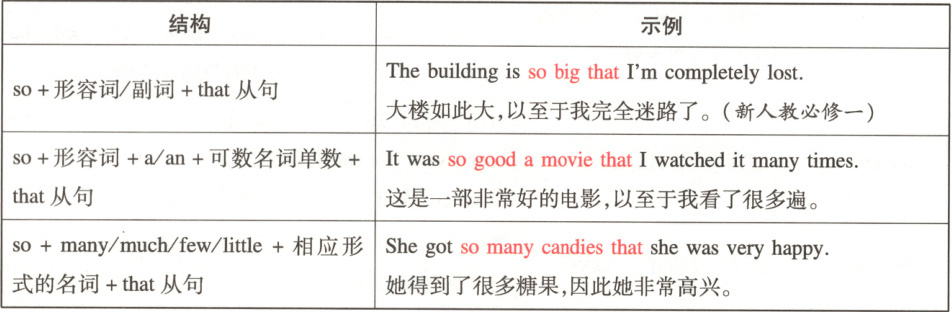
(3)so that 的用法
so that 引导结果状语从句时意为“以致;所以”,that 有时可省略。
We arrived early in the morning, so(that) we caught the first train. 我们早上到得很早,所以赶上了第一班火车。
易错警示
so that 引导目的状语从句和结果状语从句的区别:① 引导目的状语从句时,表示主观的目的,从句谓语动词中常有 may、might、can、could、will、would 等情态动词,有时 so that 前面有逗号,意为“以便,为了”。
Kate got up early so that she could catch the first bus. 为了赶上第一班公共汽车,Kate 早早就起床了。
② 引导结果状语从句时,表示既定的结果,从句谓语动词中通常没有情态动词,意为“以致;所以”。
They missed the bus so that they were late for class. 他们错过了公共汽车,所以上课迟到了。
⑥ 条件状语从句
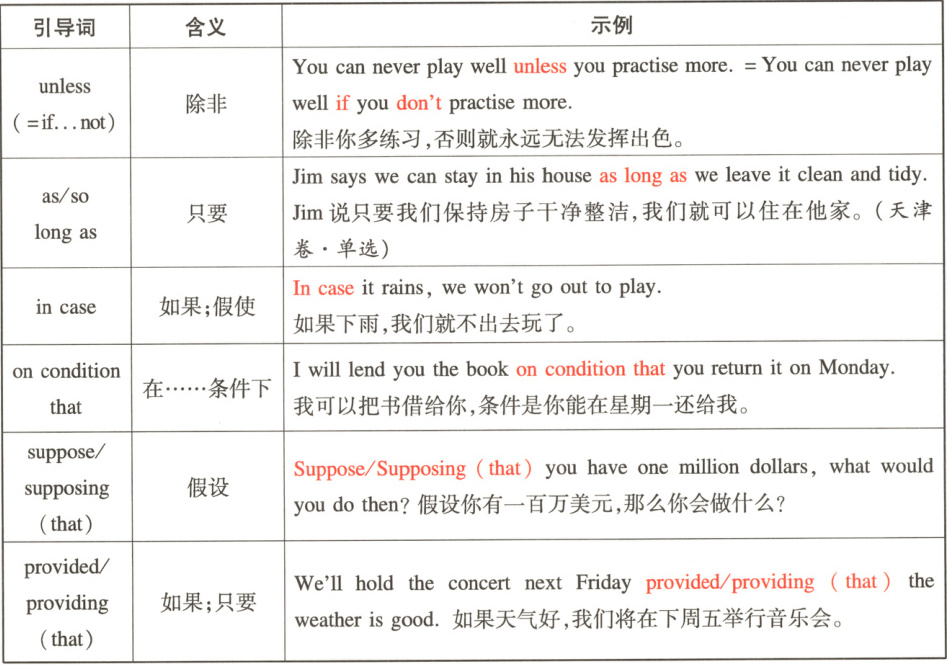
在主从复合句中作条件状语的从句称为条件状语从句。条件状语从句可置于句首,也可置于句尾,有时还可置于主语和谓语之间。常见的引导词有 if、unless(= if...not)、as/so long as、in case、on condition that、supposing(that)、provided/providing(that)等。

续表
易错警示
在含有条件状语从句的主从复合句中,若主句用一般将来时,从句常用一般现在时表将来,即“主将从现”原则。在“主将从现”原则中,“将”可以是一般将来时或将来完成时,“现”可以是一般现在时或现在完成时。“主将从现”原则还适用于含有时间状语从句和让步状语从句的主从复合句中。
If the weather is bad next week, we will put off the climbing. 如果下周天气不好,我们将推迟登山。
⑦ 让步状语从句
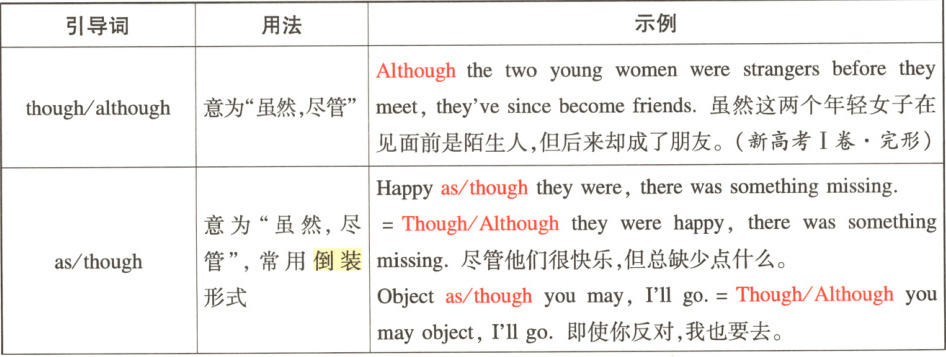
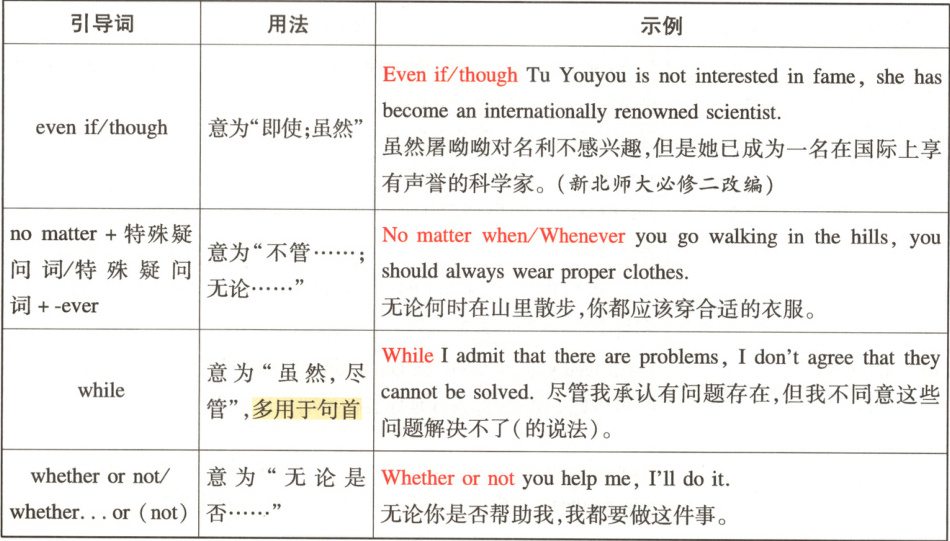
在主从复合句中作让步状语的从句称为让步状语从句。常见的引导词有 though、although、even if/though、no matter + 特殊疑问词/特殊疑问词 + -ever、while、as、whether or not/whether...or(not)等。
续表
易错警示
① although 不可作副词用,而 though 可以,且常放在句尾,意为“可是,然而”。
He said he would come; he didn't, though. 他说他要来,可他没来。
② whatever、whichever 和 whoever 既可以引导让步状语从句,也可以引导名词性从句;“no matter + 相应的 wh-疑问词”只能引导让步状语从句。
Please give the money to whoever needs it most. 请把钱给最需要的人。(宾语从句)
Whoever/No matter who you are, you must keep the law. 不管你是谁,你都必须遵守法律。(让步状语从句)
⑧ 比较状语从句
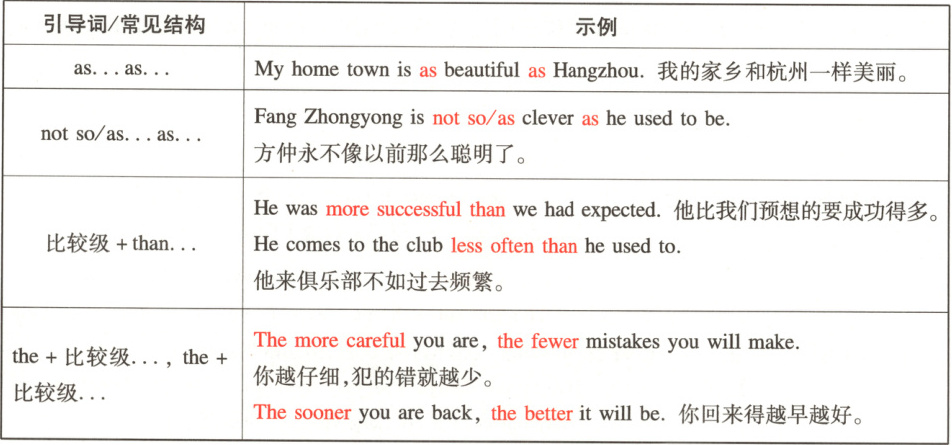
在主从复合句中作比较状语的从句称为比较状语从句。比较状语从句通常置于句尾。常见的引导词有 as...as...、not so/as...as...、than 等。
易错警示
what/as 也可引导有对称和对比关系的状语从句。
Food is to men what/as oil is to machines. 食物之于人,犹如油之于机器。
Engines are to machines what/as hearts are to animals. 引擎对于机器而言就好比心脏对于动物一样。
⑨ 方式状语从句
在主从复合句中作方式状语的从句称为方式状语从句。常见的引导词有 as、as if/though、like、the way 等。
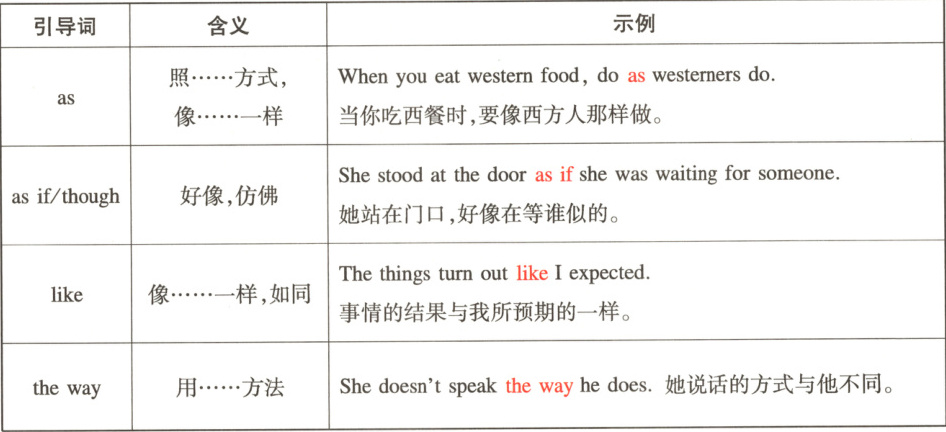
易错警示
as if/though 既可引导方式状语从句,又可引导表语从句。
She looks as if she were ten years younger. 她看起来好像年轻了 10 岁。(表语从句)
⑩ 状语从句中的省略
在时间、条件、让步、方式等状语从句中,为了使语言更加简洁、生动,经常运用省略形式。状语从句的省略原则:如果从句主语和主句主语一致,或从句主语为 it,且从句的谓语部分有 be 动词,就可以把从句中的主语和谓语中的 be 动词一起省略。
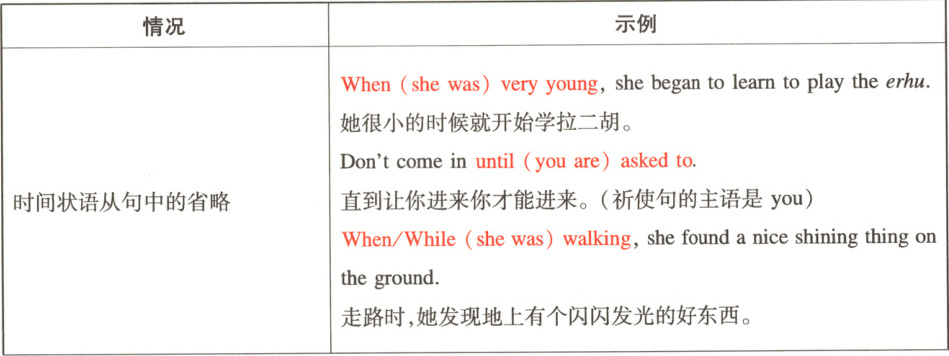
Don't come in until(you are) asked to. 直到让你进来你才能进来。(祈使句的主语是 you)
续表
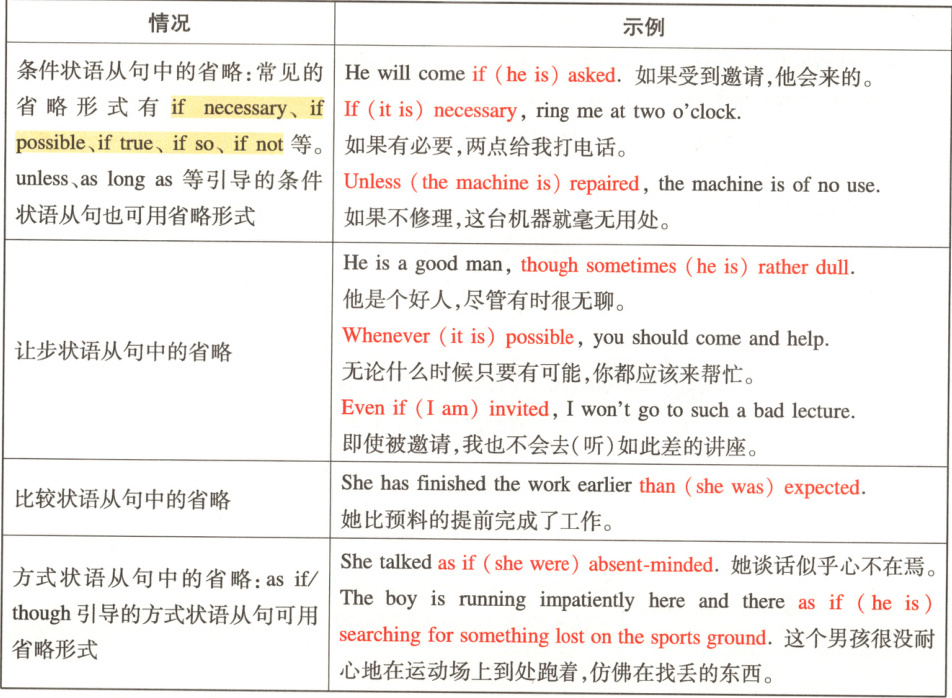
If(it is) necessary, ring me at two o'clock. 如果有必要,两点给我打电话。
Whenever(it is) possible, you should come and help. 无论什么时候只要有可能,你都应该来帮忙。
易错警示
as 引导时间状语从句时,其后不能用省略形式。若要用省略形式,可用 when 或 while 替代 as。
When/While living in London, I picked up English. 在伦敦居住期间,我顺便学会了英语。(不能用 As)
对应考法
例 1(全国甲卷·短改)
The disagreement was too sharp that neither he nor I knew how to settle it.
解析 句意:分歧如此尖锐,以至于他和我都不知道如何解决。此处为 so...that... 引导的结果状语从句。故将 too 改为 so。
例 2(全国甲卷·短改)
In my opinion, where in trouble, we should seek help from those we trust most.
解析 句意:在我看来,当我们有麻烦时(无论什么时候我们有麻烦),我们应该向我们最相信的人寻求帮助。分析句子结构可知,本句为含有时间状语从句的复合句。此处应用 when/whenever 引导。故将 where 改为 when 或 whenever。
例 3(全国Ⅰ卷·短改)
After that I poured oil into a pan and turned on the stove. I waited patiently unless the oil was hot.
解析 句意:之后,我把油倒进平底锅,打开炉子。耐心等待直到油变热。此处是指“直到”油变热,应用 until/till 引导时间状语从句。故将 unless 改为 until 或 till。
在句中作状语的从句称为状语从句,状语从句修饰主句中的谓语、定语、其他状语或整个主句,由于其功能与副词非常相似,故又称为副词性从句。常见的九种状语从句及其引导词如下:
续表
① 时间状语从句
在主从复合句中作时间状语的从句称为时间状语从句。时间状语从句可置于句首、句中或句尾。常见的引导词有 when、while、as、before 等。
(1)when、while 和 as 的用法
易错警示
① 引导时间状语从句时,while 一般都可以用 when 来代替,而 when 一般不可以用 while 来代替。② 如果主句表示的是短暂性动作,而从句用延续性动词的进行时态表示在一段时间内正在进行的动作,此时 when、while 与 as 可互换。
When/While/As I was walking down the street, I came across an old friend of mine. 我在沿街散步时,偶然遇到了我的一个老朋友。
(2)until 和 till 的用法
易错警示
① till 不能用于强调句型。② until/till 除了可作连词引导时间状语从句外,还可作介词。
He continued working until/till his death. 他一直工作到去世。
The new rules won't come into effect until/till the end of this year. 新规要到今年年底才会生效。
(3)since 的用法
续表
(4)before 的用法
It was + 一段时间 + before... 过了……才……
It won't be + 一段时间 + before... 用不了……就会……
It was three days before he came back. 三天后他才回来。
It won't be two years before he leaves the country. 用不了两年他就会离开这个国家。
易错警示
before 与 since 的区别:before 从句的动作发生在主句动作之后;since 从句的动作发生在主句动作之前。
I'd like a second opinion before I make a decision. 我在做决定之前想听听别人的意见。
Cath hasn't phoned since she went to Berlin. Cath 自从去了柏林还没有打来过电话。
(5)each/every time、next time、any time、the last time、the first time 等名词短语可引导时间状语从句。
The first time Tommy saw the snow falling, he was very excited. Tommy 第一次看到下雪时,他很兴奋。
Every time my husband arrived home at the end of the day, we'd greet him at the door. 每次我的丈夫在一天结束回到家时,我们都会在门口迎接他。
(6)表示“一……就……”的引导词有 as soon as、the moment/minute、the instant、immediately、instantly、directly 等。
As soon as he arrives, we'll start to work. 他一到,我们就开始工作。
The moment I heard the voice, I knew my father was coming. 我一听到那个声音就知道我父亲要来了。
The boy burst into tears immediately he saw his mother. 那个男孩一见到他妈妈就大哭起来。
(7)引导词 hardly/scarcely...when...和 no sooner...than...意为“一……就……”,使用这些引导词的句子,主句常用过去完成时,when 和 than 引导的从句用一般过去时。hardly、scarcely 和 no sooner 位于句首时,主句要用部分倒装。
Hardly/Scarcely had I got into the office when the telephone rang. = I had hardly/scarcely got into the office when the telephone rang. 我刚进办公室电话就响了。
No sooner had the moon appeared than it began to cloud over. = The moon had no sooner appeared than it began to cloud over. 月亮刚出现,天空就开始阴云密布。
(8)by the time 意为“到……的时候”,在句中常起连词作用,引导时间状语从句。如果从句是一般过去时,主句常用过去完成时;如果从句是一般现在时(表示将来),主句常用将来完成时。
The movie had begun by the time we got to the cinema. 我们到达电影院的时候,电影已经开始了。
I will have finished the work by the time my father comes back. 我父亲回来时,我将已经完成这项工作了。
② 地点状语从句
在主从复合句中作地点状语的从句称为地点状语从句。地点既包括具体地点,又包括抽象地点。地点状语从句表示地点、方位,通常可置于句首、句中或句尾。常见的引导词有 where、wherever、everywhere、anywhere。
You are free to go where you like. 你可以随意到你喜欢的地方去。
Where there is a will, there is a way. 有志者,事竟成。
易错警示
where 引导的状语从句与定语从句的区别:若 where 前无表示地点的名词,则为状语从句;若前有表示地点的名词,则为定语从句,名词为先行词。
The little girl who got lost stayed where she was and waited for her mother. 那个迷路的小女孩待在原地等她的母亲。(状语从句)
The little girl who got lost stayed in the place where she was and waited for her mother. 那个迷路的小女孩待在原地
等
她的母亲。(定语从句,place 为先行词)③ 原因状语从句
在主从复合句中作原因状语的从句称为原因状语从句。原因状语从句可置于句首,也可置于句尾。常见的引导词有 because、as、since、when、now that、in that、considering(that)、seeing(that)等。
(1)because、since 和 as 的用法
(2)when、considering/seeing(that)、in that 和 now that 的用法
易错警示
for 表原因:for 是并列连词,用于连接并列分句,表示原因的语气很弱,一般是对结果做出推断性的补充说明或解释,for 前通常加逗号。
It must have blown last night, for there are so many fallen leaves on the ground. 昨天晚上肯定刮风了,因为地面上有很多落叶。
④ 目的状语从句
在主从复合句中作目的状语的从句称为目的状语从句。目的状语从句一般置于句尾,谓语常含有情态动词。常见的引导词有 so that、in order that、for fear that、in case、lest 等。
易错警示
① 目的状语从句与不定式的转换:当主句的主语与从句的主语一致时,目的状语从句可以与 in order to、so as to 等表示目的的不定式短语直接转换。
We'll sit in the front of the hall so that/in order that we can hear more clearly. = We'll sit in the front of the hall in order to/so as to hear more clearly. 为了能听得更清楚,我们将坐在大厅的前部。
② in case 也可以单独使用,放在句末,意为“以防万一”。
It may not rain, but you'd better take an umbrella in case. 天可能不会下雨,但你最好带把雨伞以防万一。
⑤ 结果状语从句
在主从复合句中作结果状语的从句称为结果状语从句。结果状语从句一般置于主句之后。常见的引导词有 such...that...、so...that...、so that 等。
(1)such...that...的用法
such...that...引导结果状语从句时意为“如此……以至于……”,常见结构如下:
续表
(2)so...that...的用法
so...that...引导结果状语从句时意为“如此……以至于……”,常见结构如下:
(3)so that 的用法
so that 引导结果状语从句时意为“以致;所以”,that 有时可省略。
We arrived early in the morning, so(that) we caught the first train. 我们早上到得很早,所以赶上了第一班火车。
易错警示
so that 引导目的状语从句和结果状语从句的区别:① 引导目的状语从句时,表示主观的目的,从句谓语动词中常有 may、might、can、could、will、would 等情态动词,有时 so that 前面有逗号,意为“以便,为了”。
Kate got up early so that she could catch the first bus. 为了赶上第一班公共汽车,Kate 早早就起床了。
② 引导结果状语从句时,表示既定的结果,从句谓语动词中通常没有情态动词,意为“以致;所以”。
They missed the bus so that they were late for class. 他们错过了公共汽车,所以上课迟到了。
⑥ 条件状语从句
在主从复合句中作条件状语的从句称为条件状语从句。条件状语从句可置于句首,也可置于句尾,有时还可置于主语和谓语之间。常见的引导词有 if、unless(= if...not)、as/so long as、in case、on condition that、supposing(that)、provided/providing(that)等。
续表
易错警示
在含有条件状语从句的主从复合句中,若主句用一般将来时,从句常用一般现在时表将来,即“主将从现”原则。在“主将从现”原则中,“将”可以是一般将来时或将来完成时,“现”可以是一般现在时或现在完成时。“主将从现”原则还适用于含有时间状语从句和让步状语从句的主从复合句中。
If the weather is bad next week, we will put off the climbing. 如果下周天气不好,我们将推迟登山。
⑦ 让步状语从句
在主从复合句中作让步状语的从句称为让步状语从句。常见的引导词有 though、although、even if/though、no matter + 特殊疑问词/特殊疑问词 + -ever、while、as、whether or not/whether...or(not)等。
续表
易错警示
① although 不可作副词用,而 though 可以,且常放在句尾,意为“可是,然而”。
He said he would come; he didn't, though. 他说他要来,可他没来。
② whatever、whichever 和 whoever 既可以引导让步状语从句,也可以引导名词性从句;“no matter + 相应的 wh-疑问词”只能引导让步状语从句。
Please give the money to whoever needs it most. 请把钱给最需要的人。(宾语从句)
Whoever/No matter who you are, you must keep the law. 不管你是谁,你都必须遵守法律。(让步状语从句)
⑧ 比较状语从句
在主从复合句中作比较状语的从句称为比较状语从句。比较状语从句通常置于句尾。常见的引导词有 as...as...、not so/as...as...、than 等。
易错警示
what/as 也可引导有对称和对比关系的状语从句。
Food is to men what/as oil is to machines. 食物之于人,犹如油之于机器。
Engines are to machines what/as hearts are to animals. 引擎对于机器而言就好比心脏对于动物一样。
⑨ 方式状语从句
在主从复合句中作方式状语的从句称为方式状语从句。常见的引导词有 as、as if/though、like、the way 等。
易错警示
as if/though 既可引导方式状语从句,又可引导表语从句。
She looks as if she were ten years younger. 她看起来好像年轻了 10 岁。(表语从句)
⑩ 状语从句中的省略
在时间、条件、让步、方式等状语从句中,为了使语言更加简洁、生动,经常运用省略形式。状语从句的省略原则:如果从句主语和主句主语一致,或从句主语为 it,且从句的谓语部分有 be 动词,就可以把从句中的主语和谓语中的 be 动词一起省略。
Don't come in until(you are) asked to. 直到让你进来你才能进来。(祈使句的主语是 you)
续表
If(it is) necessary, ring me at two o'clock. 如果有必要,两点给我打电话。
Whenever(it is) possible, you should come and help. 无论什么时候只要有可能,你都应该来帮忙。
易错警示
as 引导时间状语从句时,其后不能用省略形式。若要用省略形式,可用 when 或 while 替代 as。
When/While living in London, I picked up English. 在伦敦居住期间,我顺便学会了英语。(不能用 As)
对应考法
例 1(全国甲卷·短改)
The disagreement was too sharp that neither he nor I knew how to settle it.
解析 句意:分歧如此尖锐,以至于他和我都不知道如何解决。此处为 so...that... 引导的结果状语从句。故将 too 改为 so。
例 2(全国甲卷·短改)
In my opinion, where in trouble, we should seek help from those we trust most.
解析 句意:在我看来,当我们有麻烦时(无论什么时候我们有麻烦),我们应该向我们最相信的人寻求帮助。分析句子结构可知,本句为含有时间状语从句的复合句。此处应用 when/whenever 引导。故将 where 改为 when 或 whenever。
例 3(全国Ⅰ卷·短改)
After that I poured oil into a pan and turned on the stove. I waited patiently unless the oil was hot.
解析 句意:之后,我把油倒进平底锅,打开炉子。耐心等待直到油变热。此处是指“直到”油变热,应用 until/till 引导时间状语从句。故将 unless 改为 until 或 till。
答案:
The disagreement was so sharp that neither he nor I knew how to settle it.
@@答题: 将 where 改为 when/whenever。
@@将 unless 改为 until 或 till。
@@答题: 将 where 改为 when/whenever。
@@将 unless 改为 until 或 till。
查看更多完整答案,请扫码查看

