

 搜索
搜索
2025年一本知识大盘点高中英语全一册人教版
注:目前有些书本章节名称可能整理的还不是很完善,但都是按照顺序排列的,请同学们按照顺序仔细查找。练习册 2025年一本知识大盘点高中英语全一册人教版 答案主要是用来给同学们做完题方便对答案用的,请勿直接抄袭。
第262页
- 第1页
- 第2页
- 第3页
- 第4页
- 第5页
- 第6页
- 第7页
- 第8页
- 第9页
- 第10页
- 第11页
- 第12页
- 第13页
- 第14页
- 第15页
- 第16页
- 第17页
- 第18页
- 第19页
- 第20页
- 第21页
- 第22页
- 第23页
- 第24页
- 第25页
- 第26页
- 第27页
- 第28页
- 第29页
- 第30页
- 第31页
- 第32页
- 第33页
- 第34页
- 第35页
- 第36页
- 第37页
- 第38页
- 第39页
- 第40页
- 第41页
- 第42页
- 第43页
- 第44页
- 第45页
- 第46页
- 第47页
- 第48页
- 第49页
- 第50页
- 第51页
- 第52页
- 第53页
- 第54页
- 第55页
- 第56页
- 第57页
- 第58页
- 第59页
- 第60页
- 第61页
- 第62页
- 第63页
- 第64页
- 第65页
- 第66页
- 第67页
- 第68页
- 第69页
- 第70页
- 第71页
- 第72页
- 第73页
- 第74页
- 第75页
- 第76页
- 第77页
- 第78页
- 第79页
- 第80页
- 第81页
- 第82页
- 第83页
- 第84页
- 第85页
- 第86页
- 第87页
- 第88页
- 第89页
- 第90页
- 第91页
- 第92页
- 第93页
- 第94页
- 第95页
- 第96页
- 第97页
- 第98页
- 第99页
- 第100页
- 第101页
- 第102页
- 第103页
- 第104页
- 第105页
- 第106页
- 第107页
- 第108页
- 第109页
- 第110页
- 第111页
- 第112页
- 第113页
- 第114页
- 第115页
- 第116页
- 第117页
- 第118页
- 第119页
- 第120页
- 第121页
- 第122页
- 第123页
- 第124页
- 第125页
- 第126页
- 第127页
- 第128页
- 第129页
- 第130页
- 第131页
- 第132页
- 第133页
- 第134页
- 第135页
- 第136页
- 第137页
- 第138页
- 第139页
- 第140页
- 第141页
- 第142页
- 第143页
- 第144页
- 第145页
- 第146页
- 第147页
- 第148页
- 第149页
- 第150页
- 第151页
- 第152页
- 第153页
- 第154页
- 第155页
- 第156页
- 第157页
- 第158页
- 第159页
- 第160页
- 第161页
- 第162页
- 第163页
- 第164页
- 第165页
- 第166页
- 第167页
- 第168页
- 第169页
- 第170页
- 第171页
- 第172页
- 第173页
- 第174页
- 第175页
- 第176页
- 第177页
- 第178页
- 第179页
- 第180页
- 第181页
- 第182页
- 第183页
- 第184页
- 第185页
- 第186页
- 第187页
- 第188页
- 第189页
- 第190页
- 第191页
- 第192页
- 第193页
- 第194页
- 第195页
- 第196页
- 第197页
- 第198页
- 第199页
- 第200页
- 第201页
- 第202页
- 第203页
- 第204页
- 第205页
- 第206页
- 第207页
- 第208页
- 第209页
- 第210页
- 第211页
- 第212页
- 第213页
- 第214页
- 第215页
- 第216页
- 第217页
- 第218页
- 第219页
- 第220页
- 第221页
- 第222页
- 第223页
- 第224页
- 第225页
- 第226页
- 第227页
- 第228页
- 第229页
- 第230页
- 第231页
- 第232页
- 第233页
- 第234页
- 第235页
- 第236页
- 第237页
- 第238页
- 第239页
- 第240页
- 第241页
- 第242页
- 第243页
- 第244页
- 第245页
- 第246页
- 第247页
- 第248页
- 第249页
- 第250页
- 第251页
- 第252页
- 第253页
- 第254页
- 第255页
- 第256页
- 第257页
- 第258页
- 第259页
- 第260页
- 第261页
- 第262页
- 第263页
- 第264页
- 第265页
- 第266页
- 第267页
- 第268页
- 第269页
- 第270页
- 第271页
- 第272页
- 第273页
- 第274页
- 第275页
- 第276页
- 第277页
- 第278页
- 第279页
- 第280页
- 第281页
- 第282页
- 第283页
- 第284页
- 第285页
- 第286页
- 第287页
- 第288页
- 第289页
- 第290页
- 第291页
- 第292页
- 第293页
- 第294页
- 第295页
- 第296页
- 第297页
- 第298页
- 第299页
- 第300页
- 第301页
- 第302页
- 第303页
- 第304页
- 第305页
- 第306页
- 第307页
知识点3 动词的-ed形式 [5年8考]
动词的-ed形式也称为过去分词,具有动词的特征,表示已经完成的、被动的动作,同时具有形容词和副词的特征,在句子中作定语、表语、补语和状语。过去分词没有其他的变化形式。
1 句法功能
(1)作表语
①动词的-ed形式作表语具有形容词的性质,可以被very、rather等副词修饰,通常用于表示主语的状态或感受。
He tried to sell the story of his journey to several publishers, but no one seemed interested.
他试图向几家出版商推销他的旅行故事,但似乎没有人感兴趣。(表示人的感受)
②常用作表语的动词的-ed形式
|excited(人)感到兴奋的|surprised(人)感到惊奇的|pleased(人)快乐的,高兴的|
|----|----|----|
|frightened(人)感到害怕的|worried(人)担心的,焦虑的|interested(人)感到有趣的|
(2)作补语
①动词的-ed形式可以跟在某些动词后面作宾语补足语,表示动词与宾语之间的被动关系、完成状态或动作由他人完成,动词的-ed形式与宾语之间存在逻辑上的动宾关系。当带有宾语补足语的句子变为被动结构时,原先的宾语补足语则变成主语补足语。
My brother will have his bike repaired this weekend. 我哥哥这周末会找人修他的自行车。
②常跟动词的-ed形式作补语的动词
A. 表示感官或心理状态的动词(短语),如see、observe、look at、listen to、notice、watch、hear、smell、feel、find、consider等。
He heard his name called. 他听到有人叫他的名字。
B. 表示“致使”或“使保持某状态”的动词,如have、make、get、leave、keep等。
He managed to get it done on time. 他设法按时完成了这件事。
C. 表示“希望”“要求”“命令”等意义的动词,如want、wish、like、expect、order等。
I don’t want such questions discussed at the meeting. 我不想在会上讨论这样的问题。
(3)作定语
作定语的动词的-ed形式具有形容词的性质。单个动词的-ed形式作定语常放在被修饰词之前,动词的-ed形式短语作定语常放在被修饰词之后。及物动词的-ed形式作定语,表示被动、完成意义,不及物动词的-ed形式作定语只表示完成意义。
The question mentioned at the meeting has been solved.
在会议上提到的问题已经被解决了。(表示被动、完成)
The ground is covered with fallen leaves.
地上覆盖着落叶。(fall为不及物动词,fallen在句中只表示完成,不表示被动)
(4)作状语
动词的-ed形式在句中可作时间状语、原因状语、条件状语、伴随状语、让步状语等。
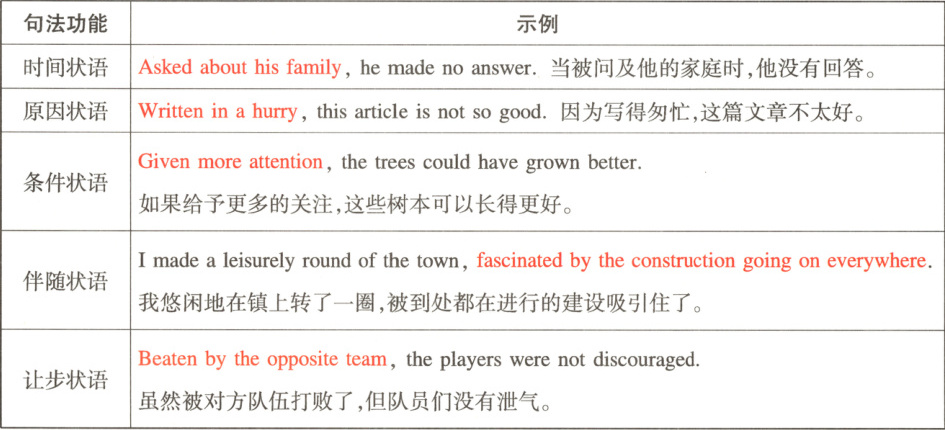
2 动词的-ed形式与动词的-ing形式的用法区别
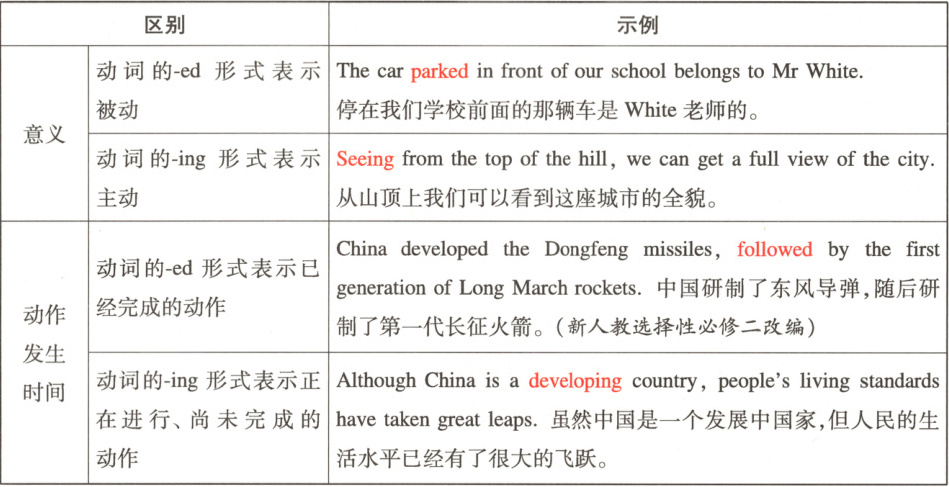
|区别|示例|
|----|----|
|意义|动词的-ed形式表示被动
The car parked in front of our school belongs to Mr White.
停在我们学校前面的那辆车是White老师的。
动词的-ing形式表示主动
Seeing from the top of the hill, we can get a full view of the city.
China developed the Dongfeng missiles, followed by the first generation of Long March rockets. 中国研制了东风导弹,随后研制了第一代长征火箭。(新人教选择性必修二改编)
动词的-ing形式表示正在进行、尚未完成的动作
对应考法
例1(新高考Ⅰ卷·语填)Shanghai may be the (recognize)home of the soup dumplings but food historians will actually point you to the neighboring canal town of Nanxiang as Xiao long bao’s birthplace.
解析 句意:上海可能是公认的小笼包之乡,但食物历史学家会告诉你,(与上海)邻近的运河小镇南翔才是小笼包的发源地。recognize与被修饰词home之间为被动关系,应用recognize的过去分词形式作定语。故填recognized。
例2(全国甲卷·语填)Behind the simple style, however, is a serious message (intend)for everyone.
解析 句意:然而,在简洁风格背后,是每个人都想要传达的重要信息。be intended for意为“打算为……所用”,为固定搭配,应用过去分词形式。故填intended。
例3(新高考Ⅰ卷·语填)But that’s how nature is—always leaving us (astonish).
解析 句意:但大自然就是这样——总是让我们惊讶。空处作宾语补足语,指“(人)吃惊的”,表示人的感受应用过去分词形式。故填astonished。
动词的-ed形式也称为过去分词,具有动词的特征,表示已经完成的、被动的动作,同时具有形容词和副词的特征,在句子中作定语、表语、补语和状语。过去分词没有其他的变化形式。
1 句法功能
(1)作表语
①动词的-ed形式作表语具有形容词的性质,可以被very、rather等副词修饰,通常用于表示主语的状态或感受。
He tried to sell the story of his journey to several publishers, but no one seemed interested.
他试图向几家出版商推销他的旅行故事,但似乎没有人感兴趣。(表示人的感受)
②常用作表语的动词的-ed形式
|excited(人)感到兴奋的|surprised(人)感到惊奇的|pleased(人)快乐的,高兴的|
|----|----|----|
|frightened(人)感到害怕的|worried(人)担心的,焦虑的|interested(人)感到有趣的|
(2)作补语
①动词的-ed形式可以跟在某些动词后面作宾语补足语,表示动词与宾语之间的被动关系、完成状态或动作由他人完成,动词的-ed形式与宾语之间存在逻辑上的动宾关系。当带有宾语补足语的句子变为被动结构时,原先的宾语补足语则变成主语补足语。
My brother will have his bike repaired this weekend. 我哥哥这周末会找人修他的自行车。
②常跟动词的-ed形式作补语的动词
A. 表示感官或心理状态的动词(短语),如see、observe、look at、listen to、notice、watch、hear、smell、feel、find、consider等。
He heard his name called. 他听到有人叫他的名字。
B. 表示“致使”或“使保持某状态”的动词,如have、make、get、leave、keep等。
He managed to get it done on time. 他设法按时完成了这件事。
C. 表示“希望”“要求”“命令”等意义的动词,如want、wish、like、expect、order等。
I don’t want such questions discussed at the meeting. 我不想在会上讨论这样的问题。
(3)作定语
作定语的动词的-ed形式具有形容词的性质。单个动词的-ed形式作定语常放在被修饰词之前,动词的-ed形式短语作定语常放在被修饰词之后。及物动词的-ed形式作定语,表示被动、完成意义,不及物动词的-ed形式作定语只表示完成意义。
The question mentioned at the meeting has been solved.
在会议上提到的问题已经被解决了。(表示被动、完成)
The ground is covered with fallen leaves.
地上覆盖着落叶。(fall为不及物动词,fallen在句中只表示完成,不表示被动)
(4)作状语
动词的-ed形式在句中可作时间状语、原因状语、条件状语、伴随状语、让步状语等。
2 动词的-ed形式与动词的-ing形式的用法区别
|区别|示例|
|----|----|
|意义|动词的-ed形式表示被动
The car parked in front of our school belongs to Mr White.
停在我们学校前面的那辆车是White老师的。
动词的-ing形式表示主动
Seeing from the top of the hill, we can get a full view of the city.
China developed the Dongfeng missiles, followed by the first generation of Long March rockets. 中国研制了东风导弹,随后研制了第一代长征火箭。(新人教选择性必修二改编)
动词的-ing形式表示正在进行、尚未完成的动作
对应考法
例1(新高考Ⅰ卷·语填)Shanghai may be the (recognize)home of the soup dumplings but food historians will actually point you to the neighboring canal town of Nanxiang as Xiao long bao’s birthplace.
解析 句意:上海可能是公认的小笼包之乡,但食物历史学家会告诉你,(与上海)邻近的运河小镇南翔才是小笼包的发源地。recognize与被修饰词home之间为被动关系,应用recognize的过去分词形式作定语。故填recognized。
例2(全国甲卷·语填)Behind the simple style, however, is a serious message (intend)for everyone.
解析 句意:然而,在简洁风格背后,是每个人都想要传达的重要信息。be intended for意为“打算为……所用”,为固定搭配,应用过去分词形式。故填intended。
例3(新高考Ⅰ卷·语填)But that’s how nature is—always leaving us (astonish).
解析 句意:但大自然就是这样——总是让我们惊讶。空处作宾语补足语,指“(人)吃惊的”,表示人的感受应用过去分词形式。故填astonished。
答案:
例1:recognized
例2:intended
例3:astonished
例2:intended
例3:astonished
查看更多完整答案,请扫码查看

