

 搜索
搜索
第30页
- 第1页
- 第2页
- 第3页
- 第4页
- 第5页
- 第6页
- 第7页
- 第8页
- 第9页
- 第10页
- 第11页
- 第12页
- 第13页
- 第14页
- 第15页
- 第16页
- 第17页
- 第18页
- 第19页
- 第20页
- 第21页
- 第22页
- 第23页
- 第24页
- 第25页
- 第26页
- 第27页
- 第28页
- 第29页
- 第30页
- 第31页
- 第32页
- 第33页
- 第34页
- 第35页
- 第36页
- 第37页
- 第38页
- 第39页
- 第40页
- 第41页
- 第42页
- 第43页
- 第44页
- 第45页
- 第46页
- 第47页
- 第48页
- 第49页
- 第50页
- 第51页
- 第52页
- 第53页
- 第54页
- 第55页
- 第56页
- 第57页
- 第58页
- 第59页
- 第60页
- 第61页
- 第62页
- 第63页
- 第64页
- 第65页
- 第66页
- 第67页
- 第68页
- 第69页
- 第70页
- 第71页
- 第72页
- 第73页
- 第74页
- 第75页
- 第76页
- 第77页
- 第78页
- 第79页
- 第80页
- 第81页
- 第82页
- 第83页
- 第84页
- 第85页
- 第86页
- 第87页
- 第88页
- 第89页
- 第90页
- 第91页
- 第92页
- 第93页
- 第94页
- 第95页
- 第96页
- 第97页
- 第98页
- 第99页
- 第100页
- 第101页
- 第102页
- 第103页
- 第104页
- 第105页
- 第106页
- 第107页
- 第108页
- 第109页
- 第110页
- 第111页
- 第112页
- 第113页
- 第114页
- 第115页
- 第116页
1. It's almost the Spring Festival. 快到春节了。
剖析 almost 副词,意为“差不多;几乎”,常用于修饰动词、形容词、副词等,表达不完全的状态或程度。
I almost finished my homework.
我差不多完成了我的家庭作业。
The room was almost empty.
房间几乎空了。
He almost always arrives on time.
他几乎总是准时到达。
拓展 almost 与 nearly 在意义上有一定的相似性,两者在很多情况下可互换使用。但 almost 常用于修饰动词、形容词和副词,nearly 则常用于修饰名词和数词。
跟踪练习
Millie
A.almost
B.already
C.really
D.nearly
剖析 almost 副词,意为“差不多;几乎”,常用于修饰动词、形容词、副词等,表达不完全的状态或程度。
I almost finished my homework.
我差不多完成了我的家庭作业。
The room was almost empty.
房间几乎空了。
He almost always arrives on time.
他几乎总是准时到达。
拓展 almost 与 nearly 在意义上有一定的相似性,两者在很多情况下可互换使用。但 almost 常用于修饰动词、形容词和副词,nearly 则常用于修饰名词和数词。
跟踪练习
Millie
A
missed the train this afternoon. It started to leave right after she got on it.A.almost
B.already
C.really
D.nearly
答案:
A
2. No matter how long I'm away, home is always glad to see me again.
无论我离开多久,家里总是很高兴再次见到我。
剖析 no matter 意为“不论”,常与疑问词连用,引导让步状语从句,这些从句可放在主句前,也可放在主句后。
No matter who you are, you have to follow the rules.
无论你是谁,你都得遵守规则。
Remember to take your ID card with you, no matter where you go.
无论你去哪里,记得带上你的身份证。
拓展 no matter 也可单独使用,表示“没关系,不要紧”。
跟踪练习
① Didn't you do well in this exam?
② 无论多难,我都不会放弃。
无论我离开多久,家里总是很高兴再次见到我。
剖析 no matter 意为“不论”,常与疑问词连用,引导让步状语从句,这些从句可放在主句前,也可放在主句后。
No matter who you are, you have to follow the rules.
无论你是谁,你都得遵守规则。
Remember to take your ID card with you, no matter where you go.
无论你去哪里,记得带上你的身份证。
拓展 no matter 也可单独使用,表示“没关系,不要紧”。
跟踪练习
① Didn't you do well in this exam?
No matter
, just work hard next time.(不要紧)② 无论多难,我都不会放弃。
No matter how
hard it is, I will never give up.
答案:
①No matter ②No matter how
3. It's starting to smell. 它开始发臭了。
剖析 smell 既可做动词,也可做名词,其用法如下:
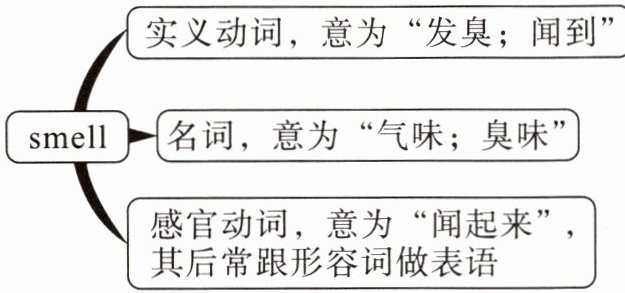
Can you smell anything?
你闻到什么气味了吗?
The strong smell made me throw up.
这种强烈的气味使我呕吐了。
The meat smells bad.
肉闻起来坏了。
跟踪练习
—Mum, flowers for you. Happy birthday!
—Thanks, son. The flowers
A.get
B.sound
C.smell
D.taste
剖析 smell 既可做动词,也可做名词,其用法如下:
Can you smell anything?
你闻到什么气味了吗?
The strong smell made me throw up.
这种强烈的气味使我呕吐了。
The meat smells bad.
肉闻起来坏了。
跟踪练习
—Mum, flowers for you. Happy birthday!
—Thanks, son. The flowers
smell
so sweet.A.get
B.sound
C.smell
D.taste
答案:
C
查看更多完整答案,请扫码查看

