

 搜索
搜索
第89页
- 第1页
- 第2页
- 第3页
- 第4页
- 第5页
- 第6页
- 第7页
- 第8页
- 第9页
- 第10页
- 第11页
- 第12页
- 第13页
- 第14页
- 第15页
- 第16页
- 第17页
- 第18页
- 第19页
- 第20页
- 第21页
- 第22页
- 第23页
- 第24页
- 第25页
- 第26页
- 第27页
- 第28页
- 第29页
- 第30页
- 第31页
- 第32页
- 第33页
- 第34页
- 第35页
- 第36页
- 第37页
- 第38页
- 第39页
- 第40页
- 第41页
- 第42页
- 第43页
- 第44页
- 第45页
- 第46页
- 第47页
- 第48页
- 第49页
- 第50页
- 第51页
- 第52页
- 第53页
- 第54页
- 第55页
- 第56页
- 第57页
- 第58页
- 第59页
- 第60页
- 第61页
- 第62页
- 第63页
- 第64页
- 第65页
- 第66页
- 第67页
- 第68页
- 第69页
- 第70页
- 第71页
- 第72页
- 第73页
- 第74页
- 第75页
- 第76页
- 第77页
- 第78页
- 第79页
- 第80页
- 第81页
- 第82页
- 第83页
- 第84页
- 第85页
- 第86页
- 第87页
- 第88页
- 第89页
- 第90页
- 第91页
- 第92页
- 第93页
- 第94页
- 第95页
- 第96页
(B)(2025·福建)
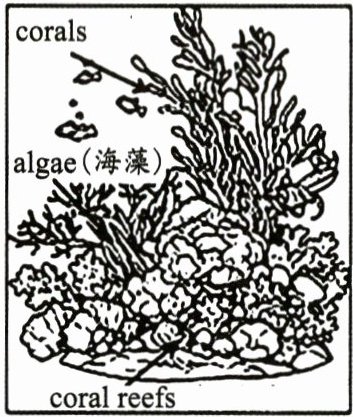
Deep under the Pacific Ocean lie coral reefs coloured by some algae that live with corals. Corals usually provide nitrogen( 氮) to algae, and in return they get carbon( 碳), which gives them energy.
In the early 1980s, a huge heat wave turned more than 90 per cent of these corals a pale, lifeless white. And it was believed that about 50 per cent of reefs with beautiful corals might disappear by 2030. Heat waves warmed up the same Pacific waters in the late 1990s and again in 2015—2016, but scientists noticed that these heat waves didn’t influence the reefs as badly as . Maybe corals have found a way to adapt( 适应).
Swimming to cooler waters is not a good choice for corals, for it makes them easily hurt by the changing climate. But corals are able to adapt. Some turn to those algae that can deal well with heat. Others can use rows of tiny hairs on their bodies to “fan” away too much harmful oxygen( $O_2$ ) let out by stressed-out algae. Certain baby corals change their own metabolisms( 新陈代谢) in order to fight the warming waters. But all these adaptations can protect themselves only to some degree.
After studying and understanding these adaptations, scientists are trying to find ways to help corals fight. If researchers can make corals accept algae that can deal with heat pressure or if they energize genes( 基因) that can deal with heat pressure, it will raise the corals’ chance of living through future ocean heat waves.
“When I go down to the sea and see a beautiful healthy reef with these colourful corals, I feel this pleasure of being in this underwater world,” a famous biologist says. “It will be really sad to see it dead. But that does drive you to want to use your skills and your love to help fight. ”
(
A. Corals make algae more colourful.
B. Algae provide room for corals to live in.
C. Corals and algae depend on each other.
D. Algae produce nitrogen to influence corals.
(
A. The heat wave in the early 1980s.
B. The heat wave in the late 1990s.
C. The Pacific waters between 2015 and 2016.
D. The reefs’ disappearance by 2030.
(
A. They cannot completely adapt to heat waves.
B. They cannot change their own metabolisms.
C. They have no ability to swim to cooler waters.
D. They have no ability to drive away harmful oxygen.
(
A. It’s necessary to live with corals.
B. The ocean has become unhealthy.
C. We should try our best to save corals.
D. Making a study of the ocean is a must.
(
A. Corals Die Out
B. Corals Fight Back
C. Corals Break Down
D. Corals Come into Being
Deep under the Pacific Ocean lie coral reefs coloured by some algae that live with corals. Corals usually provide nitrogen( 氮) to algae, and in return they get carbon( 碳), which gives them energy.
In the early 1980s, a huge heat wave turned more than 90 per cent of these corals a pale, lifeless white. And it was believed that about 50 per cent of reefs with beautiful corals might disappear by 2030. Heat waves warmed up the same Pacific waters in the late 1990s and again in 2015—2016, but scientists noticed that these heat waves didn’t influence the reefs as badly as . Maybe corals have found a way to adapt( 适应).
Swimming to cooler waters is not a good choice for corals, for it makes them easily hurt by the changing climate. But corals are able to adapt. Some turn to those algae that can deal well with heat. Others can use rows of tiny hairs on their bodies to “fan” away too much harmful oxygen( $O_2$ ) let out by stressed-out algae. Certain baby corals change their own metabolisms( 新陈代谢) in order to fight the warming waters. But all these adaptations can protect themselves only to some degree.
After studying and understanding these adaptations, scientists are trying to find ways to help corals fight. If researchers can make corals accept algae that can deal with heat pressure or if they energize genes( 基因) that can deal with heat pressure, it will raise the corals’ chance of living through future ocean heat waves.
“When I go down to the sea and see a beautiful healthy reef with these colourful corals, I feel this pleasure of being in this underwater world,” a famous biologist says. “It will be really sad to see it dead. But that does drive you to want to use your skills and your love to help fight. ”
(
C
)29. What can we know from Paragraph 1?A. Corals make algae more colourful.
B. Algae provide room for corals to live in.
C. Corals and algae depend on each other.
D. Algae produce nitrogen to influence corals.
(
A
)30. What does the underlined part “the first” in Paragraph 2 refer to?A. The heat wave in the early 1980s.
B. The heat wave in the late 1990s.
C. The Pacific waters between 2015 and 2016.
D. The reefs’ disappearance by 2030.
(
A
)31. What difficulty do corals face?A. They cannot completely adapt to heat waves.
B. They cannot change their own metabolisms.
C. They have no ability to swim to cooler waters.
D. They have no ability to drive away harmful oxygen.
(
C
)32. What can we infer from the last paragraph?A. It’s necessary to live with corals.
B. The ocean has become unhealthy.
C. We should try our best to save corals.
D. Making a study of the ocean is a must.
(
B
)33. Which would be the best title for the passage?A. Corals Die Out
B. Corals Fight Back
C. Corals Break Down
D. Corals Come into Being
答案:
29.C 30.A 31.A 32.C 33.B
查看更多完整答案,请扫码查看

