

 搜索
搜索
第45页
- 第2页
- 第3页
- 第4页
- 第5页
- 第6页
- 第7页
- 第8页
- 第9页
- 第10页
- 第11页
- 第12页
- 第13页
- 第14页
- 第15页
- 第16页
- 第17页
- 第18页
- 第19页
- 第20页
- 第21页
- 第22页
- 第23页
- 第24页
- 第25页
- 第26页
- 第27页
- 第28页
- 第29页
- 第30页
- 第31页
- 第32页
- 第33页
- 第34页
- 第35页
- 第36页
- 第37页
- 第38页
- 第39页
- 第40页
- 第41页
- 第42页
- 第43页
- 第44页
- 第45页
- 第46页
- 第47页
- 第48页
- 第49页
- 第50页
- 第51页
- 第52页
- 第53页
- 第54页
- 第55页
- 第56页
- 第57页
- 第58页
- 第59页
- 第60页
- 第61页
- 第62页
- 第63页
- 第64页
- 第65页
- 第66页
- 第67页
- 第68页
- 第69页
- 第70页
- 第71页
- 第72页
1. 光明学校举行保护野生动物的实践活动,展示了很多野生动物的现状。请从下面的图片中选择一种野生动物,并根据思维导图的提示,以校学生会的名义写一封英文倡议书,以便号召更多的同学加入保护野生动物的队伍。
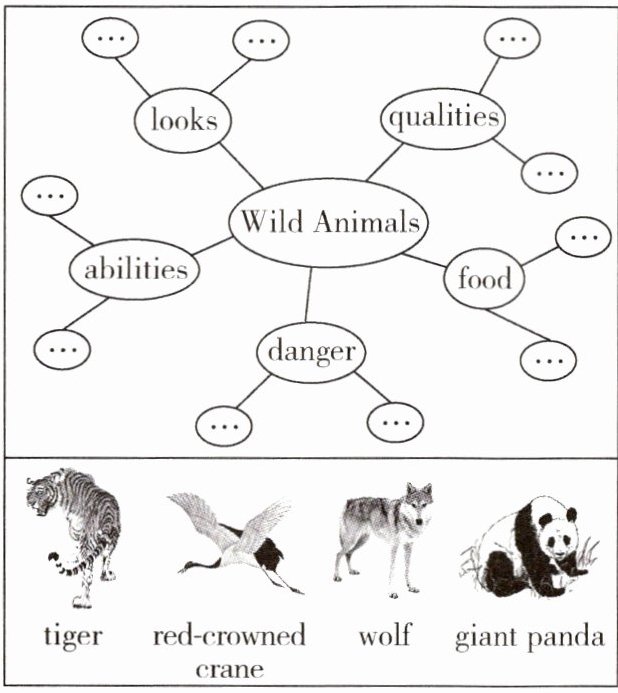
注意:
(1)倡议书须包括思维导图中所有提示内容,要求语句通顺、意思连贯;
(2)思维导图中的省略号部分需作适当发挥;
(3)文中不得出现人名和校名等真实信息;
(4)写作词数为80左右。
________
注意:
(1)倡议书须包括思维导图中所有提示内容,要求语句通顺、意思连贯;
(2)思维导图中的省略号部分需作适当发挥;
(3)文中不得出现人名和校名等真实信息;
(4)写作词数为80左右。
________
答案:
1. Dear students,
Wild animals are our friends, but giant pandas are in great danger. Giant pandas are black and white and look really cute. They mainly feed on bamboo. But now, because people cut down many trees, their living areas are becoming smaller. Also, it’s harder for them to find enough bamboo to eat.
Here is what we can do. We can plant more bamboo plants. And we can call on others to protect pandas through posters. Let’s work together to save them!
The Students’ Union
Wild animals are our friends, but giant pandas are in great danger. Giant pandas are black and white and look really cute. They mainly feed on bamboo. But now, because people cut down many trees, their living areas are becoming smaller. Also, it’s harder for them to find enough bamboo to eat.
Here is what we can do. We can plant more bamboo plants. And we can call on others to protect pandas through posters. Let’s work together to save them!
The Students’ Union
2. 实践项目:花式介绍野生动植物
(1)动植物知识问答竞赛
将学生分组。准备一系列与神奇动植物相关的英语问题,各小组抢答,答对得分,答错扣分,最后根据总分评选出获胜小组并给予奖励。
(2)创意动物故事创作
让学生以一种神奇动植物为主角,用英语创作一个小故事。完成创作后,挑选部分学生上台分享自己的故事。
(1)动植物知识问答竞赛
将学生分组。准备一系列与神奇动植物相关的英语问题,各小组抢答,答对得分,答错扣分,最后根据总分评选出获胜小组并给予奖励。
(2)创意动物故事创作
让学生以一种神奇动植物为主角,用英语创作一个小故事。完成创作后,挑选部分学生上台分享自己的故事。
答案:
此题为实践项目设计题,并非传统数学或英语语法类题目,但依据题目要求,将实践项目的执行方案以简洁明了的方式呈现如下:
(1) 动植物知识问答竞赛:
步骤1: 将学生分成若干小组,每组4-5人。
步骤2: 准备一系列与野生动植物相关的英语问题,例如:"What is the world's tallest mammal?" (Answer: Giraffe)。
步骤3: 宣布抢答规则,答对一题得1分,答错扣1分。
步骤4: 开始抢答,记录各小组得分。
步骤5: 抢答结束后,统计各小组总分,宣布获胜小组并给予奖励。
(2) 创意动物故事创作:
步骤1: 让学生选择一种神奇的动植物作为故事主角。
步骤2: 学生用英语创作一个以该动植物为主角的小故事,故事应包含开头、中间和结尾部分。
步骤3: 学生完成创作后,教师挑选部分具有代表性的故事。
步骤4: 被挑选的学生上台分享自己的故事,其他学生倾听。
Conclusion:
(1) For the wildlife quiz competition, students are grouped, questions are prepared, and the group with the highest score wins.
(2) For the creative animal story writing, students choose a magical animal or plant, write a story in English, and selected students share their stories with the class.
(1) 动植物知识问答竞赛:
步骤1: 将学生分成若干小组,每组4-5人。
步骤2: 准备一系列与野生动植物相关的英语问题,例如:"What is the world's tallest mammal?" (Answer: Giraffe)。
步骤3: 宣布抢答规则,答对一题得1分,答错扣1分。
步骤4: 开始抢答,记录各小组得分。
步骤5: 抢答结束后,统计各小组总分,宣布获胜小组并给予奖励。
(2) 创意动物故事创作:
步骤1: 让学生选择一种神奇的动植物作为故事主角。
步骤2: 学生用英语创作一个以该动植物为主角的小故事,故事应包含开头、中间和结尾部分。
步骤3: 学生完成创作后,教师挑选部分具有代表性的故事。
步骤4: 被挑选的学生上台分享自己的故事,其他学生倾听。
Conclusion:
(1) For the wildlife quiz competition, students are grouped, questions are prepared, and the group with the highest score wins.
(2) For the creative animal story writing, students choose a magical animal or plant, write a story in English, and selected students share their stories with the class.
查看更多完整答案,请扫码查看

