

 搜索
搜索
第12页
- 第1页
- 第2页
- 第3页
- 第4页
- 第5页
- 第6页
- 第7页
- 第8页
- 第9页
- 第10页
- 第11页
- 第12页
- 第13页
- 第14页
- 第15页
- 第16页
- 第17页
- 第18页
- 第19页
- 第20页
- 第21页
- 第22页
- 第23页
- 第24页
- 第25页
- 第26页
- 第27页
- 第28页
- 第29页
- 第30页
- 第31页
- 第32页
- 第33页
- 第34页
- 第35页
- 第36页
- 第37页
- 第38页
- 第39页
- 第40页
- 第41页
- 第42页
- 第43页
- 第44页
- 第45页
- 第46页
- 第47页
- 第48页
- 第49页
- 第50页
- 第51页
- 第52页
- 第53页
- 第54页
- 第55页
- 第56页
- 第57页
- 第58页
- 第59页
- 第60页
- 第61页
- 第62页
- 第63页
- 第64页
- 第65页
- 第66页
- 第67页
- 第68页
- 第69页
- 第70页
- 第71页
- 第72页
- 第73页
- 第74页
- 第75页
- 第76页
- 第77页
- 第78页
- 第79页
- 第80页
- 第81页
- 第82页
- 第83页
- 第84页
- 第85页
- 第86页
- 第87页
- 第88页
- 第89页
- 第90页
- 第91页
- 第92页
- 第93页
一、阅读理解。(20 分)
阅读选择。(共四篇短文,共 20 小题,每小题 1 分,共 20 分)
阅读 A、B、C 短文,从每小题 A、B、C 选项中选择最佳答案。
A
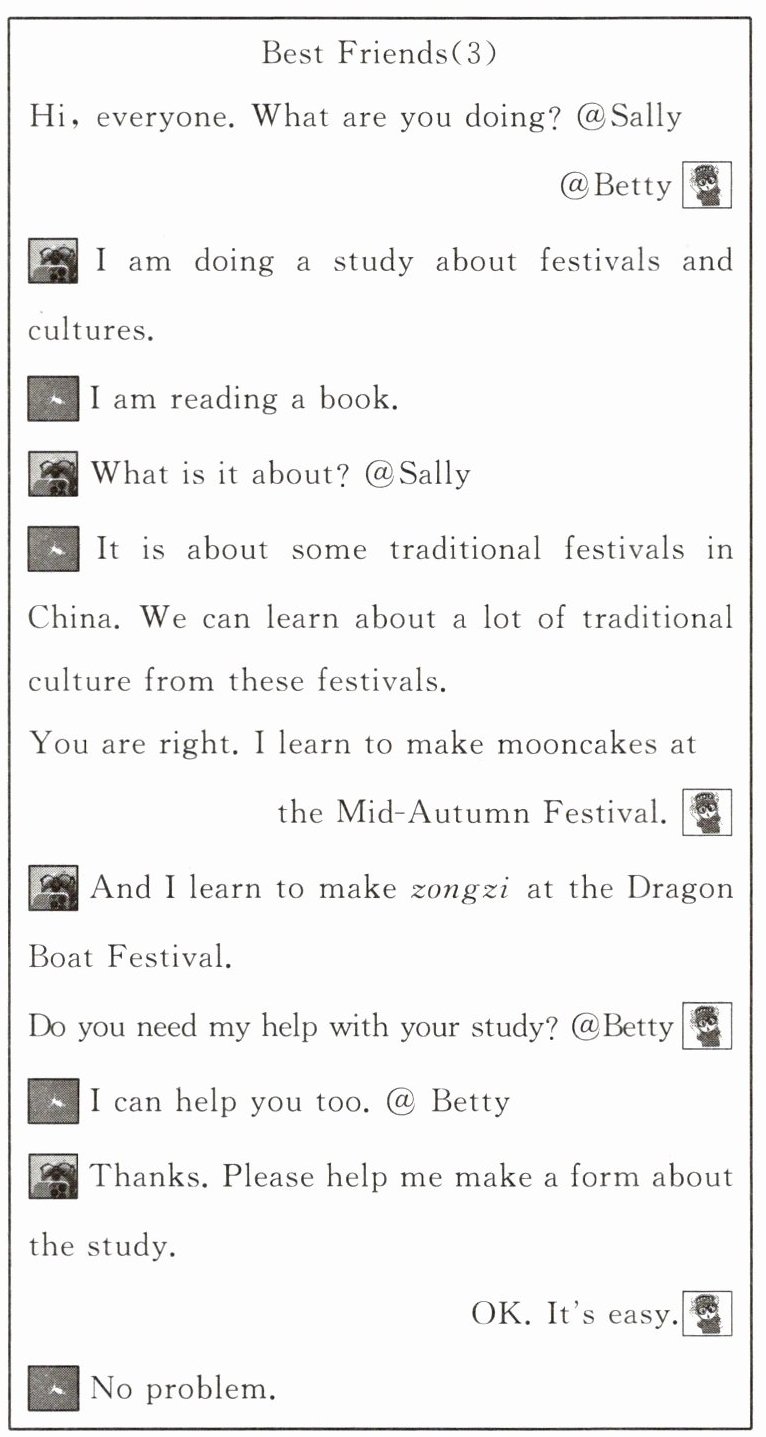
Best Friends(3)
Hi, everyone. What are you doing? @Sally
@Betty
I am doing a study about festivals and cultures.
I am reading a book.
What is it about? @Sally
It is about some traditional festivals in China. We can learn about a lot of traditional culture from these festivals.
You are right. I learn to make mooncakes at the Mid-Autumn Festival.
And I learn to make *zongzi* at the Dragon Boat Festival.
Do you need my help with your study? @Betty
I can help you too. @ Betty
Thanks. Please help me make a form about the study.
OK. It's easy.
No problem.
1. What is Betty's study about?
A. Festivals and food.
B. Festivals and cultures.
C. Food and cultures.
2. What is Sally doing now?
A. She's reading a book.
B. She's doing a study.
C. She's making *zongzi*.
3. Which of the following is Sally's idea about traditional festivals?
A. People like these traditional festivals.
B. Traditional festivals are very interesting.
C. People can learn about traditional culture from them.
4. What is the relationship among the three people?
A. Brothers and sisters.
B. Parents and children.
C. Good friends.
5. What is Sally like according to the passage?
A. Shy. B. Creative. C. Helpful.
阅读选择。(共四篇短文,共 20 小题,每小题 1 分,共 20 分)
阅读 A、B、C 短文,从每小题 A、B、C 选项中选择最佳答案。
A
Best Friends(3)
Hi, everyone. What are you doing? @Sally
@Betty
I am doing a study about festivals and cultures.
I am reading a book.
What is it about? @Sally
It is about some traditional festivals in China. We can learn about a lot of traditional culture from these festivals.
You are right. I learn to make mooncakes at the Mid-Autumn Festival.
And I learn to make *zongzi* at the Dragon Boat Festival.
Do you need my help with your study? @Betty
I can help you too. @ Betty
Thanks. Please help me make a form about the study.
OK. It's easy.
No problem.
1. What is Betty's study about?
A. Festivals and food.
B. Festivals and cultures.
C. Food and cultures.
2. What is Sally doing now?
A. She's reading a book.
B. She's doing a study.
C. She's making *zongzi*.
3. Which of the following is Sally's idea about traditional festivals?
A. People like these traditional festivals.
B. Traditional festivals are very interesting.
C. People can learn about traditional culture from them.
4. What is the relationship among the three people?
A. Brothers and sisters.
B. Parents and children.
C. Good friends.
5. What is Sally like according to the passage?
A. Shy. B. Creative. C. Helpful.
答案:
1.B 2.A 3.C 4.C 5.C
B
Tell us about the club you like.
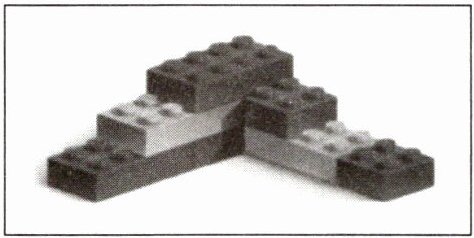
It's the school Lego club—it's great fun. It's on Tuesdays and Thursdays at lunchtime, for half an hour.
Who organizes the club?
The maths teacher, Mr Jones. We meet in his classroom. Sometimes we meet outside the classroom.

What does he do?
He's got five big boxes of Lego bricks. Every week he spends the first ten minutes showing us different ways to build things. Then we practise making things.
Are there competitions?
Yes, there are sometimes competitions. The prize is usually a box of Lego. But this month there is a competition for schools in the UK to build a Lego classroom. The winners can go to Legoland. I hope we win!
6. How many times a week does the club meet?
A. Twice. B. Three times. C. Four times.
7. How long is each meeting?
A. For 15 minutes. B. For 30 minutes. C. For 60 minutes.
8. Where does the Lego club meet?
A. At the library. B. At the museum. C. At school.
9. Why do students go to the club?
A. To learn to build new things. B. To learn maths. C. To be outside.
10. What's the prize for the UK schools competition?
A. A Lego model. B. A box of Lego. C. A trip to Legoland.
Tell us about the club you like.
It's the school Lego club—it's great fun. It's on Tuesdays and Thursdays at lunchtime, for half an hour.
Who organizes the club?
The maths teacher, Mr Jones. We meet in his classroom. Sometimes we meet outside the classroom.
What does he do?
He's got five big boxes of Lego bricks. Every week he spends the first ten minutes showing us different ways to build things. Then we practise making things.
Are there competitions?
Yes, there are sometimes competitions. The prize is usually a box of Lego. But this month there is a competition for schools in the UK to build a Lego classroom. The winners can go to Legoland. I hope we win!
6. How many times a week does the club meet?
A. Twice. B. Three times. C. Four times.
7. How long is each meeting?
A. For 15 minutes. B. For 30 minutes. C. For 60 minutes.
8. Where does the Lego club meet?
A. At the library. B. At the museum. C. At school.
9. Why do students go to the club?
A. To learn to build new things. B. To learn maths. C. To be outside.
10. What's the prize for the UK schools competition?
A. A Lego model. B. A box of Lego. C. A trip to Legoland.
答案:
6.A 7.B 8.C 9.A 10.C
查看更多完整答案,请扫码查看

