

 搜索
搜索
第17页
- 第1页
- 第2页
- 第3页
- 第4页
- 第5页
- 第6页
- 第7页
- 第8页
- 第9页
- 第10页
- 第11页
- 第12页
- 第13页
- 第14页
- 第15页
- 第16页
- 第17页
- 第18页
- 第19页
- 第20页
- 第21页
- 第22页
- 第23页
- 第24页
- 第25页
- 第26页
- 第27页
- 第28页
- 第29页
- 第30页
- 第31页
- 第32页
- 第33页
- 第34页
- 第35页
- 第36页
- 第37页
- 第38页
- 第39页
- 第40页
- 第41页
- 第42页
- 第43页
- 第44页
- 第45页
- 第46页
- 第47页
- 第48页
- 第49页
- 第50页
- 第51页
- 第52页
- 第53页
- 第54页
- 第55页
- 第56页
- 第57页
- 第58页
- 第59页
- 第60页
- 第61页
- 第62页
- 第63页
- 第64页
- 第65页
- 第66页
- 第67页
- 第68页
一、听录音,按照你听到的顺序,用数字给Yangyang 的一周活动标号。
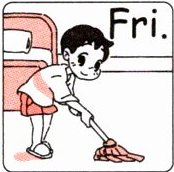
(

(
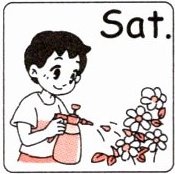
(
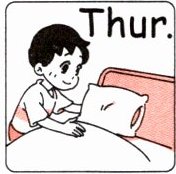
(
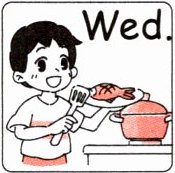
(
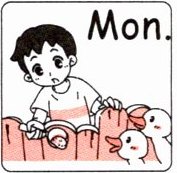
(

(
(
5
)(
7
)(
6
)(
4
)(
3
)(
1
)(
2
)
答案:
5 7 6 4 3 1 2
解析
1. 关键词: ducks、Monday,故第六幅图标1。
2. 关键词: wash clothes、Tuesday,故第七幅图标2。
3. 关键词: cook the fish、Wednesday,故第五幅图标3。
4. 关键词: make the bed、Thursday,故第四幅图标4。
5. 关键词: clean my room、Friday,故第一幅图标5。
6. 关键词: water the flowers、Saturday,故第三幅图标6。
7. 关键词: wash the plates、Sunday,故第二幅图标7。
解析
1. 关键词: ducks、Monday,故第六幅图标1。
2. 关键词: wash clothes、Tuesday,故第七幅图标2。
3. 关键词: cook the fish、Wednesday,故第五幅图标3。
4. 关键词: make the bed、Thursday,故第四幅图标4。
5. 关键词: clean my room、Friday,故第一幅图标5。
6. 关键词: water the flowers、Saturday,故第三幅图标6。
7. 关键词: wash the plates、Sunday,故第二幅图标7。
二、听录音,选出你所听到的内容。
(
(
(
(
B. What do you do on Thursdays?
C. What do you have on Thursdays?
(
B. I have Chinese, English and maths on Mondays.
C. I have Chinese, maths and music on Wednesdays.
(
B
)1. A. glass B. class C. grass(
C
)2. A. Friday B. Sunday C. Saturday(
B
)3. A. week B. weekend C. three(
C
)4. A. What do you have on Tuesdays?B. What do you do on Thursdays?
C. What do you have on Thursdays?
(
A
)5. A. I have Chinese, maths and music on Mondays.B. I have Chinese, English and maths on Mondays.
C. I have Chinese, maths and music on Wednesdays.
答案:
1. B 2. C 3. B 4. C 5. A
解析
1. 关键词: class,故选B。
2. 关键词: Saturday,故选C。
3. 关键词: weekend,故选B。
4. 关键词: have、Thursdays,故选C。
5. 关键词: Chinese、maths、music、Mondays,故选A。
解析
1. 关键词: class,故选B。
2. 关键词: Saturday,故选C。
3. 关键词: weekend,故选B。
4. 关键词: have、Thursdays,故选C。
5. 关键词: Chinese、maths、music、Mondays,故选A。
| Day | Class | |
| 1.
| Tuesday | music | 2.
| 3.
| Thursday | 4.
| Friday | writing class | 5.
| 1.
Monday
| science | computer class || Tuesday | music | 2.
maths
|| 3.
Wednesday
| reading class | art || Thursday | 4.
English
| Chinese || Friday | writing class | 5.
PE
|
答案:
1. Monday 2. maths 3. Wednesday
4. English 5. PE
解析
1. 依据: On Mondays,we have science and a computer class.
分析:周一有科学课和计算机课,故填Monday。
2. 依据: We have music and maths on Tuesdays.
分析:周二有音乐课和数学课,故填maths。
3. 依据: And we have art and a reading class on Wednesdays.
分析:周三有美术课和阅读课,故填Wednesday。
4. 依据: We have English and Chinese on Thursdays.
分析:周四有英语课和语文课,故填English。
5. 依据: How about Fridays? We have a writing class and a PE class.
分析:周五有写作课和体育课,故填PE。
4. English 5. PE
解析
1. 依据: On Mondays,we have science and a computer class.
分析:周一有科学课和计算机课,故填Monday。
2. 依据: We have music and maths on Tuesdays.
分析:周二有音乐课和数学课,故填maths。
3. 依据: And we have art and a reading class on Wednesdays.
分析:周三有美术课和阅读课,故填Wednesday。
4. 依据: We have English and Chinese on Thursdays.
分析:周四有英语课和语文课,故填English。
5. 依据: How about Fridays? We have a writing class and a PE class.
分析:周五有写作课和体育课,故填PE。
四、读一读,判断每题中画线部分的发音是否相同,相同的打"√",不相同的打"×"。
(
(
(
(
(
(
×
)1. We're ready to eat seafood in Dalian.(
×
)2. I'd like some beef and bread, please.(
×
)3. I like to read and drink tea at home in cold weather.(
×
)4. Try these green beans and you may feel great!(
√
)5. Miss Lee teaches us how to make ice cream.
答案:
1. × 2. × 3. × 4. × 5. √
解析
1. ready:/e/, eat:/iː/, seafood:/iː/,故打“×”。
2. beef:/iː/, bread:/e/, please:/iː/,故打“×”。
3. read:/iː/, tea:/iː/, weather:/e/,故打“×”。
4. beans:/iː/, feel:/iː/, great:/eɪ/,故打“×”。
5. Lee:/iː/, teaches:/iː/, cream:/iː/,故打“√”。
解析
1. ready:/e/, eat:/iː/, seafood:/iː/,故打“×”。
2. beef:/iː/, bread:/e/, please:/iː/,故打“×”。
3. read:/iː/, tea:/iː/, weather:/e/,故打“×”。
4. beans:/iː/, feel:/iː/, great:/eɪ/,故打“×”。
5. Lee:/iː/, teaches:/iː/, cream:/iː/,故打“√”。
(
A.art
B.science
C.English
B
)1.We have a ______ class on Tuesdays.A.art
B.science
C.English
答案:
1. B 解析 1. 句意:我们周二有一节 课。
分析:a用在以辅音音素开头的单词前,an用在以元音音素开头的单词前,由空前的a可知,选B。
分析:a用在以辅音音素开头的单词前,an用在以元音音素开头的单词前,由空前的a可知,选B。
(
A.year
B.week
C.weekend
B
)2.There are seven days in a ______.A.year
B.week
C.weekend
答案:
2. B 解析 2. 句意:一个 有七天。
分析:A:年,一年有365天或366天;B:周,一周有七天;C:周末,周末有两天。故选B。
分析:A:年,一年有365天或366天;B:周,一周有七天;C:周末,周末有两天。故选B。
(
A.Friday
B.Monday
C.Wednesday
B
)3.Tomorrow is Tuesday. Today is ______.A.Friday
B.Monday
C.Wednesday
答案:
3. B 解析 3. 句意:明天是周二。今天是 。
分析:明天是周二,今天是周一,故选B。
分析:明天是周二,今天是周一,故选B。
(
A.and
B.to
C.with
C
)4.I have a cooking class ______ my grandma.A.and
B.to
C.with
答案:
4. C 解析 4. 句意:我 我奶奶一起上烹饪课。
分析:A:和,连接并列成分;B:到;C:和……一起,故选C。
分析:A:和,连接并列成分;B:到;C:和……一起,故选C。
(
—______ I often play basketball after school.
A.Yes, he is.
B.No, I don't.
C.Yes, I do.
C
)5.—Do you like sports?—______ I often play basketball after school.
A.Yes, he is.
B.No, I don't.
C.Yes, I do.
答案:
5. C 解析 5. 句意:——你喜欢运动吗?
—— 我经常放学后打篮球。
分析:由空后的内容可知,“我”喜欢运动,设空处应作肯定回答。问句是以do开头的一般疑问句,答语应含有do,故选C。
—— 我经常放学后打篮球。
分析:由空后的内容可知,“我”喜欢运动,设空处应作肯定回答。问句是以do开头的一般疑问句,答语应含有do,故选C。
(
—______
A. Maths and PE.
B. I have two books.
C. It's Friday.
A
)6.—What do you have on Fridays?—______
A. Maths and PE.
B. I have two books.
C. It's Friday.
答案:
6. A 解析 6. 句意:——你周五有什么课?——
分析:询问周五的课程,应回答课程,故选A。
分析:询问周五的课程,应回答课程,故选A。
查看更多完整答案,请扫码查看

