

 搜索
搜索
第31页
- 第1页
- 第2页
- 第3页
- 第4页
- 第5页
- 第6页
- 第7页
- 第8页
- 第9页
- 第10页
- 第11页
- 第12页
- 第13页
- 第14页
- 第15页
- 第16页
- 第17页
- 第18页
- 第19页
- 第20页
- 第21页
- 第22页
- 第23页
- 第24页
- 第25页
- 第26页
- 第27页
- 第28页
- 第29页
- 第30页
- 第31页
- 第32页
- 第33页
- 第34页
- 第35页
- 第36页
- 第37页
- 第38页
- 第39页
- 第40页
- 第41页
- 第42页
- 第43页
- 第44页
- 第45页
- 第46页
- 第47页
- 第48页
- 第49页
- 第50页
- 第51页
- 第52页
- 第53页
- 第54页
- 第55页
- 第56页
- 第57页
- 第58页
- 第59页
- 第60页
- 第61页
- 第62页
- 第63页
- 第64页
- 第65页
- 第66页
- 第67页
- 第68页
- 第69页
- 第70页
- 第71页
- 第72页
- 第73页
- 第74页
(A)How to greet
When we meet someone, we always greet each other(互相).
When you meet your teachers, you may say “Good morning”, “Good afternoon” or “Good evening”. When you meet your friend, you may say, “Hi!” or “How are you doing?”. When you meet a stranger or a new classmate, you always say “Nice to meet you” and introduce yourself to them.
In China, when people meet, they often shake hands. In France or Spain, people like to kiss on the cheek. In Japan, people often bow.

生词积累
greet /gri:t/ v. 打招呼
someone /'sʌmwʌn/ pron. 某人
stranger /'streɪndʒə(r)/ n. 陌生人
introduce /ɪntrə'dju:s/ v. 介绍
yourself /jɔ:'self/ pron. 你自己;你们自己
France /fra:ns/ n. 法国
Spain /speɪn/ n. 西班牙
Japan /dʒə'pæn/ n. 日本
一、阅读短文,选择正确的答案。
()1. When we meet someone, we always ____ each other.
A. greet
B. bow to
C. meet
()2. When we meet a person we don’t know, we always say, “____”.
A. Welcome!
B. What’s your name?
C. Nice to meet you.
()3. When Tom meets his best friend at school, he may say “____”.
A. Good night.
B. How are you doing?
C. Nice to meet you.
二、不同国家的人见面他们会如何打招呼呢? 想一想,连一连。
1. China •
A. bow
2. Spain •
B. kiss on the cheek
3. Japan •
C. shake hands
When we meet someone, we always greet each other(互相).
When you meet your teachers, you may say “Good morning”, “Good afternoon” or “Good evening”. When you meet your friend, you may say, “Hi!” or “How are you doing?”. When you meet a stranger or a new classmate, you always say “Nice to meet you” and introduce yourself to them.
In China, when people meet, they often shake hands. In France or Spain, people like to kiss on the cheek. In Japan, people often bow.
生词积累
greet /gri:t/ v. 打招呼
someone /'sʌmwʌn/ pron. 某人
stranger /'streɪndʒə(r)/ n. 陌生人
introduce /ɪntrə'dju:s/ v. 介绍
yourself /jɔ:'self/ pron. 你自己;你们自己
France /fra:ns/ n. 法国
Spain /speɪn/ n. 西班牙
Japan /dʒə'pæn/ n. 日本
一、阅读短文,选择正确的答案。
()1. When we meet someone, we always ____ each other.
A. greet
B. bow to
C. meet
()2. When we meet a person we don’t know, we always say, “____”.
A. Welcome!
B. What’s your name?
C. Nice to meet you.
()3. When Tom meets his best friend at school, he may say “____”.
A. Good night.
B. How are you doing?
C. Nice to meet you.
二、不同国家的人见面他们会如何打招呼呢? 想一想,连一连。
1. China •
A. bow
2. Spain •
B. kiss on the cheek
3. Japan •
C. shake hands
答案:
一、1~3 A C B
1. 解析 根据文中“When we meet someone, we always greet each other.”可知,我们遇见他人时,总会打招呼,故选 A。
2. 解析 根据文中“When you meet a stranger or a new classmate, you always say ‘Nice to meet you’ and introduce yourself to them.”可知,我们遇见陌生人时,会问好,故选 C。
3. 解析 根据文中“When you meet your friend, you may say ‘Hi!’ or ‘How are you doing?’”可知,遇见朋友时,可以问“How are you doing?”,故选 B。
二、1—C 2—B 3—A
1. 解析 根据文中“When we meet someone, we always greet each other.”可知,我们遇见他人时,总会打招呼,故选 A。
2. 解析 根据文中“When you meet a stranger or a new classmate, you always say ‘Nice to meet you’ and introduce yourself to them.”可知,我们遇见陌生人时,会问好,故选 C。
3. 解析 根据文中“When you meet your friend, you may say ‘Hi!’ or ‘How are you doing?’”可知,遇见朋友时,可以问“How are you doing?”,故选 B。
二、1—C 2—B 3—A
(B)School bus rules in the US
Many students in the US take the school bus to school every day. Some students were injured because they don’t follow the school bus rules. Here are the school bus rules:
• Arrive at the bus stop early.
• Wait for the bus at the bus stop.
• Don’t play around the bus stop.
• Don’t run here and there at the bus stop.
• Don’t walk or fight on the bus when it is going.
• Don’t get off the bus if it doesn’t stop.
These rules are good for students. Remember(记住) them and don’t break them. Then you can keep yourself safe(安全的).
生词积累
rule /ru:l/ n. 规则,条例
injured /'ɪndʒəd/ adj. 受伤的;委屈的
fight /faɪt/ v. 与……作斗争;打斗
break /breɪk/ v. 打破;弄坏
一、根据短文内容,判断下列句子正(T)误(F)。
()1. All the students in the US take the school bus to school.
()2. Students shouldn’t get to the bus stop late.
()3. Students can run near the bus stop.
()4. Students have to sit on their seats when the bus is going.
()5. To keep safe, we must follow the bus rules.
二、“Rules”在生活中无处不在,在图书馆、体育馆、餐厅,我们还应该遵守哪些规则?请你用英文写在下列横线上。
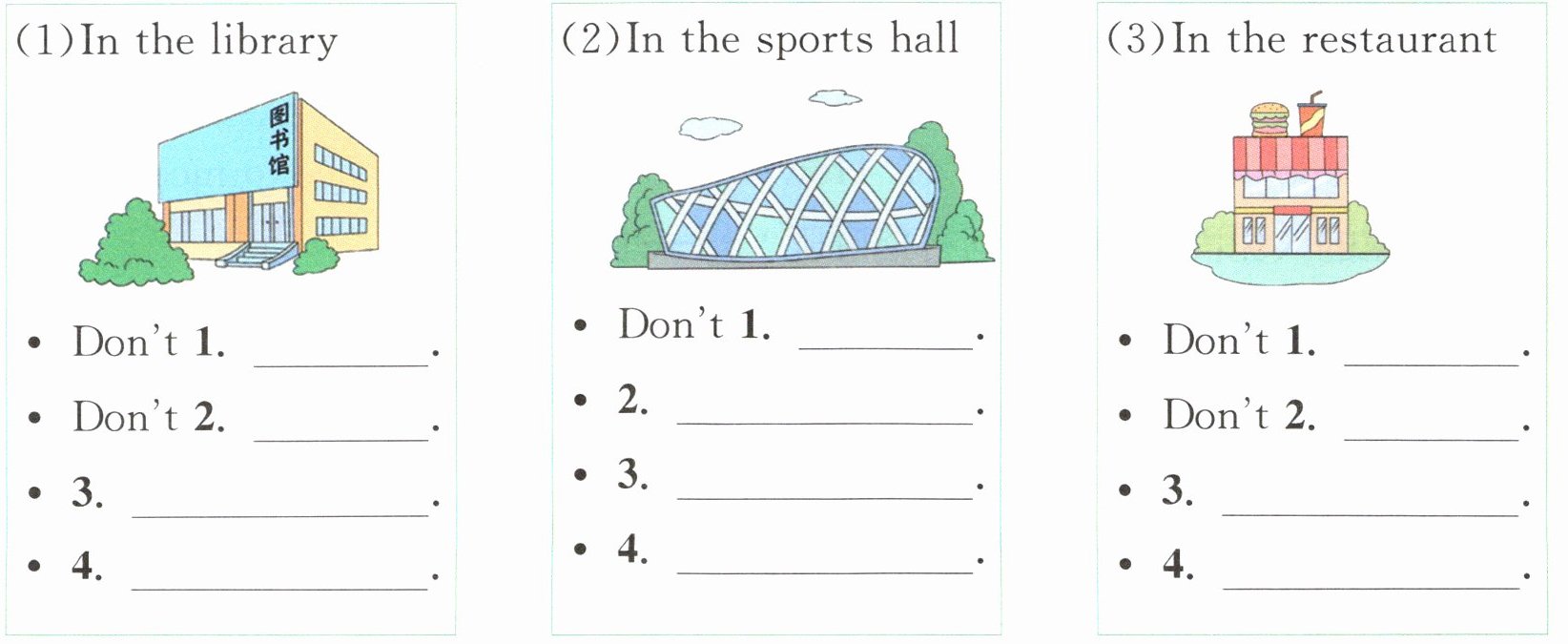
Many students in the US take the school bus to school every day. Some students were injured because they don’t follow the school bus rules. Here are the school bus rules:
• Arrive at the bus stop early.
• Wait for the bus at the bus stop.
• Don’t play around the bus stop.
• Don’t run here and there at the bus stop.
• Don’t walk or fight on the bus when it is going.
• Don’t get off the bus if it doesn’t stop.
These rules are good for students. Remember(记住) them and don’t break them. Then you can keep yourself safe(安全的).
生词积累
rule /ru:l/ n. 规则,条例
injured /'ɪndʒəd/ adj. 受伤的;委屈的
fight /faɪt/ v. 与……作斗争;打斗
break /breɪk/ v. 打破;弄坏
一、根据短文内容,判断下列句子正(T)误(F)。
()1. All the students in the US take the school bus to school.
()2. Students shouldn’t get to the bus stop late.
()3. Students can run near the bus stop.
()4. Students have to sit on their seats when the bus is going.
()5. To keep safe, we must follow the bus rules.
二、“Rules”在生活中无处不在,在图书馆、体育馆、餐厅,我们还应该遵守哪些规则?请你用英文写在下列横线上。
答案:
一、1~5 F T F T T
二、
(1)1. run 2. eat or drink
3. Keep quiet 4. Keep the desk clean
(2)1. smoke 2. Keep your seat clean
3. Watch quietly 4. Cheer properly
(3)1. smoke 2. take pets
3. Eat quietly 4. Keep your things safe
(答案不唯一)
二、
(1)1. run 2. eat or drink
3. Keep quiet 4. Keep the desk clean
(2)1. smoke 2. Keep your seat clean
3. Watch quietly 4. Cheer properly
(3)1. smoke 2. take pets
3. Eat quietly 4. Keep your things safe
(答案不唯一)
查看更多完整答案,请扫码查看

