

 搜索
搜索
2025年中考复习指导英语浙江科学技术出版社
注:目前有些书本章节名称可能整理的还不是很完善,但都是按照顺序排列的,请同学们按照顺序仔细查找。练习册 2025年中考复习指导英语浙江科学技术出版社 答案主要是用来给同学们做完题方便对答案用的,请勿直接抄袭。
第41页
- 第1页
- 第2页
- 第3页
- 第4页
- 第5页
- 第6页
- 第7页
- 第8页
- 第9页
- 第10页
- 第11页
- 第12页
- 第13页
- 第14页
- 第15页
- 第16页
- 第17页
- 第18页
- 第19页
- 第20页
- 第21页
- 第22页
- 第23页
- 第24页
- 第25页
- 第26页
- 第27页
- 第28页
- 第29页
- 第30页
- 第31页
- 第32页
- 第33页
- 第34页
- 第35页
- 第36页
- 第37页
- 第38页
- 第39页
- 第40页
- 第41页
- 第42页
- 第43页
- 第44页
- 第45页
- 第46页
- 第47页
- 第48页
- 第49页
- 第50页
- 第51页
- 第52页
- 第53页
- 第54页
- 第55页
- 第56页
- 第57页
- 第58页
- 第59页
- 第60页
- 第61页
- 第62页
- 第63页
- 第64页
- 第65页
- 第66页
- 第67页
- 第68页
- 第69页
- 第70页
- 第71页
- 第72页
- 第73页
- 第74页
- 第75页
- 第76页
- 第77页
- 第78页
- 第79页
- 第80页
- 第81页
- 第82页
- 第83页
- 第84页
- 第85页
- 第86页
- 第87页
- 第88页
- 第89页
- 第90页
- 第91页
- 第92页
- 第93页
- 第94页
- 第95页
- 第96页
- 第97页
- 第98页
- 第99页
- 第100页
- 第101页
- 第102页
- 第103页
- 第104页
- 第105页
- 第106页
- 第107页
- 第108页
- 第109页
- 第110页
- 第111页
- 第112页
- 第113页
- 第114页
- 第115页
- 第116页
- 第117页
- 第118页
- 第119页
- 第120页
- 第121页
- 第122页
- 第123页
- 第124页
- 第125页
- 第126页
- 第127页
- 第128页
- 第129页
- 第130页
- 第131页
- 第132页
- 第133页
- 第134页
- 第135页
- 第136页
- 第137页
- 第138页
- 第139页
- 第140页
- 第141页
- 第142页
- 第143页
- 第144页
- 第145页
- 第146页
- 第147页
- 第148页
- 第149页
- 第150页
- 第151页
- 第152页
- 第153页
- 第154页
- 第155页
- 第156页
- 第157页
- 第158页
- 第159页
- 第160页
- 第161页
- 第162页
- 第163页
- 第164页
- 第165页
- 第166页
- 第167页
- 第168页
- 第169页
- 第170页
- 第171页
- 第172页
- 第173页
- 第174页
- 第175页
- 第176页
- 第177页
- 第178页
- 第179页
- 第180页
- 第181页
- 第182页
- 第183页
G
It was the first day of school. Li, a boy from China, was talking happily with Tom, his classmate.
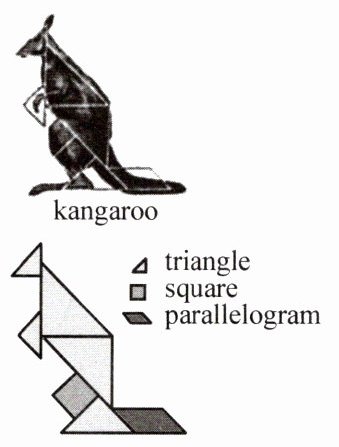
When the bell rang, the teacher, Miss Hess, came in and gave Li a warm welcome. Li gave a gift for the class to her. Miss Hess opened it and said, “What a lovely gift! Could you describe it?” Li replied, “Of course! It's a tangram (七巧板) made by my father. It's part of traditional Chinese culture and shows the wisdom (智慧) of Chinese people. It has seven pieces, five triangles, a square and a parallelogram. These pieces can be arranged (排列) into the shape of a building, a bridge, an animal and so on. It helps improve our imagination and creativity.”
After Li's introduction, his classmates became very curious about the tangram and wanted to have a try.
One day, Miss Hess started an animal science unit with a riddle (谜语). She said, “This animal lives in Australia and needs little water to survive.” Li quickly made up the shape of a kangaroo and showed it to Miss Hess. “Good job!” Miss Hess applauded him and said, “Could you give more information so the class could get it, Li?” “Sure!” said Li in a clear voice. “This animal carries its baby in a pouch (育儿袋).” “Kangaroo!” the class cried out. When Li's classmates saw what he arranged, they felt amazed and asked him to make more tangram animals.
Weeks later, Miss Hess invited Li to share a riddle in class. He stood up and said with confidence, “Gifts from China, each with seven pieces.” “Tangrams!” said the class. “Great! Here are enough tangrams for everyone,” said Li proudly. Very soon, the tangram became popular in the whole school.
(
A. Li.
B. Tom.
C. Miss Hess.
D. Li's father.
(
A. Saved.
B. Warned.
C. Stopped.
D. Praised.
(
A. Li got gifts from his classmates.
B. The tangram became popular.
C. Miss Hess solved a riddle in class.
D. The whole class liked animals.
(
A. A proud father
B. A wild animal
C. A lovely gift
D. A social class
It was the first day of school. Li, a boy from China, was talking happily with Tom, his classmate.
When the bell rang, the teacher, Miss Hess, came in and gave Li a warm welcome. Li gave a gift for the class to her. Miss Hess opened it and said, “What a lovely gift! Could you describe it?” Li replied, “Of course! It's a tangram (七巧板) made by my father. It's part of traditional Chinese culture and shows the wisdom (智慧) of Chinese people. It has seven pieces, five triangles, a square and a parallelogram. These pieces can be arranged (排列) into the shape of a building, a bridge, an animal and so on. It helps improve our imagination and creativity.”
After Li's introduction, his classmates became very curious about the tangram and wanted to have a try.
One day, Miss Hess started an animal science unit with a riddle (谜语). She said, “This animal lives in Australia and needs little water to survive.” Li quickly made up the shape of a kangaroo and showed it to Miss Hess. “Good job!” Miss Hess applauded him and said, “Could you give more information so the class could get it, Li?” “Sure!” said Li in a clear voice. “This animal carries its baby in a pouch (育儿袋).” “Kangaroo!” the class cried out. When Li's classmates saw what he arranged, they felt amazed and asked him to make more tangram animals.
Weeks later, Miss Hess invited Li to share a riddle in class. He stood up and said with confidence, “Gifts from China, each with seven pieces.” “Tangrams!” said the class. “Great! Here are enough tangrams for everyone,” said Li proudly. Very soon, the tangram became popular in the whole school.
(
A
)1. Who described the tangram in class?A. Li.
B. Tom.
C. Miss Hess.
D. Li's father.
(
D
)2. What does the underlined word “applauded” mean in Paragraph 4?A. Saved.
B. Warned.
C. Stopped.
D. Praised.
(
B
)3. What can we learn from the last paragraph?A. Li got gifts from his classmates.
B. The tangram became popular.
C. Miss Hess solved a riddle in class.
D. The whole class liked animals.
(
C
)4. What's the best title (标题) for the text?A. A proud father
B. A wild animal
C. A lovely gift
D. A social class
答案:
ADBC
查看更多完整答案,请扫码查看

