

 搜索
搜索
B
Many kids do housework, in exchange, they get some money or computer time.
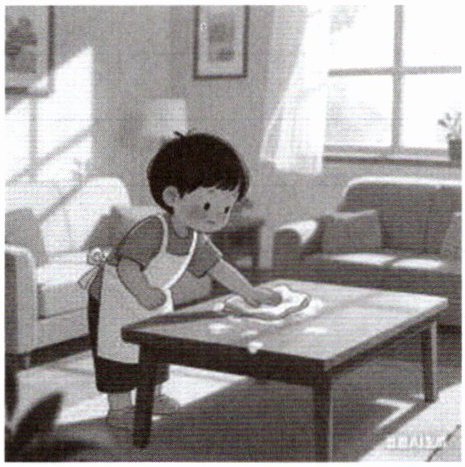
Some parents think that adults are paid to do their jobs, they should pay kids for everyday housework. But some people don’t think kids should get rewards (报酬) for doing housework. Susie Walton, an expert, believes that by rewarding kids, parents are sending a message that work isn’t worth doing unless you get something in return. “Doing any kind of housework is a team effort,” Walton says. “A home is a living space for everyone in the family.” Other people believe that getting a reward encourages (鼓舞) kids to do housework, and it also teaches them real world lessons about how we need to work to get money. “Our goal is to give kids lawful power so they can get rewards,” says Chris Bergman. “And kids need rewards to help encourage them.”
(
A. 作为回报
B. 受惩罚
C. 降价销售
D. 被控制
(
A. Running exercise is a kind of teamwork.
B. People work to get some rewards.
C. Kids have responsibilities (责任) in the house.
D. Doing housework is the parents’ job.
(
A. Kids Should Study as Well as Doing Housework
B. Let Children Do Some Housework
C. Should Kids Be Rewarded for Doing Housework?
D. Doing Housework Is Good for Children’s Study
Many kids do housework, in exchange, they get some money or computer time.
Some parents think that adults are paid to do their jobs, they should pay kids for everyday housework. But some people don’t think kids should get rewards (报酬) for doing housework. Susie Walton, an expert, believes that by rewarding kids, parents are sending a message that work isn’t worth doing unless you get something in return. “Doing any kind of housework is a team effort,” Walton says. “A home is a living space for everyone in the family.” Other people believe that getting a reward encourages (鼓舞) kids to do housework, and it also teaches them real world lessons about how we need to work to get money. “Our goal is to give kids lawful power so they can get rewards,” says Chris Bergman. “And kids need rewards to help encourage them.”
(
A
)6. What does the underlined phrase “in return” in Paragraph 2 mean in Chinese?A. 作为回报
B. 受惩罚
C. 降价销售
D. 被控制
(
C
)7. What is Walton’s idea in the passage?A. Running exercise is a kind of teamwork.
B. People work to get some rewards.
C. Kids have responsibilities (责任) in the house.
D. Doing housework is the parents’ job.
(
C
)8. Which is the best title for the passage?A. Kids Should Study as Well as Doing Housework
B. Let Children Do Some Housework
C. Should Kids Be Rewarded for Doing Housework?
D. Doing Housework Is Good for Children’s Study
答案:
6.A 7.C 8.C
三、阅读表达
Many parents think that it’s very difficult to get their children to do chores. But I don’t think so.
My daughter is ten years old. At night, I write down her chores for the next day. Then I stick (贴) the paper with chores on her door. Usually she gets three to eight chores a day. It depend on how she does chores. If she does all of her chores well, she can get fewer (较少) chores the next day. 一些家务是容易的,比如扫地、叠衣服和晚饭后擦桌子。
For my other two children, the chores are d
根据短文内容,完成下列阅读任务。
任务一:根据首字母提示补全文中的单词。
1.
任务二:回答下列问题。
2. How many kids does the writer have?
3. How does the writer’s ten-year-old daughter know her chores?
4. What’s the main idea of the passage?
5. 任务三:将文中画线句子译成英语。
Many parents think that it’s very difficult to get their children to do chores. But I don’t think so.
My daughter is ten years old. At night, I write down her chores for the next day. Then I stick (贴) the paper with chores on her door. Usually she gets three to eight chores a day. It depend on how she does chores. If she does all of her chores well, she can get fewer (较少) chores the next day. 一些家务是容易的,比如扫地、叠衣服和晚饭后擦桌子。
For my other two children, the chores are d
ifferent
because they are very young. They both know how to put their dirty plates in the dishwasher (洗碗机). My 3-year-old son helps me put the dirty clothes into the washing machine (洗衣机) when I am washing the clothes. They can also help me when I’m working in the yard. They help me pick up the sticks (树枝) and throw them away.根据短文内容,完成下列阅读任务。
任务一:根据首字母提示补全文中的单词。
1.
different
任务二:回答下列问题。
2. How many kids does the writer have?
Three/3(kids).
3. How does the writer’s ten-year-old daughter know her chores?
By looking at the paper with chores stuck on her door.
4. What’s the main idea of the passage?
How the writer gets her children to do chores.
5. 任务三:将文中画线句子译成英语。
Some chores are easy, like sweeping the floor, folding clothes and cleaning the table after dinner.
答案:
1.different 2.Three/3(kids). 3.By looking at the paper with chores stuck on her door. 4.How the writer gets her children to do chores. 5.Some chores are easy, like sweeping the floor, folding clothes and cleaning the table after dinner.
查看更多完整答案,请扫码查看

