

 搜索
搜索
第35页
- 第1页
- 第2页
- 第3页
- 第4页
- 第5页
- 第6页
- 第7页
- 第8页
- 第9页
- 第10页
- 第11页
- 第12页
- 第13页
- 第14页
- 第15页
- 第16页
- 第17页
- 第18页
- 第19页
- 第20页
- 第21页
- 第22页
- 第23页
- 第24页
- 第25页
- 第26页
- 第27页
- 第28页
- 第29页
- 第30页
- 第31页
- 第32页
- 第33页
- 第34页
- 第35页
- 第36页
- 第37页
- 第38页
- 第39页
- 第40页
- 第41页
- 第42页
- 第43页
- 第44页
- 第45页
- 第46页
- 第47页
- 第48页
- 第49页
- 第50页
- 第51页
- 第52页
- 第53页
- 第54页
- 第55页
- 第56页
- 第57页
- 第58页
- 第59页
- 第60页
- 第61页
- 第62页
- 第63页
- 第64页
- 第65页
- 第66页
- 第67页
- 第68页
- 第69页
- 第70页
- 第71页
- 第72页
- 第73页
- 第74页
- 第75页
- 第76页
- 第77页
- 第78页
- 第79页
- 第80页
- 第81页
- 第82页
- 第83页
- 第84页
- 第85页
- 第86页
- 第87页
- 第88页
- 第89页
- 第90页
- 第91页
- 第92页
- 第93页
- 第94页
- 第95页
- 第96页
- 第97页
- 第98页
- 第99页
- 第100页
1. compare
【感知】
» How do we compare with each other?(教材第 21 页)我们如何比较彼此?
» Parents always compare their own children with other children. 父母总是将自己的孩子与其他孩子比较。
» We usually compare books to friends. 我们通常会将书籍比作朋友。
【探究】
(1)compare 动词,意为“______”,常与介词 with/to 搭配使用。
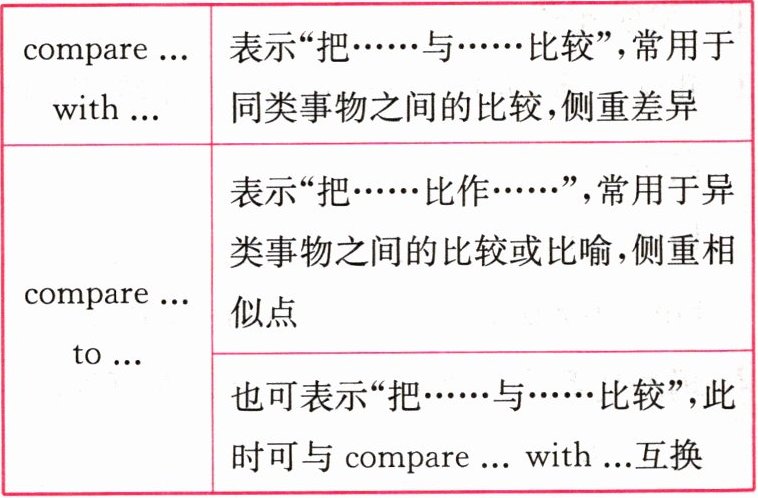
(2)compare...with...与 compare...to...的用法辨析
| compare...with... | 表示“把……与……比较”,常用于同类事物之间的比较,侧重差异 |
| compare...to... | 表示“把……比作……”,常用于异类事物之间的比较或比喻,侧重相似点 也可表示“把……与……比较”,此时可与 compare...with...互换 |
【应用】
完成句子
① 我父母常常把我比作温室里的花朵。
My parents often ______ me ______ a flower in the greenhouse.
② 别拿你的优点和别人的缺点比较。
Don’t ______ your advantages ______ others’ disadvantages.
【感知】
» How do we compare with each other?(教材第 21 页)我们如何比较彼此?
» Parents always compare their own children with other children. 父母总是将自己的孩子与其他孩子比较。
» We usually compare books to friends. 我们通常会将书籍比作朋友。
【探究】
(1)compare 动词,意为“______”,常与介词 with/to 搭配使用。
(2)compare...with...与 compare...to...的用法辨析
| compare...with... | 表示“把……与……比较”,常用于同类事物之间的比较,侧重差异 |
| compare...to... | 表示“把……比作……”,常用于异类事物之间的比较或比喻,侧重相似点 也可表示“把……与……比较”,此时可与 compare...with...互换 |
【应用】
完成句子
① 我父母常常把我比作温室里的花朵。
My parents often ______ me ______ a flower in the greenhouse.
② 别拿你的优点和别人的缺点比较。
Don’t ______ your advantages ______ others’ disadvantages.
答案:
[探究]
(1)比较;对比
[应用]①compare; to ②compare; with
(1)比较;对比
[应用]①compare; to ②compare; with
2. attend
【感知】
» You attended the festival last year and this year.(教材第 23 页)你去年和今年都参加了这个节日。
» The famous scientist will attend the meeting next Friday. 这位著名科学家将于下周五出席会议。
» He joined the army when he was 19. 他 19 岁时参军。
» Can I join in the game? 我可以加入游戏吗?
» Will you take part in the sports meeting? 你会参加运动会吗?
【探究】
(1)attend 动词,意为“______”,其宾语通常为 concert、meeting、lecture 等。
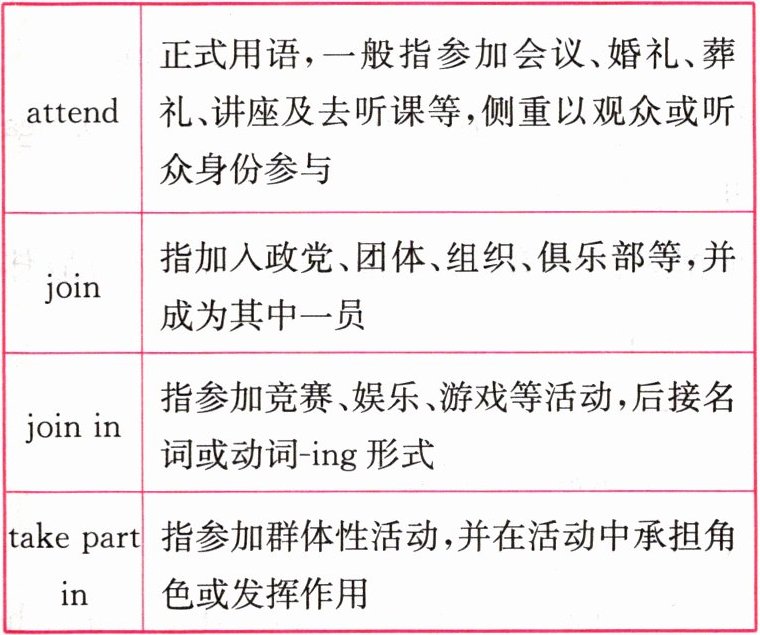
(2)attend,join,join in 与 take part in 的用法辨析
| attend | 正式用语,一般指参加会议、婚礼、葬礼、讲座及去听课等,侧重以观众或听众身份参与 |
| join | 指加入政党、团体、组织、俱乐部等,并成为其中一员 |
| join in | 指参加竞赛、娱乐、游戏等活动,后接名词或动词 - ing 形式 |
| take part in | 指参加群体性活动,并在活动中承担角色或发挥作用 |
【应用】
完成句子
① 很遗憾,我不能参加这次会议。
Unfortunately,I won’t be able to ______ ______ ______.
② 我们希望参加 100 米比赛。
We wish to ______ ______ the 100 - metre race.
【感知】
» You attended the festival last year and this year.(教材第 23 页)你去年和今年都参加了这个节日。
» The famous scientist will attend the meeting next Friday. 这位著名科学家将于下周五出席会议。
» He joined the army when he was 19. 他 19 岁时参军。
» Can I join in the game? 我可以加入游戏吗?
» Will you take part in the sports meeting? 你会参加运动会吗?
【探究】
(1)attend 动词,意为“______”,其宾语通常为 concert、meeting、lecture 等。
(2)attend,join,join in 与 take part in 的用法辨析
| attend | 正式用语,一般指参加会议、婚礼、葬礼、讲座及去听课等,侧重以观众或听众身份参与 |
| join | 指加入政党、团体、组织、俱乐部等,并成为其中一员 |
| join in | 指参加竞赛、娱乐、游戏等活动,后接名词或动词 - ing 形式 |
| take part in | 指参加群体性活动,并在活动中承担角色或发挥作用 |
【应用】
完成句子
① 很遗憾,我不能参加这次会议。
Unfortunately,I won’t be able to ______ ______ ______.
② 我们希望参加 100 米比赛。
We wish to ______ ______ the 100 - metre race.
答案:
[探究]
(1)参加;出席
[应用]①attend the meeting ②join in
(1)参加;出席
[应用]①attend the meeting ②join in
查看更多完整答案,请扫码查看

